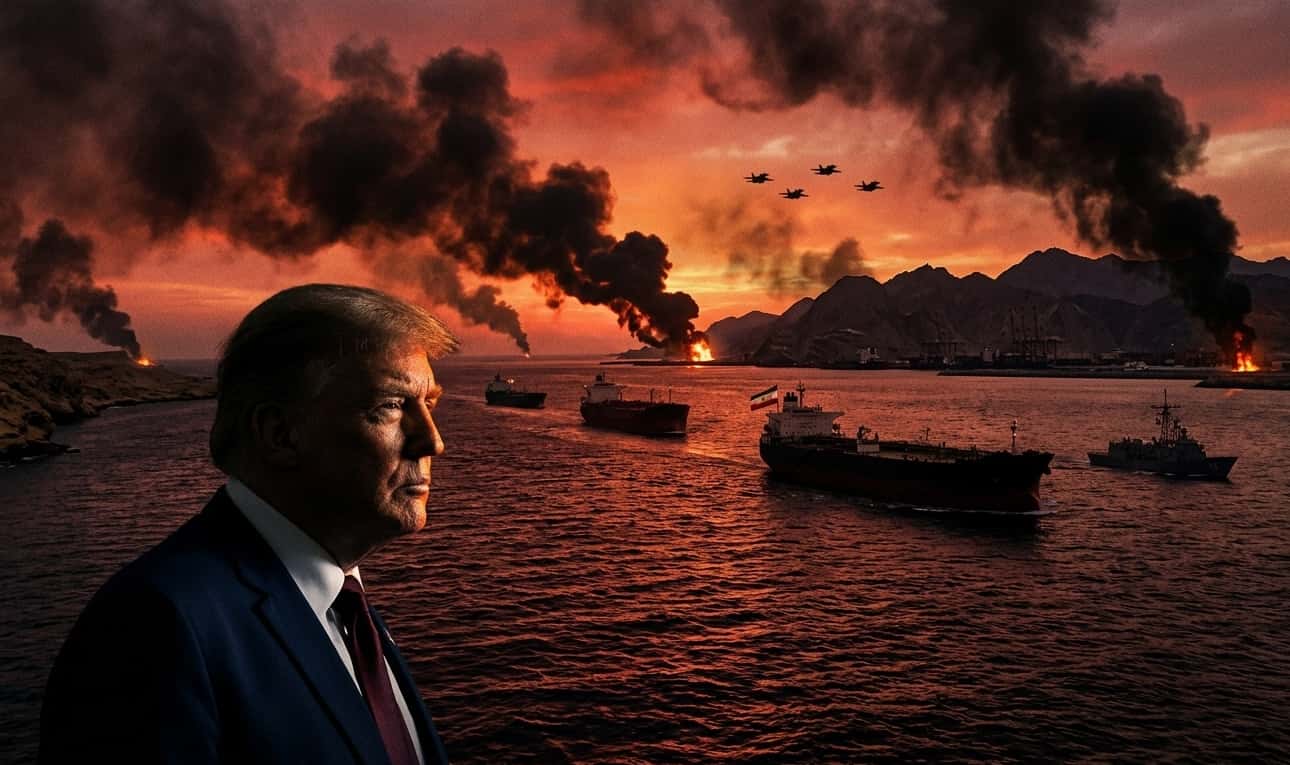

The Strait of Hormuz crisis didn’t begin with a press release. It began with airstrikes.
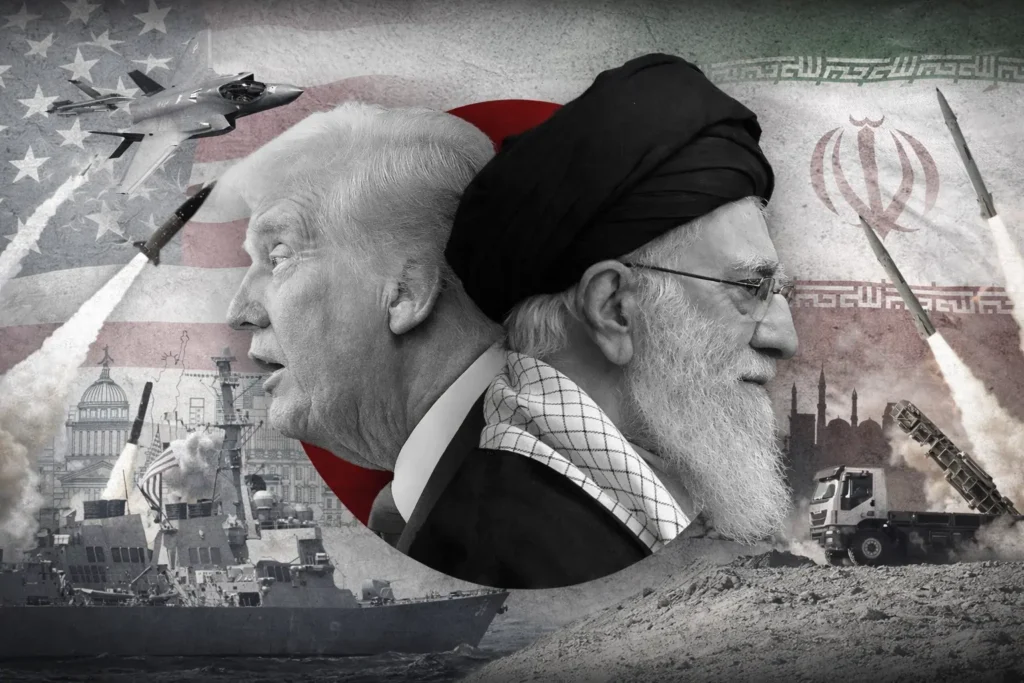
On February 28, 2026, the United States and Israel launched coordinated strikes on Iran under Operation Epic Fury, killing Supreme Leader Ali Khamenei and triggering the single largest energy supply disruption in modern history. Iran’s Revolutionary Guard responded by closing the Strait — the 21-mile-wide waterway that carries 20% of the world’s oil— to commercial shipping. What followed has shaken supply chains, stock markets, and startup balance sheets across every continent.
If you’re a founder, operator, or investor, this is not background noise. This is your new operating environment.
What the Strait of Hormuz Crisis Actually Means for the Global Economy
The numbers are not abstract. Brent crude surpassed $100 per barrel on March 8, 2026 — the first time in four years — before peaking at $126 per barrel. As of April 8, prices are back above $115, driven by renewed military threats. The Dallas Fed estimates this crisis will lower global real GDP growth by 2.9 percentage points in Q2 2026 alone.
The Strait of Hormuz crisis is not just an oil story. It is a food story, a manufacturing story, and a capital markets story — all colliding at once.
Here is the cascade:
Energy shock. Oil at $115/barrel means gasoline near $4/gallon in the US and diesel nearing $5. Jet fuel and kerosene prices more than doubled as refineries ran short of specific crude grades. Bloomberg analysts are now modeling a scenario where oil hits $200/barrel if the closure extends beyond Q3.
Supply chain collapse. Over 44,000 businesses across 174 countries had at least one shipment exposed to the closure as of mid-March. Shipping firms rerouted around the Cape of Good Hope, adding 10–14 days per voyage and pushing freight surcharges up 50–87% on key lanes. War-risk insurance premiums jumped from 0.2% to 1% of ship value — and some insurers pulled out entirely. Sidley Austin LLP
Food and fertilizer disruption. The Gulf supplies 30–35% of globally traded fertilizer. Urea prices rose 50% since the war began. With the spring planting season underway in the US Midwest, corn and soy yields are at risk — meaning food prices could remain elevated well into 2027.
Financial market stress. Global equities declined sharply. The 10-year US bond yield jumped to 4.46% in late March — its highest since mid-2025. The Fed is now caught between fighting supply-driven inflation and avoiding recession, and that policy paralysis is exactly what freezes venture capital.
How the Strait of Hormuz Crisis Is Hitting Startups Directly
The Strait of Hormuz crisis is a funding crisis disguised as a logistics problem for many founders.
Rising bond yields make risk-free returns more attractive to institutional investors. When LP portfolios shrink and inflation surges simultaneously, commitment to venture funds slows — and GPs slow deployment. Series A and B rounds freeze first and thaw last. Pre-seed and seed rounds are more resilient given smaller check sizes, but the growth capital that turns promising startups into scaled businesses is drying up.
The sectors facing capital flight: consumer discretionary, physical retail, travel, hospitality, and any business dependent on spending from consumers now paying 40% more for fuel and 15–25% more for groceries.
The sectors attracting capital acceleration: defense tech, energy security, domestic manufacturing, AI for supply chain optimization, fintech for currency hedging, and climate-resilient agriculture.
Small and micro-businesses — those with fewer than 50 employees — make up roughly 80% of all entities experiencing supply chain disruption from this crisis. They are the most exposed and the least resourced to adapt.
Regional Impact: US, Europe, Gulf, and China
United States: America’s domestic oil production provides some insulation, but consumers are getting crushed. Discretionary spending is contracting in real time. Defense tech and energy transition companies are the clear winners; consumer-facing startups are the clear losers.
Europe: Exposure is acute. The euro area faces roughly 1 percentage point of additional annual inflation and 0.6% GDP drag at $110/barrel — and that roughly doubles at $170. Aviation is severely disrupted, with major flight corridors between Asia, Africa, and Europe rerouted around the Middle East, adding fuel costs and journey time for carriers.
The Gulf: A humanitarian and economic crisis is converging. Iranian strikes on desalination plants — the source of 99% of drinking water in Kuwait and Qatar — have triggered emergency responses. Over 70% of the region’s food imports were disrupted by mid-March. Sovereign wealth fund deployment will slow dramatically as governments prioritize stabilization over investment.
China: The country receives a third of its oil via the Strait. Iran has reportedly permitted only Chinese-affiliated vessels limited transit, creating a structural strategic advantage for Beijing — but Chinese manufacturing costs are still rising, which means every brand sourcing from China is absorbing a secondary margin shock regardless of where they sell.
What Founders Must Do Right Now
In the Next 30 Days
Audit your supply chain. Map every supplier, raw material, and logistics partner. Identify anything routed through the Gulf, manufactured in Asia on Gulf energy, or shipped via rerouted tanker lanes. Build a second-source plan for every single point of failure.
Extend your runway aggressively. If you have 12 months of cash, operate as though you have six. Delay non-essential hires. Renegotiate vendor contracts. Identify your top five cost lines to pause if revenue softens by 20%.
Reprice your cost model. Assume logistics costs are 20–40% higher than your last projection. Build energy price inflation into Q2 and Q3 unit economics now — before you’re surprised by it.
Communicate proactively with investors. Founders who communicate clearly during uncertainty are the ones whose investors remain confident. Don’t wait for a board meeting.
Over the Next 12 Months
Restructure toward near-shore supply chains. The era of globally optimized, just-in-time manufacturing is structurally over. Move toward shorter chains, more inventory buffer, and bilateral supplier agreements with force majeure clauses. Southeast Asia, India, and Mexico are the emerging beneficiaries of Gulf-rerouted supply chains.
Recalibrate your fundraising narrative. If a Series A was planned for Q3 2026, extend your runway and build a story centered on capital efficiency and market defensibility — not hypergrowth. In a stagflationary environment, investors reward businesses that work at lower growth rates.
Invest in operational efficiency through AI. Every dollar eliminated through automation now compounds through the downturn. The startups that emerge strongest from the Strait of Hormuz crisis will be the ones that used it to get lean without losing capability.
Watch the reconstruction opportunity. Wars end. The Gulf rebuild — desalination, power grids, logistics infrastructure — will generate hundreds of billions in procurement over the next decade. If your startup operates in infrastructure software, energy, or construction tech, start building those relationships now.
The Bottom Line
The Strait of Hormuz crisis is not the 2020 pandemic. That was a demand shock with a visible end date. This is a supply shock of historic scale with an unknown duration and active military operations still underway.
The founders who survive this period are not the ones waiting for clarity. They are the ones restructuring, communicating, and finding the opportunity hidden inside the disruption — because there always is one.
Bookmark this page. Share it with your co-founder and CFO. The next chapter of global business is being written in a 21-mile stretch of water between Iran and Oman.
Related Articles from IMFounder
If this article helped you think through the crisis, these pieces will sharpen your strategy further:
- The Hidden Bill of War: How Geopolitics, Oil, and Power Are Reshaping the Global Economy — A deep dive into how military conflict translates into economic pain across every sector, from energy to consumer spending.
- 10 Startup Ideas That Could Build the Next Billion-Dollar Company in 2026 — Even in a crisis, opportunity exists. Discover which startup categories are positioned to win in a high-inflation, supply-disrupted world.
- Market Meltdown: The $Trillion Dollar Crash, Global Fallout, and the Uncertain Path to Recovery — Context on what a market-wide shock looks like, how it spreads globally, and what recovery timelines historically look like for founders and investors.