
The IRL app fraud is one of the most calculated startup deceptions of the last decade. A social media company raised $170 million from some of the world’s most sophisticated investors — including SoftBank’s Vision Fund 2 — by claiming organic growth that did not exist, users who were largely bots, and marketing costs that had been deliberately hidden from the people writing the cheques.
When IRL’s own board of directors completed its internal investigation in June 2023, the result was staggering: 95% of the app’s purported 20 million monthly active users were “automated or from bots.” The app shut down days later. A year after that, the U.S. Securities and Exchange Commission charged founder Abraham Shafi with fraud.
This is the full story of how it happened, what the SEC found, and what every founder and investor needs to understand before they trust a growth chart again.
What Was the IRL App? A Quick Background
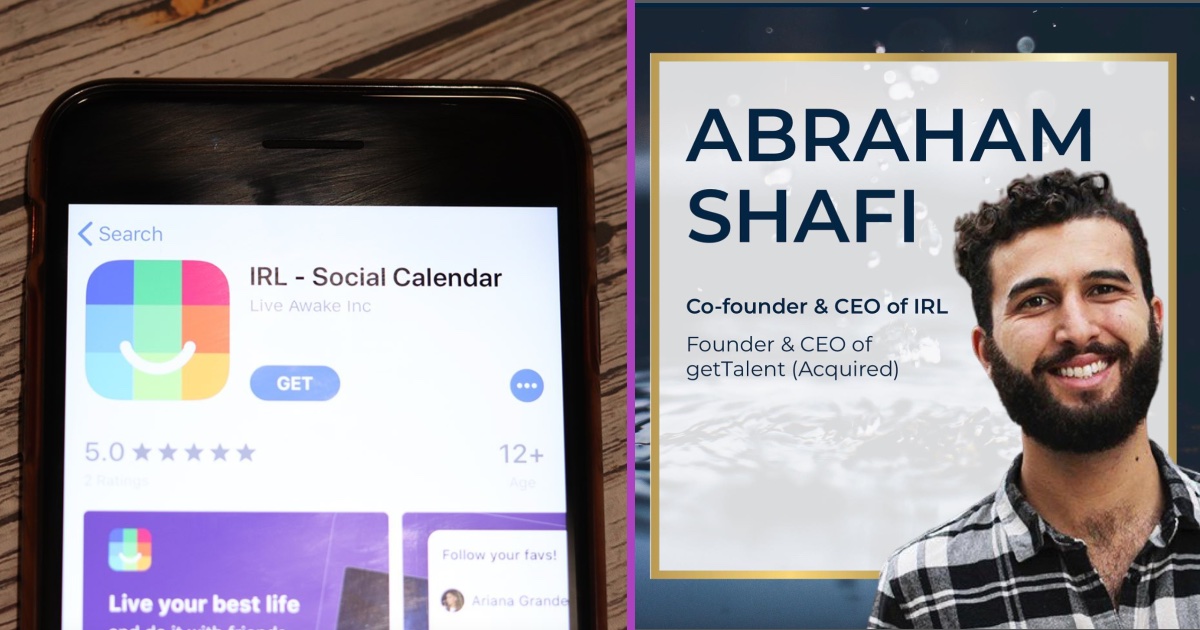
IRL — short for “In Real Life” — launched in 2017 as a social calendar app built for Gen Z. Co-founded by Abraham Shafi, Genrikh Khachatryan, and early PayPal board member Scott Banister, its premise was simple: young people were abandoning Facebook Events and had no good alternative for discovering and organizing real-world gatherings.
When COVID-19 erased in-person events in 2020, IRL pivoted quickly toward online events — esports, livestreams, virtual parties. Growth numbers climbed sharply. Or so Shafi told investors.
By June 2021, that story had convinced SoftBank Vision Fund 2 to lead a $170 million Series C round, pushing IRL’s valuation to $1.17 billion and granting it unicorn status. Shafi positioned the company as the “WeChat of the West” — a bold, ambitious claim that investors in a frothy funding environment were willing to believe.
They shouldn’t have.
How the IRL App Fraud Was Executed
According to the SEC’s official complaint filed in the U.S. District Court for the Northern District of California, the IRL app fraud worked across two tracks simultaneously.
Track 1: Fabricating Organic Growth
Shafi told investors that IRL had attracted the vast majority of its user base through organic growth, with minimal marketing spend. In reality, the SEC alleges, IRL was pumping millions of dollars into incentive advertising — paying users to download the app through ad platforms that offered rewards for installs.
The resulting downloads were low-quality, non-engaged, and in enormous numbers, bot-generated. To conceal this, Shafi allegedly routed advertising payments through third-party companies, then provided investors with offering documents that dramatically understated the company’s actual marketing costs.
The forensic investigation that later confirmed the IRL app fraud found unmistakable evidence of inauthentic activity: millions of duplicate-named private groups, accounts cycling through proxy IP addresses and device types, and irregular sign-ups clustered around Hotmail, Yahoo, and burner email addresses — patterns no organic user community would produce.
Track 2: Personal Misuse of Investor Funds
The SEC’s complaint goes further than inflated metrics. It alleges that Shafi and his fiancée, Barbara Woortmann, charged hundreds of thousands of dollars to IRL’s business credit cards for personal use — clothing, home furnishings, international travel, and reportedly wedding expenses. None of this was disclosed to investors.
“As we alleged, Shafi took advantage of investors’ appetite for investments in the pre-IPO technology space and fraudulently raised approximately $170 million by lying about IRL’s business practices.” — Monique C. Winkler, Director, SEC San Francisco Regional Office
The Warning Signs That Were Ignored
The IRL app fraud did not collapse without warning. Multiple signals emerged well before the board’s investigation confirmed the truth.
June 2022: IRL quietly laid off 25% of its staff — roughly 25 people — after having more than tripled headcount the prior year. In an internal memo obtained by TechCrunch, Shafi urged the remaining team to “adapt” and “be disciplined,” comparing the company’s mission to winning an Olympic gold medal. He assured employees the company had “more than enough cash to last well into 2024.”
December 2022: The SEC opened a formal investigation into whether IRL had misled investors about its business performance.
April 2023: A former employee, Nicholas Grant, filed a legal complaint alleging he had been fired in retaliation for raising internal concerns about the company’s inflated user metrics. A special committee of the board simultaneously suspended Shafi for what it described as a “pattern of misconduct.” Shafi stepped down.
June 2023: The board’s investigation concluded. 95% of IRL’s users were bots. The company shut down June 27, 2023.
The whistleblower had been right all along.
IRL App Fraud: Full Timeline
| Date | Event |
|---|---|
| 2017 | IRL founded by Shafi, Khachatryan, and Scott Banister |
| 2020 | Pandemic pivot to online events; user numbers spike |
| June 2021 | SoftBank leads $170M Series C; IRL becomes a $1.17B unicorn |
| June 2022 | IRL lays off 25% of staff |
| December 2022 | SEC opens investigation into IRL’s investor disclosures |
| April 2023 | Employee whistleblower files complaint; Shafi suspended |
| June 27, 2023 | IRL shuts down; board confirms 95% of users are bots |
| November 2023 | Shafi and Khachatryan sue investors, alleging sabotage |
| July 2024 | SEC formally charges Shafi; DOJ files criminal charges |
What the SEC and DOJ Are Seeking
The SEC’s charges against Shafi include violations of the antifraud provisions of federal securities law. The agency is seeking:
- Permanent injunctive relief
- Full disgorgement of the approximately $170 million raised
- Civil monetary penalties
- An officer-and-director bar preventing Shafi from leading another company
The Department of Justice filed parallel criminal charges. SoftBank also launched a separate civil suit seeking $150 million in recovered capital.
Shafi and his co-founder mounted a counter-offensive, suing investors including SoftBank’s Serena Dayal, Goodwater Capital’s Chi-Hua Chien, and Floodgate’s Mike Maples. Their lawsuit alleged the 95% bot figure was invented by investors who wanted to shut the company down and recover the remaining $40 million in cash on hand. The board denied those claims in full, citing the forensic report’s findings and evidence of Shafi’s misappropriation of company funds.
Why Smart Investors Missed the IRL App Fraud
The IRL app fraud raises an uncomfortable question: how does $200 million flow to a company where 95% of the users are bots, without anyone catching it?
Three factors converged to make it possible.
The metrics were unaudited. Consumer social apps are notoriously difficult to verify from the outside. Unlike SaaS businesses with clear ARR figures or marketplaces with transaction data, social platforms live on engagement metrics that are self-reported and rarely subjected to independent forensic scrutiny before a round closes.
The funding environment rewarded speed over rigour. The 2020–2022 venture cycle was defined by FOMO. Capital was cheap, valuations were disconnected from fundamentals, and the fear of missing the “next TikTok” pushed investors to move fast. Shafi’s narrative — Gen Z social graph, WeChat ambition, pandemic-era virality — fit exactly what the market wanted to back.
The fraud was structurally concealed. By routing ad spend through third parties and understating marketing costs in official offering documents, the IRL app fraud was not visible in the materials investors actually received. This was not sloppy accounting — it was deliberate concealment.
5 Lessons Every Founder Must Learn From the IRL App Fraud
The IRL app fraud is not just a cautionary tale about one bad actor. It exposes systemic weaknesses in how the startup ecosystem measures, reports, and trusts growth.
1. Vanity metrics are not traction. Monthly active user counts mean nothing without cohort retention, session depth, and revenue correlation. The IRL app fraud persisted because investors accepted top-line numbers without asking what those users were actually doing.
2. Organic growth claims require evidence. If a founder tells you customer acquisition cost is near zero, demand proof. Marketing spend transparency should be a standard due diligence requirement, not an optional disclosure.
3. Whistleblowers inside a company see the fraud first. Nicholas Grant raised concerns internally and was fired for it. Investor governance frameworks need clear, protected channels for employees to surface concerns before a fraud compounds.
4. Inflating metrics is securities fraud, not a growth hack. The startup culture of “fake it till you make it” has a legal ceiling. The moment fabricated metrics are used to raise capital, it crosses into criminal territory. The IRL app fraud demonstrates this with a 25-year prison risk attached to it.
5. Unicorn status is not validation. A $1.17 billion valuation printed on a press release does not mean a company is real. It means investors agreed on a number. The IRL app fraud proves that number can be built entirely on fiction.
The Bigger Pattern in Startup Fraud
The IRL app fraud did not happen in isolation. In the same month the SEC charged Shafi, it charged BitClout founder Nader Al-Naji with raising over $257 million in unregistered securities — backed by a16z and Sequoia. Earlier that year, it went after student financial aid startup Frank, which sold JPMorgan a fabricated customer database for $175 million.
The pattern is consistent: a high-pressure funding environment, a compelling founder narrative, self-reported metrics accepted without independent verification, and regulators arriving after the money is gone.
For founders building genuine companies in Canada and the US — whether you’re navigating the Start-Up Visa program or raising your first seed round — the IRL app fraud is a reminder that the shortcuts are never worth it. The SEC’s enforcement pipeline is full. The DOJ is watching. And the whistleblowers inside your company will eventually be heard.
Build something real.
Frequently Asked Questions About the IRL App Fraud
What was the IRL app fraud? The IRL app fraud refers to the alleged scheme by founder Abraham Shafi to raise approximately $170 million from investors by lying about the app’s user growth, hiding millions in marketing spend, and misusing company funds for personal expenses. The SEC filed formal fraud charges in July 2024.
How many fake users did IRL have? IRL’s board of directors found in June 2023 that 95% of the app’s claimed 20 million monthly active users were “automated or from bots” — not real people.
Who invested in IRL? IRL’s major investors included SoftBank Vision Fund 2, Dragoneer Investment Group, and Goodwater Capital. The company raised over $200 million in total before shutting down.
What happened to Abraham Shafi? Shafi was charged by the SEC in July 2024 with violating federal securities antifraud laws. The Department of Justice filed parallel criminal charges. The SEC is seeking full disgorgement of the $170 million raised, civil penalties, and a permanent ban on Shafi serving as an officer or director of any company.
What can founders learn from the IRL app fraud? Key lessons include the importance of honest metrics, the legal danger of inflating user numbers to raise capital, and the need for investor governance that protects whistleblowers who identify fraud before it compounds.
This article is part of IMFounder’s ongoing coverage of startup accountability and founder responsibility.
Related Reading on IMFounder
- The NFT Collapse — From Digital Gold Rush to a Global Scam Reckoning
- Community Coders — The Story of a Startup That Didn’t Scale