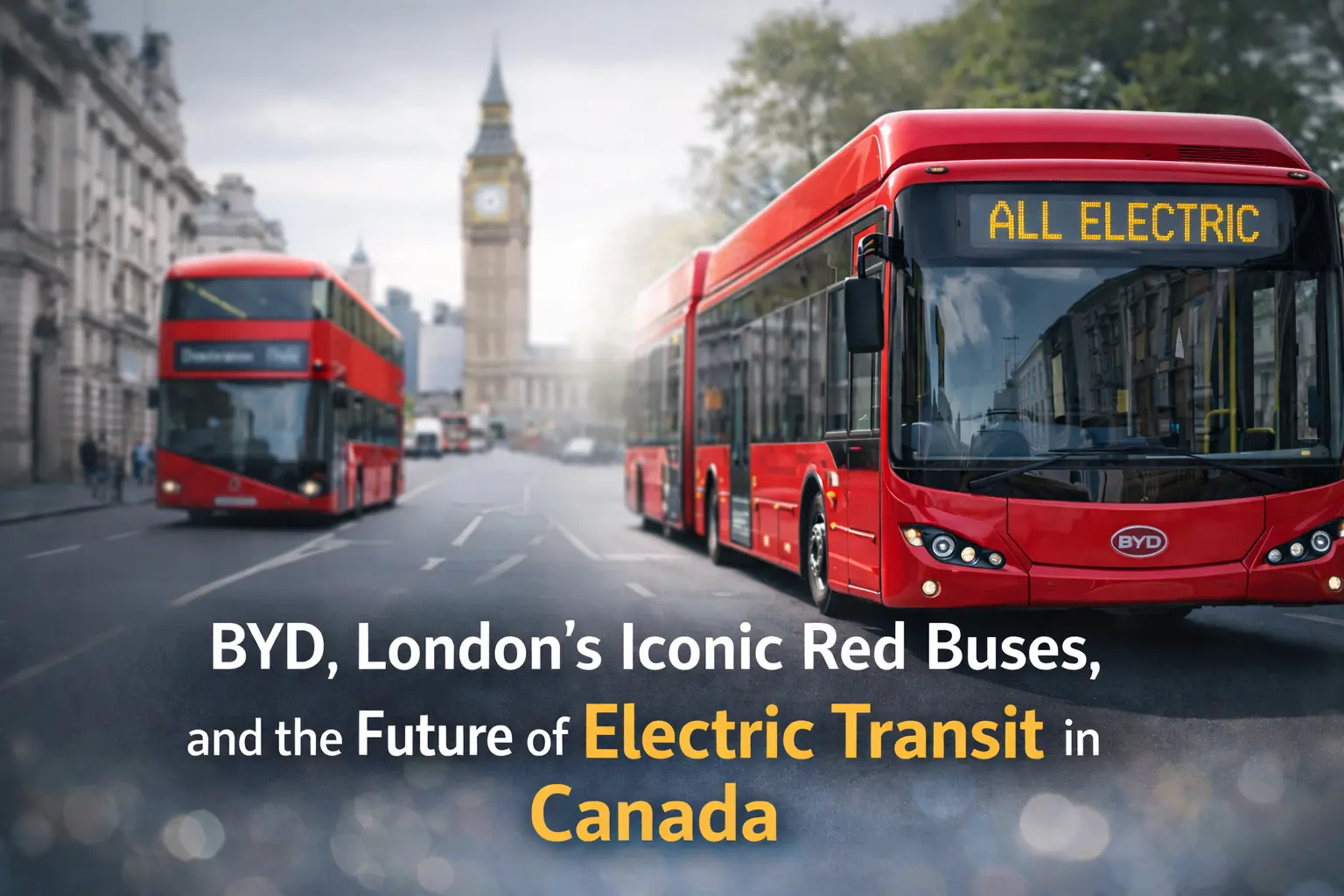

In recent years, global public transportation has been undergoing a significant transformation driven by environmental, economic, and regulatory imperatives. One of the most visible examples of this transition is the adoption of electric buses in major urban centers. Among manufacturers leading this shift is BYD (Build Your Dreams), a Chinese electric vehicle and battery technology company. Across Europe, and particularly in London, BYD’s electric buses are increasingly replacing diesel-powered vehicles, prompting questions about whether similar changes could happen in Canada as policy, trade relationships, and technology adoption evolve.
BYD’s Role in Electrifying London’s Bus Fleet
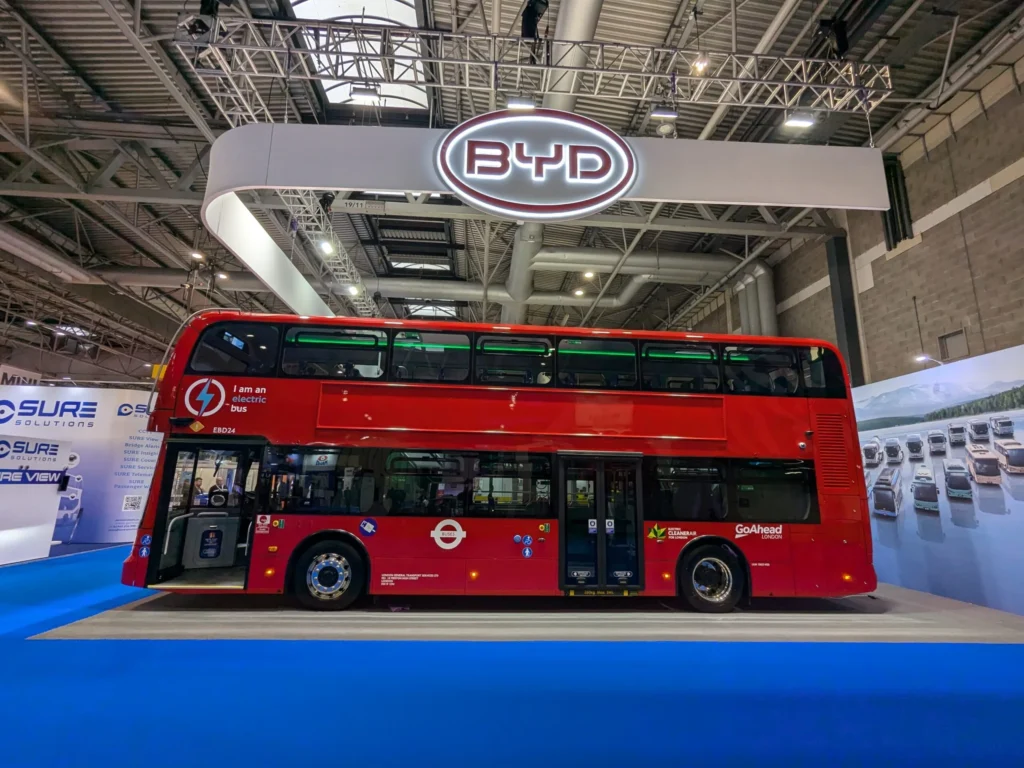
Transport for London (TfL) and private operators such as Go-Ahead London have been transitioning their fleets to zero-emission vehicles, with BYD playing a key role through a long-standing partnership with British manufacturer Alexander Dennis Limited (ADL). Under this joint venture, BYD provides electric powertrains and battery systems while ADL manufactures the body and assembles units tailored to the UK market. By 2023, this partnership had delivered nearly 600 battery-electric buses to Go-Ahead London and continued to secure repeat orders, reflecting London’s broader commitment to decarbonize scheduled services and reduce urban air pollution.
The introduction of BYD-powered electric buses in London is already reshaping public transit. These vehicles operate on multiple routes, including double-decker models built to meet the demands of the city’s dense passenger flows. They offer features such as enhanced accessibility, integrated digital systems, and reduced noise and emissions compared with older diesel fleets.
This transition aligns with the UK government and TfL’s goal to achieve a zero-emission bus fleet by 2030 — part of broader climate and clean air commitments. Sales and deliveries of electric buses in Europe are rising rapidly, with battery-electric models forming a growing share of total heavy-duty vehicle registrations.
BYD’s Presence in Canada’s Electric Bus Market
The narrative around Canadian public transit electrification is different from London’s but shows notable parallels in early adoption rather than wholesale fleet replacement. BYD has been present in Canada’s electric bus ecosystem for several years, exemplified by orders from private operators such as Vancouver’s WESTCOAST Sightseeing, which committed to a fully electric fleet of BYD buses to reduce emissions and noise pollution.
In addition, York University and Attridge Transportation in Ontario recently announced procurement plans for BYD battery-electric buses, supported by Canada’s Incentives for Medium-Heavy-Duty Zero-Emission Vehicles (iMHZEV) Program — a federal initiative to promote adoption of clean technology.
Despite these steps, Canadian public transit agencies have tended to diversify their suppliers rather than relying exclusively on a single manufacturer. For example, the Toronto Transit Commission (TTC) has evaluated and ordered electric buses from a range of manufacturers including BYD, New Flyer, and Proterra as part of a broader strategy to electrify a portion of its fleet. Likewise, the Regional Municipality of York has ordered electric buses from Nova Bus, a Quebec-based manufacturer.
This multi-supplier strategy reflects Canada’s complex policy environment and industrial context. Canadian transit agencies often balance local manufacturing interests, supply chain considerations, and diverse technology evaluations when planning fleet replacements.
Trade Policy, Market Access, and Canada’s EV Landscape
Beyond buses, Canada’s broader engagement with Chinese electric vehicles is evolving. Recent policy changes have reduced tariffs on Chinese-made EVs, allowing up to 49,000 vehicles to be imported annually at a reduced tariff rate. This move could affect the EV market dynamics in Canada, including passenger cars, by lowering barriers to entry for manufacturers such as BYD.
However, automatic access to the U.S. market for Chinese vehicles through Canada remains constrained by regional trade rules such as the United States–Mexico–Canada Agreement (USMCA), which requires a high percentage of vehicle content to originate within North America before U.S. tariff exemptions apply.
In the context of public transit, this means that although Canada may import or assemble electric buses from international manufacturers, broader industrial policies and trade frameworks will continue shaping competitive dynamics.
Will Canada Follow London’s Example?
The short answer is: Canada is electrifying its bus fleets, but it is unlikely to adopt a singular model like London’s BYD-ADL dominance in the near term. Canada’s approach has been more diversified, with multiple manufacturers and local industry players contributing to bus electrification strategies.
That said, BYD’s footprint in Canada is strengthening through partnerships and procurement agreements. As cities and transit agencies invest in infrastructure to support zero-emission vehicles, and as federal incentives reduce financial barriers, the presence of BYD battery-electric buses is likely to grow. Their adoption will be driven by local policy goals, operational performance, and comparative technology assessments rather than by geopolitical alignment alone.
Conclusion: A Transition Shaped by Policy, Industry, and Local Needs
London’s transition toward electric buses, powered in large part by the successful BYD-ADL collaboration, illustrates how public policy, market demand, and industrial partnerships can transform iconic transportation systems. In contrast, Canada’s path is marked by diverse procurement strategies, federal incentives, and a competitive landscape that includes global and domestic manufacturers.
While Canada is embracing electric buses — and BYD is among the suppliers contributing to that shift — a direct replication of London’s model is neither imminent nor prescriptive. The Canadian transit sector’s evolution will reflect local priorities, technological performance, and a broader ecosystem that includes innovation and job creation domestically.