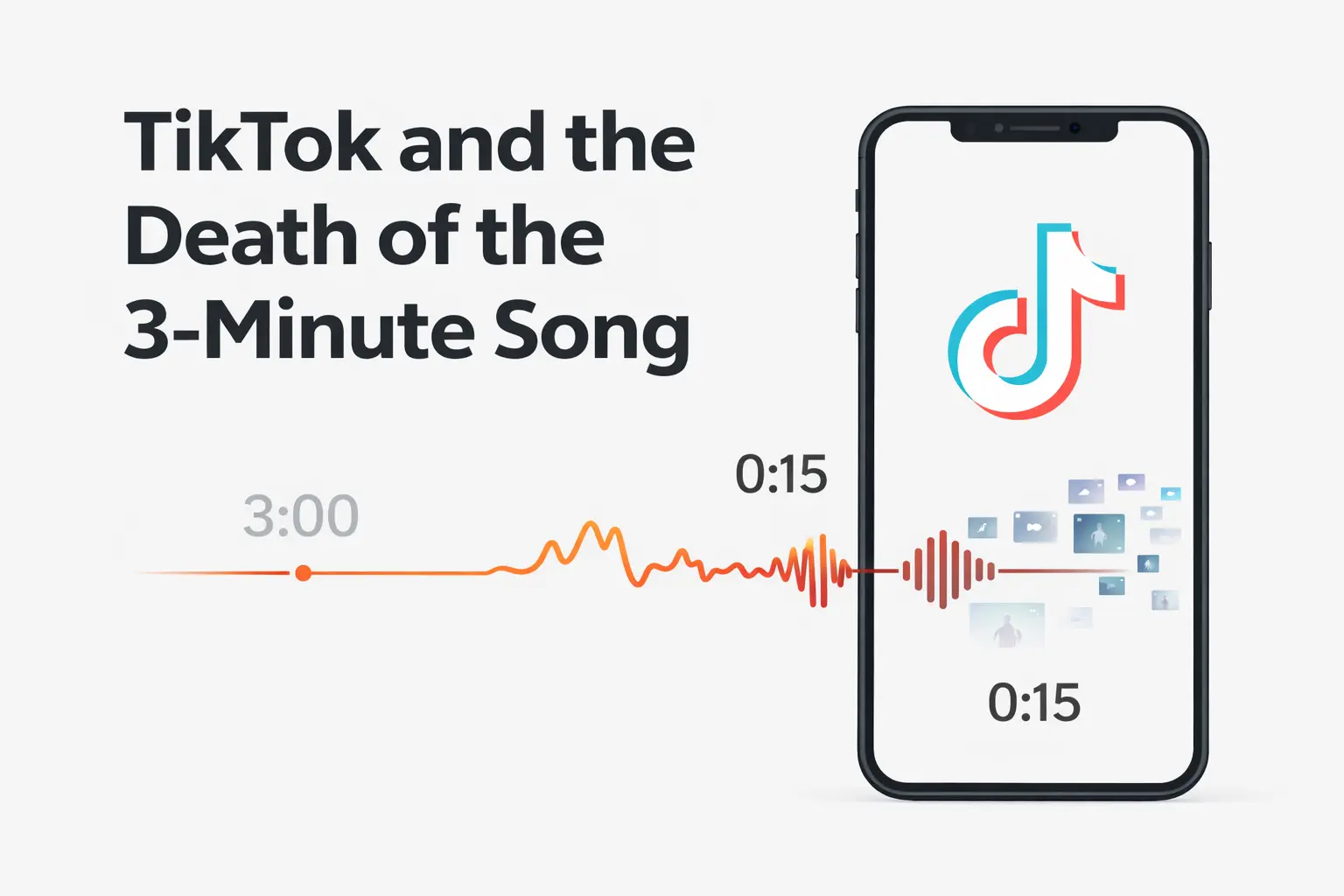

Why Songs Are Getting Shorter: The TikTok Effect on the Music Industry
For decades, the three-minute song was the gold standard of the music industry. From vinyl records to radio programming, the format shaped how artists composed music and how audiences consumed it.
But in the era of short-form video, that structure is rapidly dissolving. Platforms like TikTok are not just influencing how music is discovered — they are actively reshaping how songs are written, produced, and released.
Today, the question many producers ask in the studio isn’t “Is this a great song?” but rather “Does the first 15 seconds go viral?”
The result: shorter songs, faster hooks, and music engineered for the algorithm.
The Collapse of the Traditional 3-Minute Structure
Historically, the three-minute length wasn’t random.
Radio stations preferred shorter songs to maximize advertising slots, and physical formats like 7-inch vinyl records limited how much audio could fit on each side. Artists structured songs around a predictable arc:
- Intro
- Verse
- Chorus
- Verse
- Chorus
- Bridge
- Final chorus
This format worked perfectly for radio and streaming platforms like Spotify and Apple Music in the early 2010s.
But TikTok changed the incentive structure entirely.
Instead of listening to a full song, millions of users interact with tiny musical fragments — often just 10–20 seconds long.
And those fragments determine whether a track becomes a hit.
Songs Are Now Optimized for 15-Second Hooks
Scroll through TikTok for five minutes and you’ll notice a pattern: the most viral songs start instantly.
No slow intros.
No long build-ups.
Just a hook within seconds.
Producers now design tracks specifically to perform well in TikTok clips:
- Immediate chorus drops
- Repetitive lyrical hooks
- Simplified melodies
- Distinct sonic “moments” perfect for trends
A perfect example is Old Town Road by Lil Nas X, which exploded through TikTok memes before dominating global charts.
The viral loop looked like this:
- 15-second TikTok clip goes viral
- Millions search the full song
- Streaming numbers surge
- Charts respond
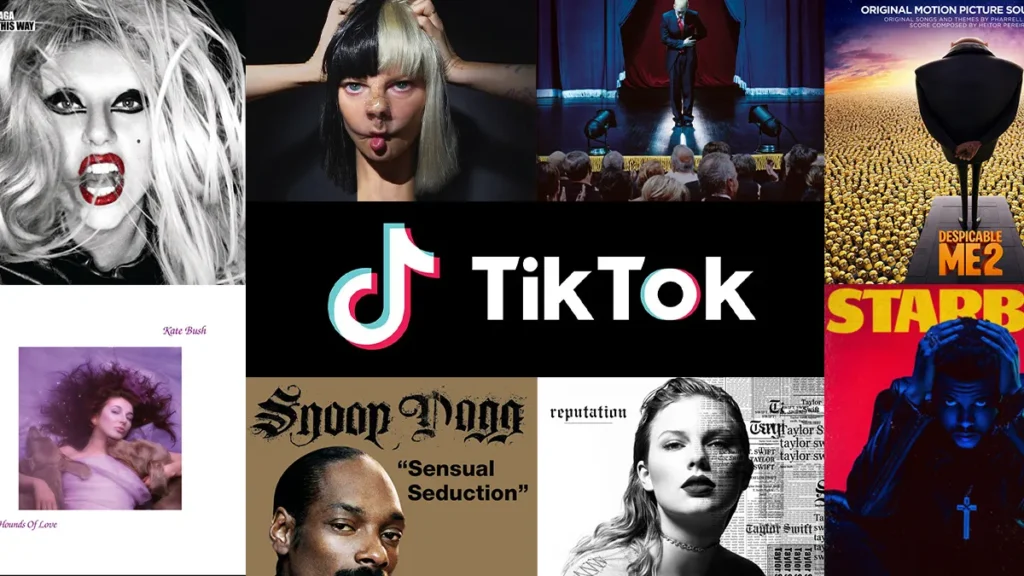
The song becomes famous before people even know the artist.
Artists Are Writing Music for Virality
The shift isn’t accidental — it’s strategic.
Songwriters and labels now reverse-engineer songs for social media engagement. Instead of asking “Will radio play this?”, the question has become:
“Will this trend?”
Modern pop songwriting sessions increasingly focus on:
- Hook density – placing multiple memorable moments in one track
- Loopability – segments that repeat seamlessly in short videos
- Memetic lyrics – lines easy to caption or lip-sync
Even established artists are adapting.
Pop stars like Doja Cat, Olivia Rodrigo, and Drake now regularly release songs that explode on TikTok before dominating streaming charts.
In many cases, TikTok acts as the world’s largest music marketing platform.
Streaming Algorithms Are Influencing Songwriting
The transformation goes deeper than social media trends.
Streaming platforms themselves reward shorter songs.
On services like Spotify, a stream counts after 30 seconds of playback. This has led artists to structure songs so listeners reach that threshold as quickly as possible.
This creates several industry incentives:
Shorter songs = more plays.
If a listener plays a two-minute track twice instead of a four-minute track once, the artist earns two streams instead of one.
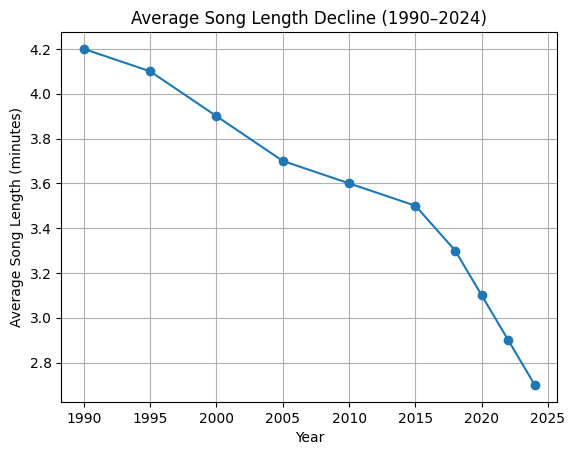
As a result, average song length has been steadily declining across pop, hip-hop, and electronic music.
Producers are cutting:
- Extended intros
- Long bridges
- Instrumental sections
What remains is a condensed hit formula optimized for streaming and social media.
The Economics of Attention
Behind all these changes is one powerful force:
Attention span economics.
Gen Z listeners consume media across multiple screens simultaneously. Music is no longer always the primary experience — it’s often background content for video, gaming, or social media scrolling.
TikTok thrives on this behavior.
The platform’s algorithm continuously tests short clips and promotes those that retain attention. Songs that contain instantly recognizable hooks perform best.
That means music now competes not just with other songs — but with every piece of digital content on the internet.
A three-minute listening commitment suddenly feels long.
The Rise of the “Micro-Song”
A new format is emerging in response:
The micro-song.
These tracks typically run under two minutes and are designed around a single viral moment.
Instead of telling a musical story with multiple sections, micro-songs focus on one unforgettable hook repeated in different variations.
This approach mirrors the logic of social media itself:
Short.
Loopable.
Shareable.
For emerging artists, this format can be incredibly powerful. One viral TikTok sound can generate millions of streams and launch a career overnight.
Is This Good or Bad for Music?
The TikTok era has created both opportunities and creative constraints.
Advantages
- Faster discovery for independent artists
- Global viral distribution without major labels
- Direct fan interaction through trends
Drawbacks
- Pressure to prioritize virality over artistic depth
- Homogenization of songwriting structures
- Reduced space for experimentation
Some musicians worry the industry is becoming algorithm-first rather than artist-first.
Others see it as simply the next evolution of music culture — similar to how MTV reshaped pop in the 1980s.
The Future of Songwriting
Despite the changes, long songs will never disappear completely.
Albums, live performances, and dedicated fan bases still reward deeper musical storytelling.
But the reality is clear:
TikTok has permanently altered the economics of music creation.
The three-minute song isn’t dead yet — but it’s no longer the industry’s default format.
In the age of algorithms, the first 15 seconds matter more than the final minute.
And for a new generation of artists, the path to a global hit might start not in a studio — but in a scrolling feed.
Related Articles from IMFounder
- Attention Span of Gen Z & Gen Alpha Shrinking – How smartphones, reels, and 24/7 content have rewired young minds.
- Gen Z’s Attention Span Crisis – From TikTok-trained attention habits to AI-driven product experiences.
- From Side Hustle to Freedom – How Gen Z Is Building Multiple Income Streams.
- Influencer-Founded Brands – The New Million-Dollar Empires Built From Followers.