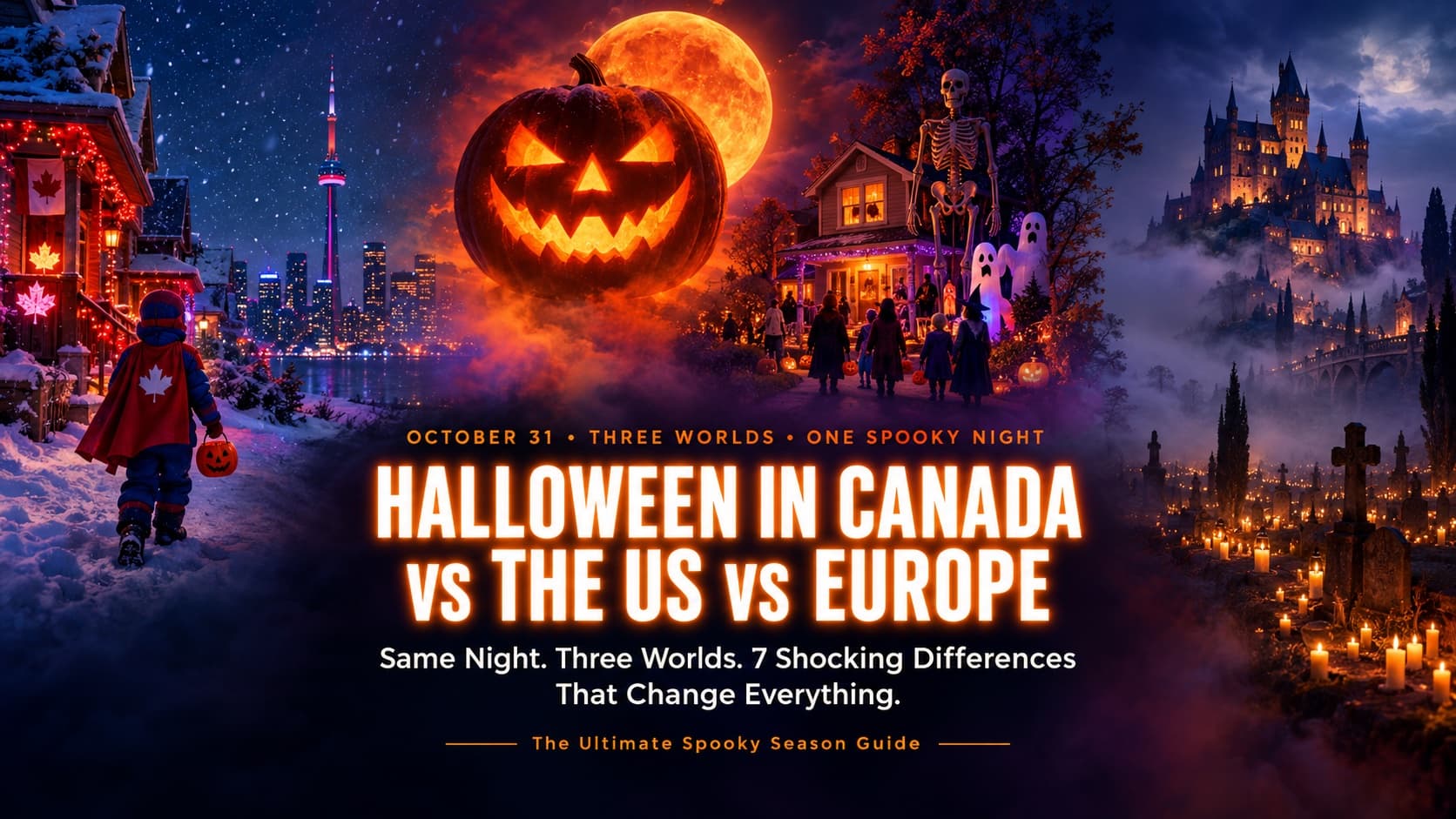

Halloween in Canada has a lot in common with the United States: carved pumpkins on porches, kids in costumes ringing doorbells and bowls of fun-size candy by the front door. But look closer and the differences start to appear. The candy brands change. The weather changes. And once you cross the Atlantic into Europe, the entire meaning of October 31 changes with it.
So how different is Halloween in Canada, the US and Europe, really? This guide breaks down seven real differences in history, spending, candy, costumes, safety, remembrance and local events, so you can understand what makes each version unique, whether you are planning a trip, moving abroad or simply settling an argument at the costume party.
Where Halloween in Canada, the US and Europe All Began
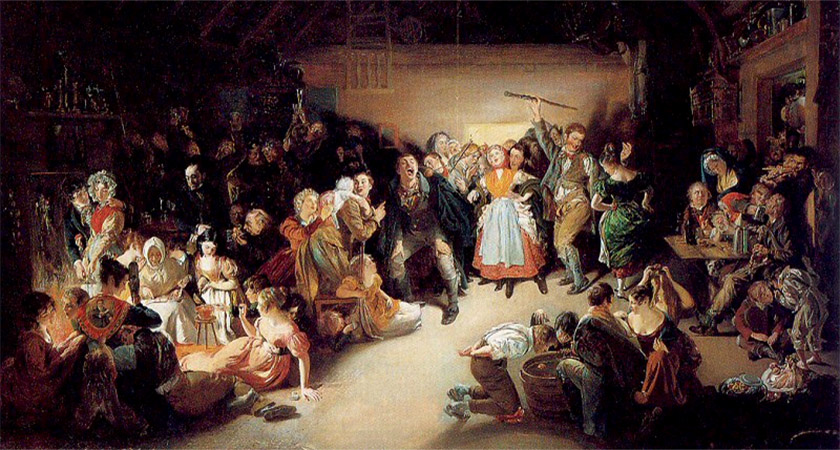
Every version of Halloween traces back to the same place: Samhain, an ancient Gaelic festival held around October 31 and November 1 to mark the end of the harvest and the start of winter. People believed the boundary between the living and the dead grew thin on that night. You can find a clear overview in the Britannica guide to Samhain. Later, the Christian calendar placed All Saints’ Day on November 1, which made October 31 “All Hallows’ Eve” and, eventually, Halloween.
The tradition crossed the Atlantic with Irish and Scottish immigrants, especially during the large waves of migration in the nineteenth century. In Ireland and Scotland, people carved turnips into lanterns. In North America, pumpkins were bigger, cheaper and easier to carve, and the jack-o’-lantern we know today was born. This shared journey is why Halloween in Canada and the US feels like close cousins, while Europe’s version feels like the older relative with deeper roots. For a broader timeline, see the Halloween entry on Wikipedia.
Difference 1: Scale and Spending, Where America Goes Biggest
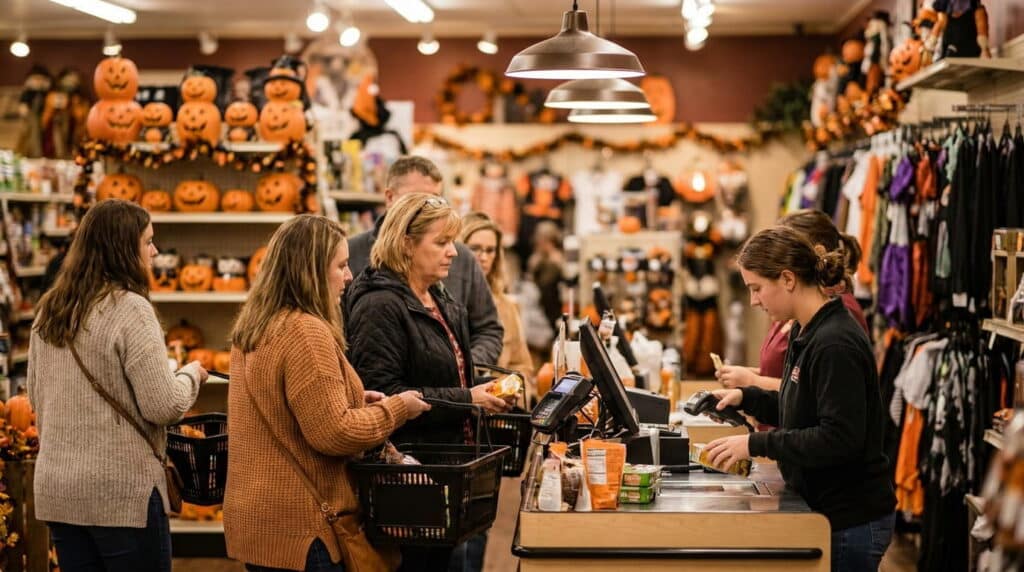
Nobody does Halloween on a bigger scale than the United States. According to the National Retail Federation, Americans spend well over ten billion dollars each year on candy, costumes and decorations, and recent seasons have set records. Inflatable ghosts, 12-foot skeletons, themed store aisles that appear in late summer and costumes for pets are all part of the picture. Halloween traditions in the US are as much about spectacle as they are about scares.
Halloween in Canada is also a major seasonal event, but it tends to feel more neighbourhood-scale. Canadians decorate enthusiastically, especially in suburban streets across Ontario, British Columbia and Alberta, yet the size of the displays and the number of commercial haunted attractions are smaller in proportion to the population. Canadian Thanksgiving arrives earlier in October, so many households have already used their pumpkins and fall décor before the spooky season peaks.
Europe sits at the other end of the scale. Halloween has grown steadily in the UK, France, Germany and Spain over the past three decades, driven by supermarkets, schools and social media. However, in many countries it is still seen as a recent import rather than a deep-rooted national tradition.
Difference 2: Candy and Treats, What Actually Lands in the Bag
Halloween Candy in Canada: Coffee Crisp, Smarties and Aero
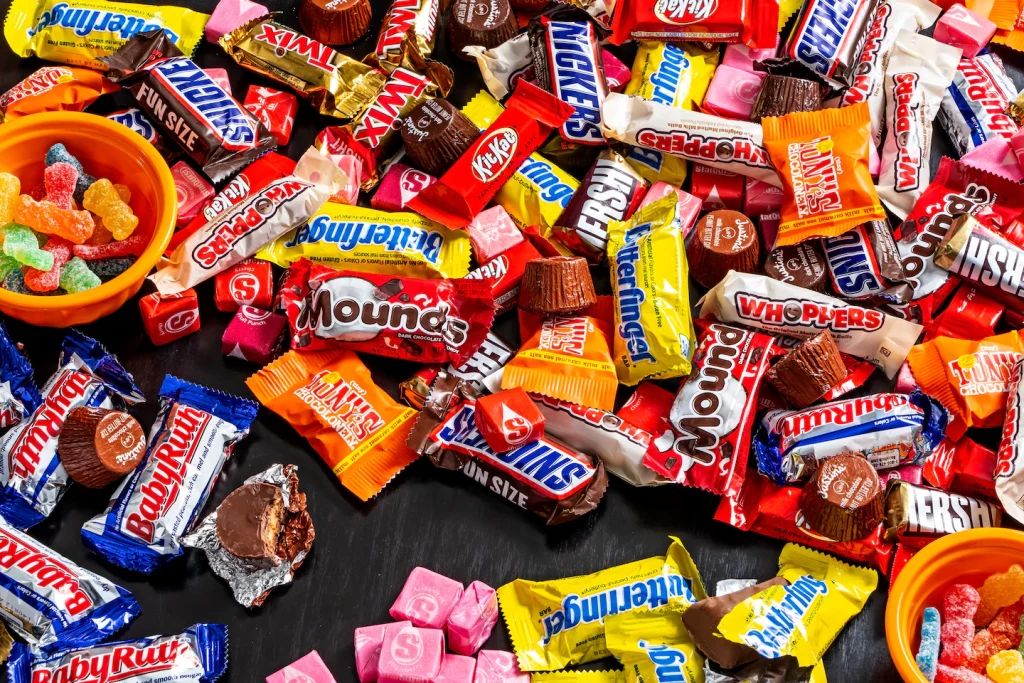
The treat bag is where Halloween in Canada feels most distinct. Canadian trick-or-treaters expect Nestlé Canada favourites such as Coffee Crisp, Aero bars, Kit Kat and Smarties. Canadian Smarties are chocolate-filled, candy-coated pieces, which is very different from the chalky sugar tablets sold under the same name in the United States. Many Canadian families also rank chocolate bars above hard candy when sorting the haul at the kitchen table.
Halloween Traditions in the US: Reese’s, Snickers and the Candy Corn Debate
In the US, Hershey’s and Mars dominate the bowl. Reese’s Peanut Butter Cups, Snickers, M&M’s and Skittles regularly top fan-favourite lists. Then there is candy corn, a tricolour sweet that Americans either love or love to argue about. Even when brand names match across the border, recipes and package sizes often differ, so each country’s treat bag has its own flavour.
Halloween Traditions in Europe: Seasonal Baking Over Wrapped Candy
Europe leans on seasonal baking rather than wrapped candy. In Ireland, barmbrack, a fruit loaf traditionally baked with a ring or another small charm hidden inside, is a Halloween staple. In Catalonia, families celebrate La Castanyada with roasted chestnuts and panellets, small almond sweets. In Italy, almond biscuits known as fave dei morti are eaten around November 2. In Portugal, children traditionally ask for bread and sweets on November 1 in a custom called Pão-por-Deus.
Difference 3: Weather and Costumes
Halloween in Canada comes with a built-in plot twist: the weather. In many regions, especially across the Prairies and in Atlantic Canada, October 31 can bring freezing temperatures, rain or even early snow. Kids frequently wear costumes over snowsuits or pick designs that fit over a puffy jacket, and parents get creative with winter-proof outfits. That is why you will see a lot of very bulky superheroes.
In much of the US, from Florida to Southern California, children can trick-or-treat in mild weather, which gives costume choices more freedom. Costume culture is also bigger, with movie franchises, video games and viral trends shaping what everyone wears. Teens and adults treat Halloween as a full-scale dress-up event.
In Europe, costumes often appear at parties, bars and school events rather than on the street. Adult costume nights are popular in cities such as Berlin, Madrid and London, while children in Scotland and Ireland follow the older tradition of guising, performing a song, joke or poem to earn their treats. In both North America and Europe, communities increasingly encourage costumes that avoid stereotypes of cultures and identities.
Difference 4: Trick-or-Treating, Safety and Giving Back
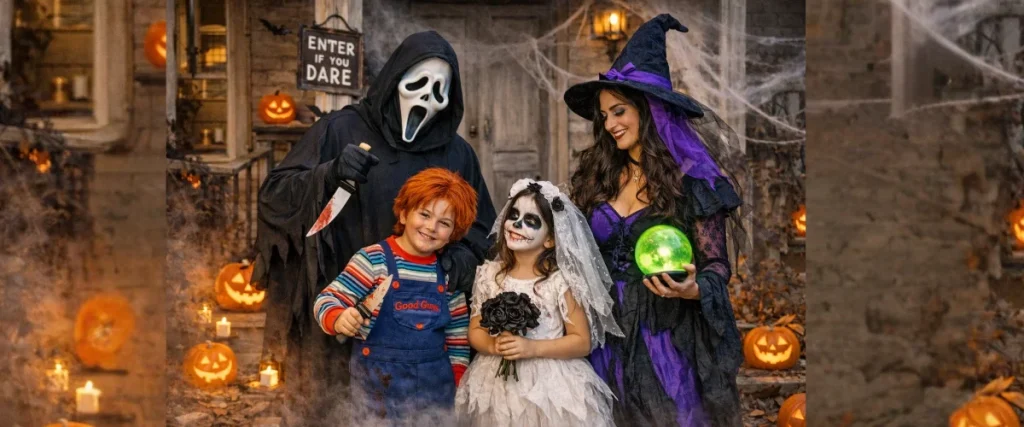
Trick-or-treating is the heart of Halloween in Canada and the US. One of the earliest printed uses of the phrase “trick or treat” appears in a 1927 Alberta newspaper, and the practice has been a childhood ritual on both sides of the border ever since. Canadian Halloween traditions follow the same unwritten rule as in the US: porch light on means welcome, porch light off means move along.
Giving back has long been part of the night as well. The idea of collecting coins for UNICEF began in the United States in 1950, and in Canada the bright orange collection boxes became a familiar part of childhood for decades. You can learn more about that work at UNICEF Canada. Today, safety gets more attention than ever: reflective tape, glow sticks, group trick-or-treating and allergy-friendly options. The Teal Pumpkin Project, promoted by Food Allergy Research & Education, encourages homes to offer non-food treats such as stickers, and the idea has spread widely across North America. Another growing trend is trunk-or-treat, where families hand out candy from decorated car trunks in a parking lot, a popular option in both countries when weather or neighbourhood layout makes door-to-door difficult.
In much of Europe, door-to-door trick-or-treating is less established. It exists and is growing in the UK and Ireland, but in many other countries knocking on a stranger’s door for sweets is still unusual, and neighbours may not be expecting it.
Difference 5: Remembrance, Public Holidays and Local Rituals
Here the gap is widest. Neither Canada nor the US treats Halloween as a public holiday. Across much of Europe, however, November 1 is All Saints’ Day, a public holiday in countries including France, Italy, Spain, Poland, Austria, Belgium and Portugal. Families visit cemeteries to honour the dead with candles and flowers.
In Poland, cemeteries glow with thousands of candles on the evening of November 1, a breathtaking and deeply moving sight. In France, chrysanthemums are placed on graves, which is why many French people associate the flower with mourning rather than celebration. In Germany, All Saints’ Day is a public holiday in several states, and Reformation Day on October 31 is a holiday in a number of others.
This is why Halloween traditions in Europe can feel quieter and more reflective than the party-focused celebrations of North America. In many countries, the emotional weight of the season lands on November 1 and 2, not on October 31. Halloween in Canada and the US, by contrast, is a night of fun, community and playful fear.
Difference 6: Haunted Attractions and Festivals Worth Travelling For
If you want to experience the season in person, each region has its own headline events:
- Canada: Halloween in Canada has spooky destinations of its own, including the Ghost Train at Stanley Park in Vancouver, The Haunted Walk tours in Ottawa and the Legends of Horror event at Casa Loma in Toronto.
- United States: Salem, Massachusetts, with its witch-trial history, hosts a month-long Haunted Happenings celebration. Sleepy Hollow in New York, the Village Halloween Parade in New York City and the big theme-park events such as Halloween Horror Nights are also major draws.
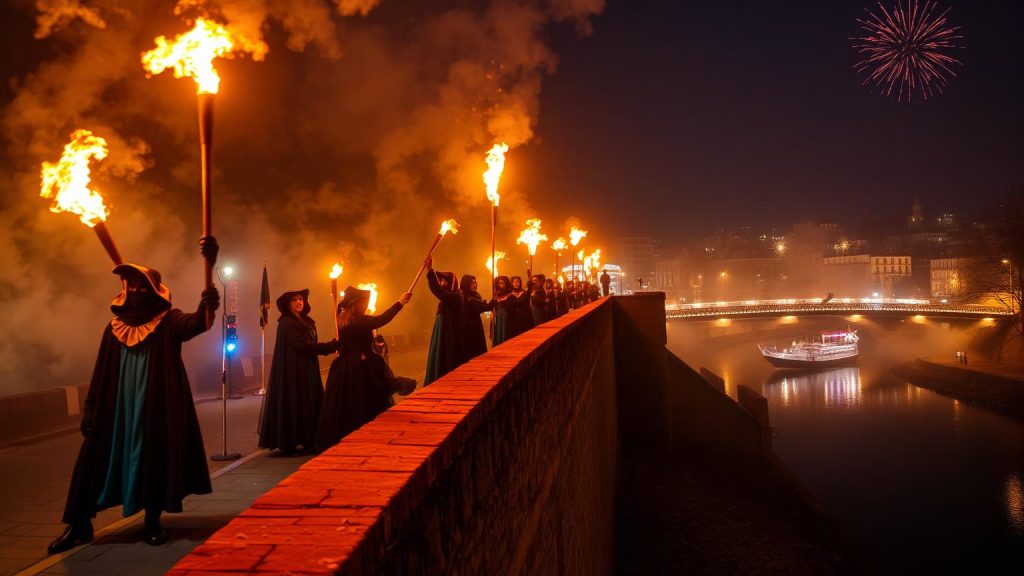
- Europe: Derry in Northern Ireland hosts one of the largest Halloween festivals in Europe. Find details at Derry Halloween. Ireland’s Púca Festival, Edinburgh’s Samhuinn fire festival, Halloween events around Bran Castle in Transylvania and Burg Frankenstein in Germany round out a very atmospheric list.
Difference 7: Competing Celebrations on the Calendar
October 31 does not exist in isolation. In Canada, Thanksgiving comes first, so pumpkin season is split between turkey dinners and jack-o’-lanterns. Halloween in Canada also has to compete with early snow in some regions, which can reshape plans overnight.
In the UK, Bonfire Night on November 5, also known as Guy Fawkes Night, keeps fireworks and bonfires in the spotlight, and many British children look forward to it just as much as Halloween. In Germany and the Netherlands, St. Martin’s lantern processions on November 11 bring children out with paper lanterns. Meanwhile, in both Canada and the US, Mexico’s Día de los Muertos has gained wider recognition each year, adding another meaningful layer to early-November traditions.
Halloween in Canada vs the US vs Europe: Quick Comparison Table
| Feature | Canada | United States | Europe |
|---|---|---|---|
| Overall scale | Big, neighbourhood-focused | Largest spending and décor | Smaller but growing |
| Typical weather | Cold, possible rain or snow | Varies, often milder | Cool and damp |
| Signature treats | Coffee Crisp, Aero, Smarties | Reese’s, Snickers, candy corn | Barmbrack, panellets, fave dei morti |
| Trick-or-treating | Very common | Very common | Varies by country |
| Public holiday | No | No | November 1 in many countries |
| Main mood | Fun and community | Spectacle and fun | Fun plus remembrance |
Frequently Asked Questions About Halloween in Canada
Is Halloween in Canada celebrated the same way as in the US?
Mostly, yes. Both countries share trick-or-treating, jack-o’-lanterns and costume parties. The main differences are the candy selection, the colder weather and the generally smaller scale of Canadian displays and spending.
Is Halloween a public holiday in Canada?
No. Halloween is not a statutory holiday in any Canadian province or territory. Schools and workplaces usually operate as normal, although many hold costume days and parties.
Do people celebrate Halloween in Europe?
Yes, and the celebration is growing, especially in the UK and Ireland. In many other countries, the focus remains on All Saints’ Day and All Souls’ Day, with Halloween parties adding a modern layer.
Which country celebrates Halloween the most?
By spending and spectacle, the United States leads. By origin and ancient roots, Ireland is the birthplace of the tradition.
Final Thoughts: Why Halloween in Canada, the US and Europe Is So Different
Halloween in Canada, the US and Europe may share the same date and the same ancient roots, but each place has shaped the night in its own way. Canada brings snowsuit superheroes and chocolate bars you will not find elsewhere. The United States turns the season into a full-scale spectacle. Europe blends modern parties with centuries of remembrance, candlelight and folklore.
The best way to understand these differences is to experience them. Whether you are carving a pumpkin in Calgary, watching a parade in New York or lighting a candle in Kraków, you are part of a story that began thousands of years ago.
Which version of Halloween do you love most? Tell us in the comments, and share this guide with a friend who loves spooky season.
Related Articles on IMFounder
- All About Halloween: History, Meaning & Best Places to Celebrate
- Top 10 Best Places to Go for Valentine’s Day in the USA
- Top Digital Gifts You Can Buy Instantly on Christmas Eve
- Christmas Eve Planning: Best Last-Minute Ideas for Families
- Most Popular Holiday Drinks in North America
- Top 7 Last-Minute Holiday Destinations for Canadians