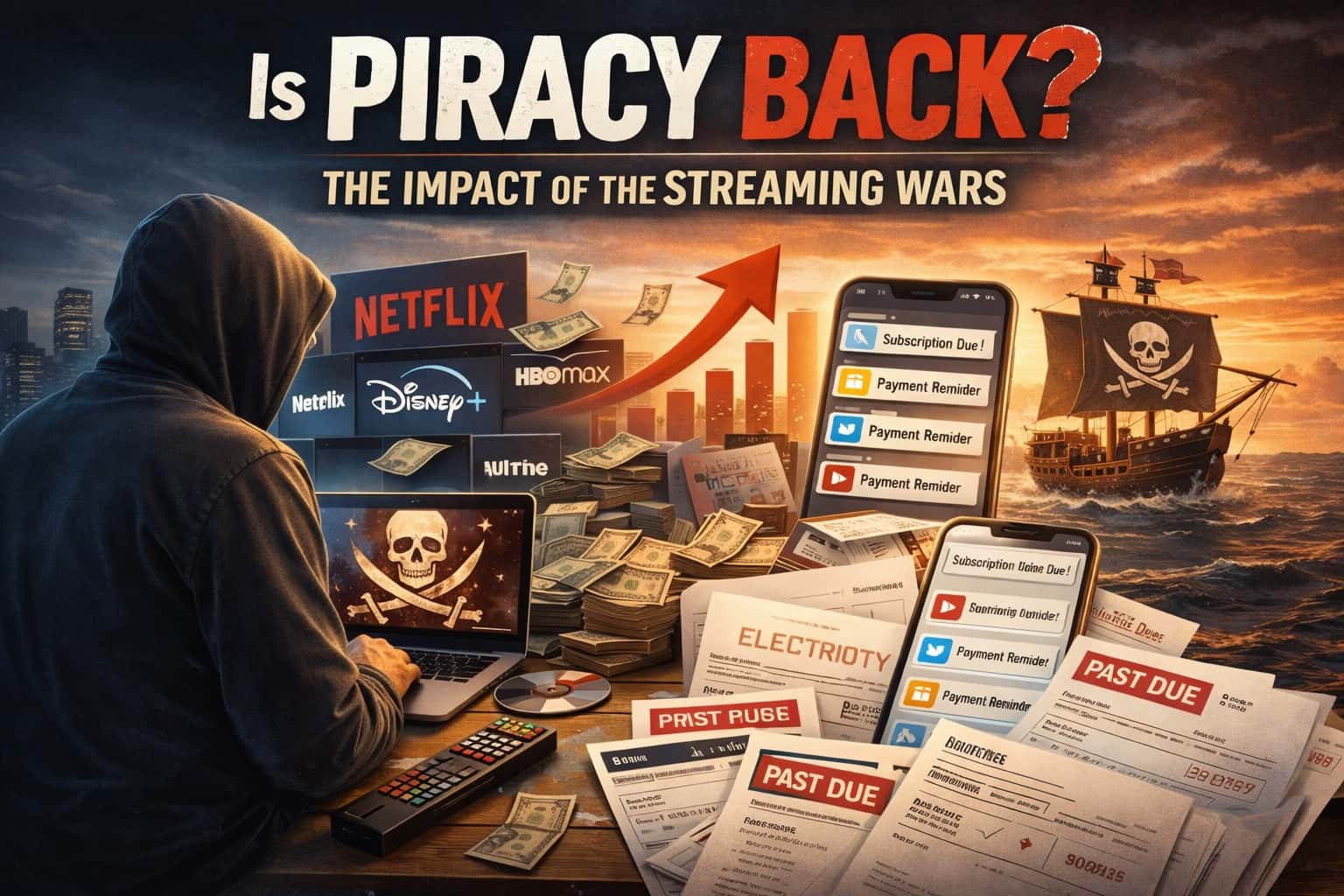

In recent years, digital streaming was hailed as the definitive solution to media piracy. Consumers abandoned DVDs, torrents, and illegal downloads in favor of legal on-demand subscriptions that offered convenience and quality. However, the proliferation of streaming services, rising subscription costs, and market fragmentation have unintentionally created conditions that are driving piracy back into mainstream viewership behavior.
Fragmentation of Streaming Services: A Root Cause
The era of streaming began with a simple offering like Netflix, where a single subscription meant access to a vast library of movies and shows. Today, however, that landscape has radically shifted. Global video streaming markets are booming—valued at hundreds of billions of dollars and expected to surpass $800 billion by the end of 2025—but the number of platforms has exploded alongside them.Tech Between the Lines
This “streaming war” means movies, series, and sports events are now segregated across dozens of competing services. Exclusive licensing deals force content that once lived under one roof into scattered silos: Netflix, Disney+, Amazon Prime Video, HBO Max, Paramount+, Peacock, and many regional platforms all hold pieces of the entertainment pie. Consumers chasing their favorite shows across platforms face subscription fatigue, a growing sense of overwhelm and frustration at managing so many services.Forbes
Rising Costs: From One Subscription to Many
The financial burden of streaming services has grown significantly. In the early 2010s, a subscription to Netflix or a similar service could cost below $10 per month. Today, even basic ad-supported tiers of major platforms often cost more, and premium or ad-free tiers reach $15–$20+ per service. A combined monthly spend on just a handful of services can easily exceed $50–$70, and for consumers subscribing to four or more platforms, totals above $100 per month are not uncommon.TV Tech+1
Streaming Subscription Cost Comparison (Example)
| Subscription Era | Typical Monthly Cost for Main Services | Total for Multiple Services (Example) |
|---|---|---|
| 2015–2018 | Netflix ~$9.99; Hulu ~$7.99 | ~$18–$25 |
| 2025 (Example) | Netflix ~$17.99; Disney+ ~$18.99; HBO ~$18.49; Prime included with ads | ~$70+ average household spend per month (varies by region) New York Post |
By comparison, cable bills once averaged similar amounts; but unlike cable, which bundled hundreds of channels in one plan, streaming services charge separately for content that now lives in isolated apps. This shift has turned streaming into a subscription zoo, where costs can be unpredictable and hard to manage alongside everyday bills such as rent, utilities, groceries, and mobile data.
Subscription Fatigue and Managing Multiple Bills
Consumers report that the cumulative nature of streaming bills has become stressful and difficult to track. Many feel compelled to set calendar reminders or budgeting alerts to avoid missed payments among streaming services, credit cards, rent, or utility bills. This increasing cognitive load—balancing multiple monthly charges contributes to frustration and a reevaluation of the value these services provide.
When subscribers begin to cancel, pause, rotate, or churn between services to chase content, the perceived convenience of streaming diminishes further. In such scenarios, the appeal of pirated content which offers everything in one place and at no cost—becomes easier to rationalize for some users.
Data Shows Piracy Remains Significant
Data shows piracy remains significant not only in emerging markets but also across developed economies such as Canada, the United States, the U.K., and Australia. Industry tracking firms consistently report that North America and Western Europe together account for a substantial share of global piracy traffic, with the U.S. alone ranking among the top sources of visits to piracy websites worldwide despite having the highest availability of legal streaming platforms. Studies indicate that a large majority of pirated content accessed in these regions is premium video—movies and TV shows originally released on OTT platforms—often driven by exclusive licensing, delayed releases, or paywalled content spread across multiple services. In the U.K. and Australia, regulators and industry bodies have acknowledged recurring spikes in piracy around major sports events and popular series launches, while Canadian data similarly shows sustained demand for pirated streaming despite widespread broadband access and legal alternatives. Collectively, these trends confirm that piracy is not a regional or income-driven issue alone, but a structural response to fragmented access, rising subscription costs, and declining convenience in mature streaming markets.
Piracy Site Visits by Country (2024)
United States | ██████████████████████ 26.7B
India | ████████████████ 17.6B
Russia | ██████████████ 15.4B
Indonesia | ███████████ 12.1B
Vietnam | ████████ 7.4B
Turkey | ███████ 5.9B
Canada | ███████ 5.8B
U.K. | ███████ 5.8B
France | ██████ 5.6B
Source: 2024 Piracy Trends and Insights (MUSO Analytics) 6347345.fs1.hubspotusercontent-na1.net
Chart: Growth of Global Video Piracy Visits vs. Rise of Streaming Subscriptions
| Year | Estimated Global Video Piracy Visits (Billions) | Approx. Number of Streaming Subscriptions Worldwide | Notes / Context |
|---|---|---|---|
| 2019 | ~125B | ~1.1B subscribers | Early streaming growth phase. |
| 2020 | ~130B | ~1.1B | Piracy still high despite growing legal options. |
| 2022 | ~182B* | ~1.3B | Streaming fragmentation increases. |
| 2023 | ~216B** | ~1.5B | Most pirated TV show The Last of Us driven by access issues. torrentfreak.com+1 |
| 2024 | ~216.3B | ~1.8B | Piracy continues strong; TV & film piracy remains dominant. Electro IQ+1 |
* Estimated from industry trends.
** Data from multiple piracy reports showing continued annual increases.
Industry data suggests that piracy costs content creators and streaming services billions in potential annual revenue, with some platforms reporting up to 25 percent of earnings lost to unauthorized sharing and illegal distribution.exchange4media
Why Piracy Is Resurgent
The resurgence of piracy today is not simply because people want free content; it stems from a complex set of economic and structural factors:
- Content Fragmentation: Consumers must subscribe to multiple services to watch various shows, which increases cumulative costs.AlixPartners
- Rising Prices: Subscription fees have increased significantly over the last decade, making total monthly spend comparable to or higher than traditional cable bills.New York Post
- Subscription Fatigue: Managing multiple platforms requires effort and planning, which adds cognitive and financial stress for users.
- Convenience and Aggregation: Pirated platforms often provide all desired content in one place, eliminating the need to juggle multiple accounts.
What Industry Leaders Suggest
Experts and industry analysts increasingly acknowledge that simpler pricing models, flexible licensing, and bundled offerings could improve the value proposition for consumers. Reducing fragmentation and lowering barriers to access might help lure viewers back toward legal platforms and away from pirate alternatives.Forbes
Conclusion
Piracy is not simply a relic of the early internet; it has returned in a modern form driven by the streaming wars, high cumulative costs, and the organisational burden of multiple services. For streaming providers, the challenge ahead is to rethink pricing, packaging, and user experience to counter piracy not through enforcement alone, but through accessibility and economic value.