
Introduction: The Most Powerful Feature Is the One You Never Build
In startup culture, we glorize speed. We celebrate roadmaps packed with features, product updates, and constant shipping. But after building multiple platforms from e-commerce to social media, I learned a counterintuitive truth that every serious founder eventually faces:
Saying no to features is more important than shipping fast.
This article is not theory. It’s a founder’s case study—drawn directly from my own journey of building, scaling, and shutting down products. If you’re working on a SaaS, marketplace, app, or social platform, this may save you months—or years—of wasted effort.
Why Most Startups Build Too Much, Too Early
The early-stage startup mindset is simple: If we add more features, more people will join. If more people join, growth will follow.
In reality, the opposite often happens.
Every new feature introduces:
- Complexity for users
- Technical debt for developers
- Slower release cycles
- More surface area for bugs
- Higher maintenance costs
Instead of moving faster, the product becomes heavier. Instead of clarity, users face confusion. And instead of product-market fit, founders end up managing a feature factory.
I learned this the hard way.
My First Lesson in Focus: The Accidental Success of MacSlatch

When I first wanted to start a company, I didn’t have a polished business plan. I spent years exploring ideas, technologies, and business models, trying to understand where I truly fit as a founder.
My original ambition was to build a niche social media platform. But before I could get there, I wanted to understand how real products were built and scaled.
That curiosity led me to OpenCart, an open-source e-commerce platform. I was experimenting with tech, not trying to launch a business.
Then I noticed something important.
At that time, India didn’t have a dedicated online store exclusively for Apple products. So instead of building a generic e-commerce platform with thousands of categories, I did the opposite.
I built MacSlatch—focused on one brand, one audience, and one clear problem.
The Result
- Within 12 months, MacSlatch was outperforming major e-commerce platforms in the Apple product category.
- In certain segments, it even surpassed Flipkart (India’s equivalent of Amazon).
We didn’t win because we had more features.
We won because we had focus.
Looking back, this was my first real lesson in what not to build. I just didn’t recognize it at the time.
When I Did the Opposite—and Paid for It
After two years, I returned to my original dream: building a social platform.
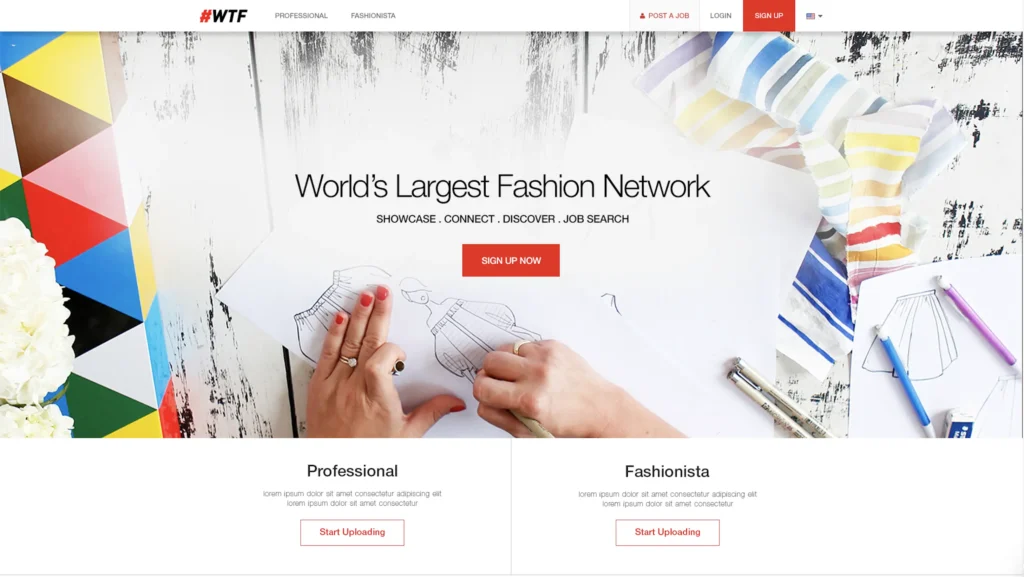
I launched WeTheFashion (#WTF) a fashion-focused social media network for creators, designers, and fashionista’s. We launched it publicly at a fashion event, with strong branding and international ambitions.
This time, I wasn’t trying to stay small.
I was trying to compete with Instagram and LinkedIn.
So I built like they did.
Over the next three years, I invested heavily in:
- Advanced user profiles
- Discovery systems
- Upload and feed algorithms
- Engagement tools
- Social networking features
- Performance and scalability layers
- 75+ user data points
Feature by feature, the platform became more powerful.
But it didn’t become more successful.
The Dangerous Illusion of Progress
After 16–24 months, the numbers looked respectable:
- Hundreds of active users
- Thousands of uploads
- Showcased WeTheFashion on world’s biggest startup platforms in Hong Kong, India, Singapore, Thailand, and Japan
On the surface, it felt like momentum.
But underneath, something was wrong.
I was investing nearly 10 times more into development than into growth and distribution.
Every feature felt like progress. Every release felt like a win.
But none of them solved the real problem:
People didn’t need more tools. They needed a reason to care.
Social platforms don’t grow because they’re well-engineered. They grow because they create network effects, identity, and emotional pull.
I was building infrastructure for a city that didn’t yet have citizens.
Eventually, financial reality forced a hard decision.
I shut the platform down.
Not because the idea was bad.
But because I had built something too complex for its stage of life.
The Core Insight: Product-Market Fit Beats Product Completeness
Founders often confuse these two concepts:
- Product completeness: The product has many features.
- Product-market fit: The product solves a painful problem for a specific group of people.
Only one of them matters in the early stage.
A simple product with strong pull will outgrow a powerful product with weak demand—every single time.
How to Decide What NOT to Build: A Founder’s Framework
Here is the decision system I use today before approving any feature, no matter how good the idea sounds.
1. The Pain Test
Ask:
Does this solve my user’s #1 problem or just make the product feel more impressive?
If it doesn’t remove real pain, it’s not a priority.
2. The Behavior Test
Ask:
Are users already trying to solve this problem in a workaround way?
If they’re not hacking a solution themselves, the pain may not be strong enough to justify building.
3. The Growth Test
Ask:
Will this feature directly improve acquisition, retention, or revenue in the next 90 days?
If it won’t move at least one of these metrics, it belongs in the backlog—not the sprint.
4. The Simplicity Test
Ask:
Can I solve this with 50% less functionality and still deliver 80% of the value?
Most features are overdesigned before they’re even built. I over-engineered the platform and flooded with features.
Why Saying No Makes You Faster, Not Slower
Every “yes” comes with hidden costs:
- More engineering hours
- Longer QA cycles
- More user support
- Higher infrastructure bills
- Increased cognitive load for users
Every “no” gives you:
- Faster releases
- Cleaner UX
- Clearer positioning
- Stronger brand identity
- Better product-market fit
- And you can save lot, and I mean lot of money.
MacSlatch scaled because it said no to everything that wasn’t Apple.
WeTheFashion struggled because it tried to say yes to everything social media and fashion tech could be.
The Founder’s Real Job
Your job is not to build the most advanced platform in your market.
Your job is to:
- Identify a small group of people with a painful problem
- Solve it better than anyone else
- Let growth pull features out of you—not the other way around
Practical Takeaways You Can Apply This Week
If you’re building right now, do this exercise:
- List your next 10 planned features
- Circle the two that directly impact growth, retention, or revenue
- Pause or kill the other eight
You’ll move faster within 30 days.
You’ll learn more from the market within 60.
And you’ll be closer to product-market fit within 90.
Final Thoughts: Learn From My Overbuilding
I didn’t lose WeTheFashion because the idea failed. I’ve learned that building isn’t just about adding more, it’s about knowing when to stop, breathe, and trust what already exists. As a tech mind, my instinct is to create endlessly, to chase every problem with a new solution, every idea with another feature. But life, and entrepreneurship, taught me a different rhythm.
This isn’t a lesson you read in a book or pick up from a podcast. You have to live it. You have to stand at the crossroads where you realize you could invest the same money in gold, silver, or stocks and maybe make millions faster. Yet, if you are a true entrepreneur, money is never the destination, it’s just the fuel. The vision is the journey.
Along the way, you also learn something humbling: you can’t be good at everything. Some people are born to build, to code, to design. Others are meant to sell, to speak, to open doors you didn’t even know existed. And no matter how strong you are alone, there comes a moment when you need a partner, someone who completes the parts of you that don’t. If you’re lucky, you find that person before the weight of doing it all by yourself becomes too heavy to carry.
I remember pouring every last drop of my resources into WeTheFashion. I took a job not to build a career, but to keep the dream alive. And along the way, I learned that this path doesn’t only test your wallet, it tests your body, your mind, and your heart.
In the end, you don’t build companies. You build yourself through them. And whatever stands at the finish line is shaped by who you became along the way.
If you remember one line from this article, make it this:
A focused product grows. A feature-rich product waits.
Build less. Listen more. Let your users design the roadmap.
If this article saves you even a few months of development, it has done its job.