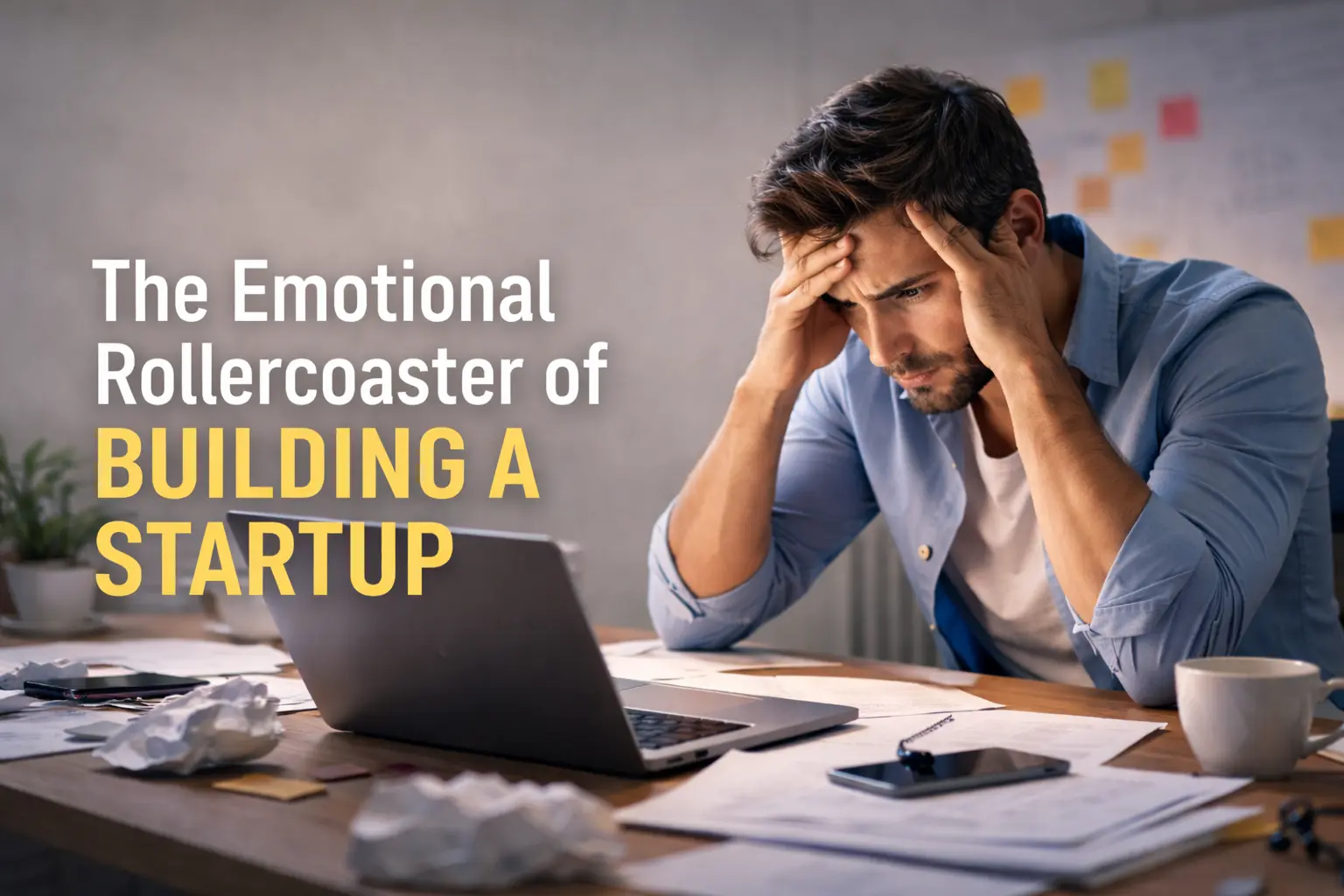

Introduction: The Part of Startup Life No One Posts About
Building a startup is often portrayed as an exciting journey—pitch decks, product launches, funding announcements, and growth charts moving up and to the right. What rarely makes it to LinkedIn or investor blogs is the emotional reality behind the scenes.
The truth is simple but uncomfortable: building a startup is emotionally exhausting. It’s a constant cycle of hope, fear, confidence, doubt, momentum, and burnout—sometimes all within the same day.
And while founders openly discuss product strategy, fundraising, and growth metrics, mental health remains one of the most under-discussed yet critical factors in startup success.
The Hidden Emotional Stages of a Startup
Most founders experience similar emotional patterns, regardless of industry or geography.
1. The Excitement Phase: “This Will Change Everything”
It starts with an idea—fresh, powerful, and full of promise. Energy is high. Sleep feels optional. Every conversation feels like validation.
This phase fuels early momentum, but it’s also emotionally deceptive. It creates unrealistic expectations about speed, ease, and outcomes.
2. The Reality Check: “Why Is This So Hard?”
Then reality hits.
- Users don’t convert
- Features break
- Investors don’t respond
- Team members leave
- Cash starts shrinking
This is where self-doubt enters quietly. Founders begin questioning their competence, their idea, and sometimes themselves.
3. The Isolation Phase: “No One Really Understands”
Even with a team, founders often feel deeply alone.
You can’t share everything with employees.
You can’t show weakness to investors.
Friends and family may not understand the pressure.
This emotional isolation is one of the most damaging aspects of startup life—and one of the least talked about.
4. The Survival Phase: “Just Don’t Let This Die”
At this stage, decision-making becomes reactive instead of strategic. Stress clouds judgment. Founders operate in constant “firefighting mode.”
This is where mental health directly affects business outcomes.
Poor sleep leads to poor decisions.
Chronic stress reduces creativity.
Emotional fatigue increases risk aversion or impulsive choices.
Why Founder Mental Health Impacts Decision Quality
Startup decisions are not made in a vacuum. They are made by humans under pressure.
When a founder is emotionally exhausted:
- Risk assessment becomes distorted
- Long-term thinking weakens
- Communication quality drops
- Leadership empathy declines
This doesn’t just affect the founder—it affects the entire company.
A mentally strained founder may:
- Overbuild unnecessary features
- Avoid hard conversations
- Chase the wrong metrics
- Delay critical pivots
Mental clarity is a competitive advantage.
Why This Is Rarely Discussed Openly
There are three main reasons founders avoid this topic:
- Fear of appearing weak
- Cultural glorification of hustle and burnout
- Lack of safe spaces to talk honestly
The startup ecosystem rewards confidence, not vulnerability. But suppressing emotional strain doesn’t eliminate it—it compounds it.
How Founders Can Handle the Emotional Rollercoaster
This isn’t about toxic positivity or “just pushing through.” It’s about sustainable leadership.
1. Normalize the Experience
Feeling overwhelmed doesn’t mean you’re failing. It means you’re building something hard.
Understanding that emotional turbulence is part of the process reduces self-blame.
2. Separate Identity from Outcome
Your startup’s performance is not your personal worth.
This mental separation protects decision quality and long-term resilience.
3. Build a Founder Support Circle
Not advisors. Not employees. Other founders.
People who understand the pressure without explanation are invaluable for mental stability.
4. Protect Cognitive Health
Sleep, boundaries, and downtime are not luxuries—they are operational necessities.
A burned-out founder is a business liability.
5. Talk Before It Becomes Heavy
Mental strain doesn’t suddenly appear—it accumulates.
Talking early prevents emotional overload that leads to shutdown or poor decisions.
The Real Measure of a Strong Founder
Strength in startups isn’t about pretending everything is fine.
It’s about maintaining clarity under pressure.
The best founders are not emotionally immune—they are emotionally aware.
They recognize that:
- Mental health affects leadership
- Leadership affects execution
- Execution determines outcomes
Final Thoughts: The Quiet Truth of Startup Success
Almost every founder feels this emotional rollercoaster.
Almost no one talks about it openly.
But the startups that survive—and the founders who last—are the ones who treat mental health as part of the business strategy, not a personal afterthought.
Taking care of your mind is not stepping away from the startup.
It’s protecting its most critical asset.