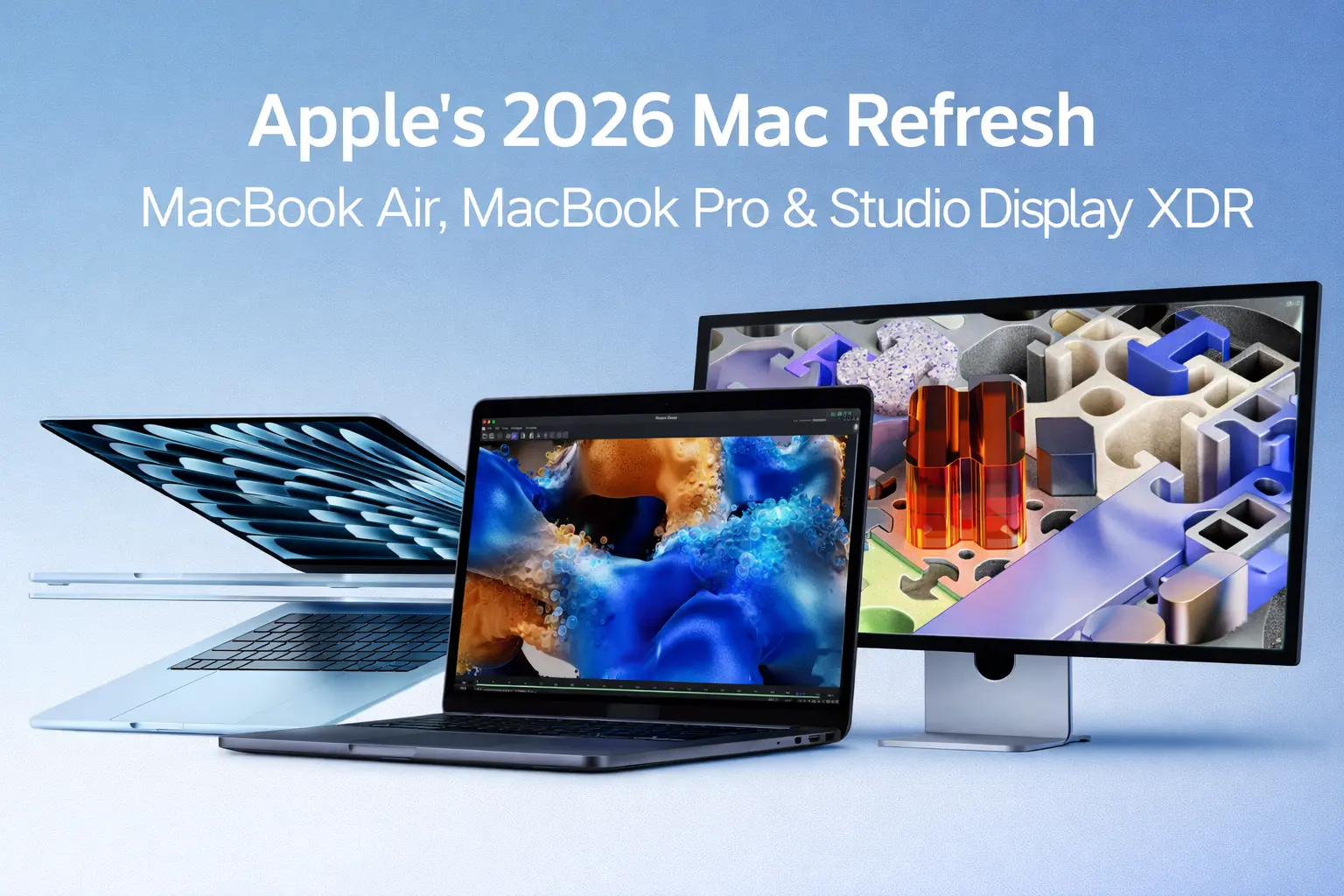

Apple has officially taken the wraps off the 2026 updates to its laptop and desktop ecosystem: a refreshed MacBook Air, an upgraded MacBook Pro lineup, and a reimagined Studio Display XDR alongside the regular Studio Display. Coming to stores March 11th after March 4th pre-orders, these products push performance and features forward — but for most buyers, the big question isn’t just what’s new — it’s is it worth upgrading?
💻 What’s New in the 2026 MacBook Air
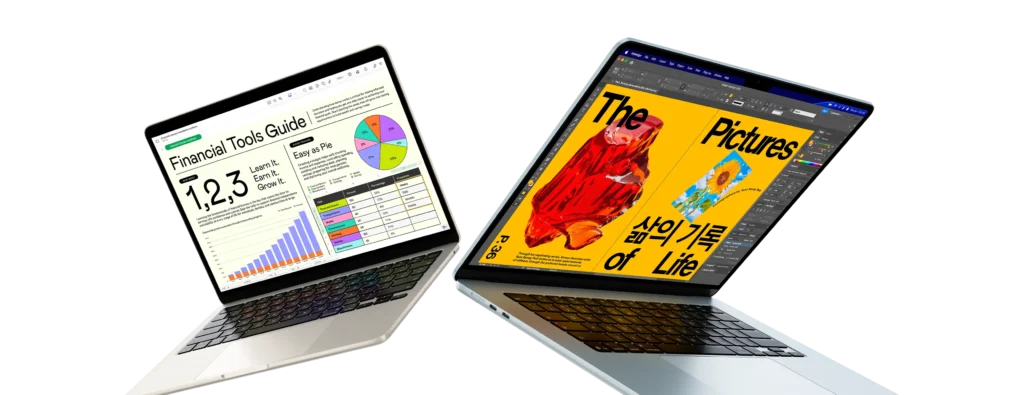
The MacBook Air gets its first major refresh in the M-series era with the Apple M5 chip, offering improved performance and efficiency over the prior M4 generation. Here’s what’s standard in the 2026 Air:
- M5 System-on-Chip with up to 10-core CPU and 10-core GPU
- 512 GB base storage — double last generation’s entry level
- Support for Wi-Fi 7 and Bluetooth 6
- Faster SSD with up to 2× read/write speeds compared to the previous model
- Larger 15.3-inch Liquid Retina option alongside 13.6-inch
- Unified memory options up to 32 GB
- MagSafe 3, two Thunderbolt 4 ports, and improved webcam & speakers
📊 Price (USA):
- 13-inch – $1,099
- 15-inch – $1,299
(Education pricing slightly lower)
📊 Price (Canada):
- 13-inch – ~$1,499 CAD entry
- 15-inch – ~$1,799 CAD entry
(Configurations increase with RAM/SSD)
What’s new vs M4?
The jump to M5 brings more cores, faster storage, and next-gen wireless — but the design remains familiar. The real benefit is a modest performance uplift and significantly more storage out of the box.
🔥 Upgraded MacBook Pro with M5 Pro & M5 Max
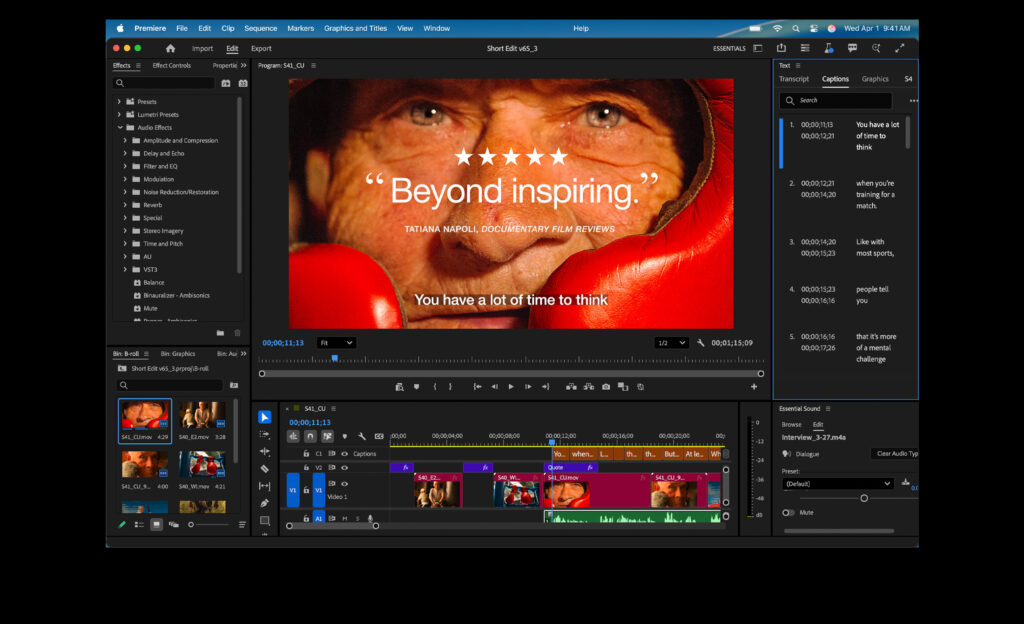
The MacBook Pro saw its most meaningful update in chip performance. Apple’s Pro and Max silicon now power the 14″ and 16″ MacBook Pros:
- M5 Pro with up to 18 CPU cores and 20 GPU cores
- M5 Max with up to 40 GPU cores — ideal for heavy creative workflows
- 1 TB base storage on all models (was 512 GB)
- Enhanced multitasking, media encoding, and AI acceleration

📊 Price (USA):
- 14″ base – $1,699
- 14″ M5 Pro – $2,199
- 14″ M5 Max – $3,599
- 16″ models go up correspondingly (up to ~$3,899)
📊 Price (Canada):
Canadian pricing typically runs ~30–40 % higher: expect ~$2,049 CAD and up for base models, with flagship Max configurations nearing $4,000 CAD+ depending on options.
Upgrade takeaway:
These Pro models are clearly targeted at power users — video editors, 3D artists, software developers, and creative pros. You will see real gains in CPU and GPU-intensive tasks compared to older M-series chips. For lighter users or students, they’re overkill.
🖥️ What’s New: Studio Display & Studio Display XDR
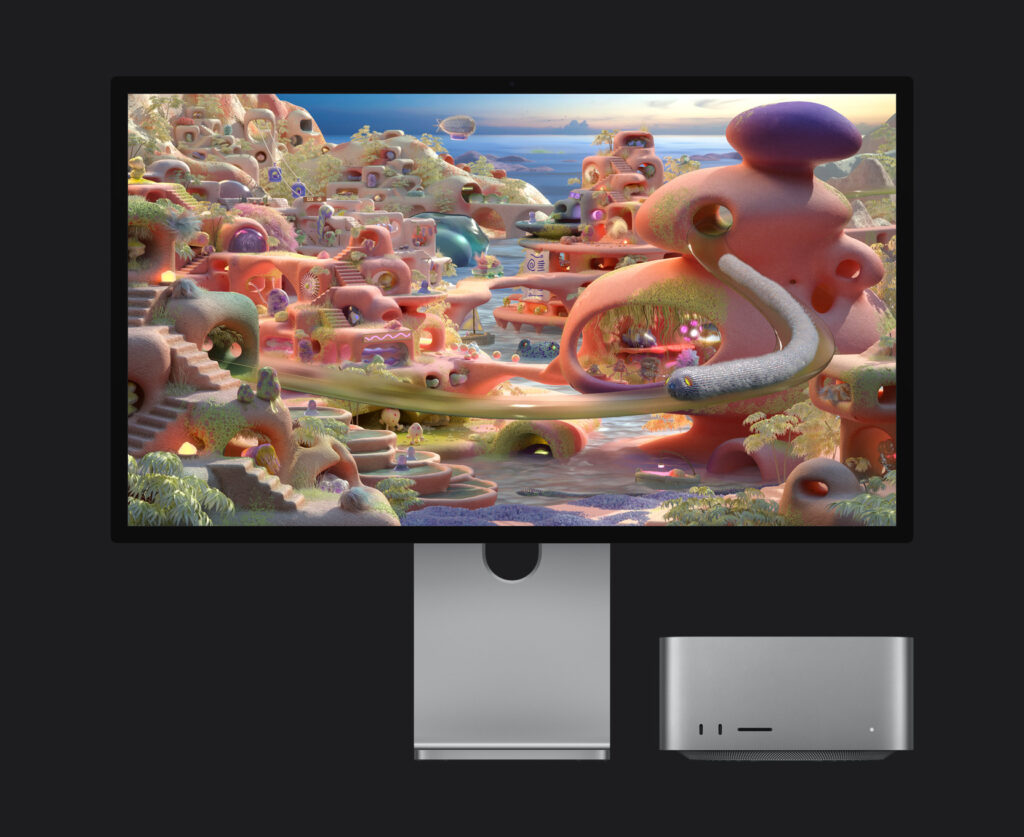
Apple updated its standalone displays with better connectivity and a whole new premium model:
Standard Studio Display (2026):
- 27″ 5K Retina display
- 12 MP Center Stage camera with Desk View
- Six-speaker Spatial Audio system
- Thunderbolt 5 ports with up to 96 W host charging
- 60 Hz refresh rate
Studio Display XDR: The flagship pro model adds:

- Mini-LED backlight with over 2,300 dimming zones
- 1,000 nits SDR / 2,000 nits HDR peak brightness
- 120 Hz refresh rate + Adaptive Sync
- Adobe RGB & P3 wide color gamuts
- Enhanced HDR & reference-grade tuning
- Up to 140 W charging onboard
📊 Display Pricing (USA):
- Studio Display – $1,599
- Studio Display XDR – $3,299
📊 Display Pricing (Canada):
- Studio Display ~$1,999 CAD+
- Studio Display XDR ~$4,099 CAD+ (with stand)
Should you consider the XDR?
For pro photo, video, design, or color-critical work, the XDR’s high brightness, adaptive refresh, and advanced color accuracy matter. For everyone else, it’s an expensive luxury when excellent monitors from other makers cost a fraction of that price.
🧠 Should You Upgrade Or Stick With M4/M-Series?
For Everyday Users
If your current device is a recent M4 or even M3 MacBook Air/Pro, the generational performance improvements in M5 and storage boosts are nice to have — but not transformative. Browsing, email, productivity tools, and light creative work run smoothly on older Macs; upgrading now is optional, not essential.
For Power Users & Creators
The M5 Pro / Max MacBook Pros deliver meaningful performance gains in video editing, 3D rendering, AI workflows, and multicore tasks. If you need faster compile times, creative app throughput, or larger unified memory, the upgrade can be justified.
For Studio Display Buyers
Unless you need professional-grade HDR and high refresh rates for your workflow, the standard Studio Display offers excellent clarity and convenience. The XDR makes sense when display performance directly impacts your work output — otherwise, it’s a premium niche investment.
📌 Final Verdict
Apple’s 2026 Mac refresh is evolutionary, not revolutionary. The M5 MacBook Air is a sensible update with more storage and a better chip, while the Pro version is a meaningful performance leap for creators and pros. The Studio Display XDR finally pushes Apple displays into true pro territory, but mainstream users won’t need the premium tier.
Our recommendation:
- Everyday users — stick with your current Mac or wait for the next big redesign.
- Creators/pros — consider the Pro/Max chips and XDR display where performance directly ties to productivity.
- Value-seekers — evaluate alternatives or consider refurbished older M-series devices for better cost-per-performance.