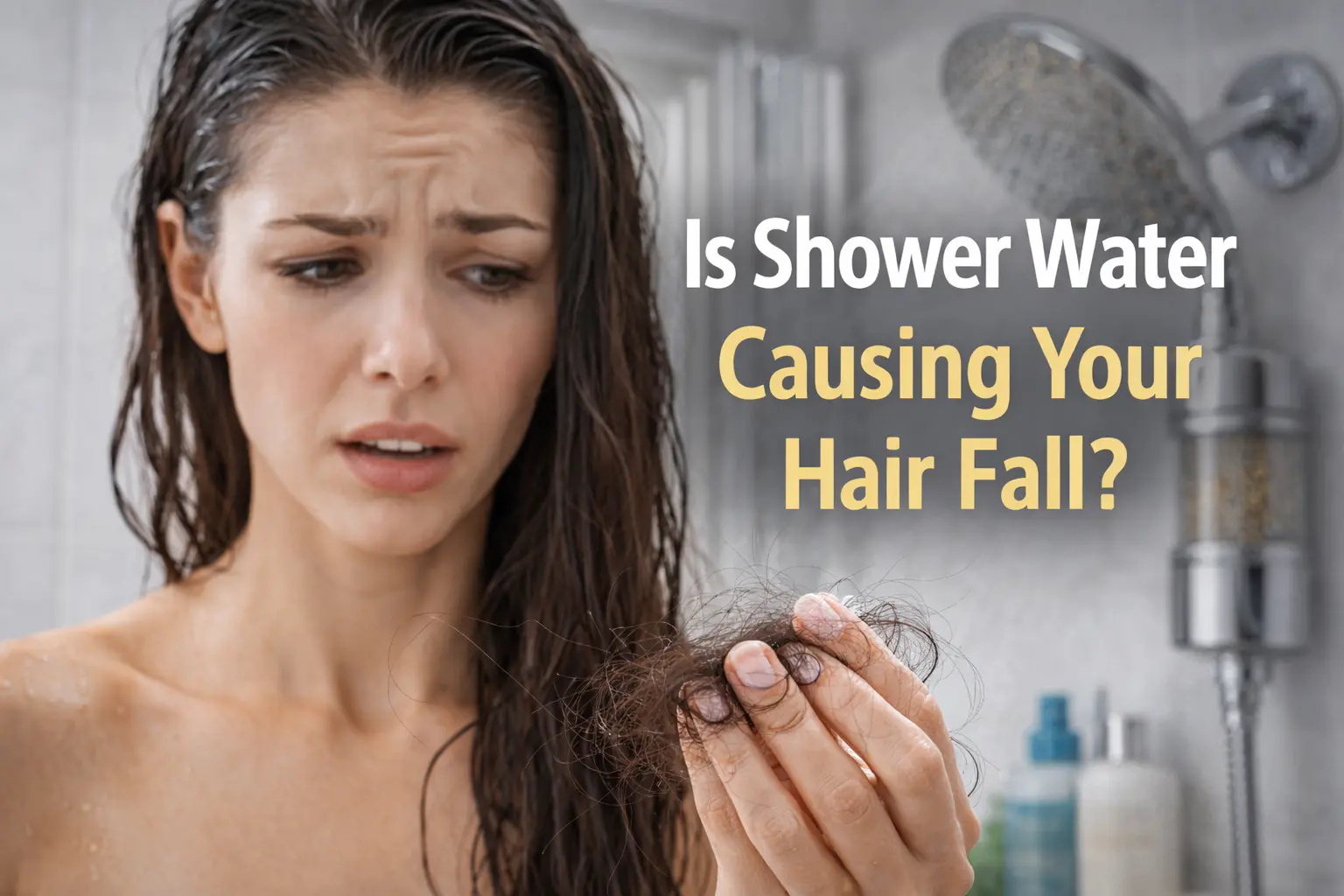

1. Hair Loss Prevalence: A Big Public Health Concern
Hair loss and thinning affect millions of people worldwide:
- In the United States, about 80 million people experience noticeable hair loss due to various causes such as genetics, hormonal changes, nutritional deficiencies, and stress. Approximately 50 million men and 30 million women experience androgenetic hair loss specifically. (dermatologytimes.com)
- In Canada, male pattern baldness affects around 50 % of men, with most showing signs by middle age; about 40 % of women will experience thinning by age 50. Alopecia areata — a distinct form of hair loss — affects an estimated 775,000 Canadians at some point. (CSPA)
In comparison, losing 50–100 hairs per day is normal due to the hair growth cycle. Only when shedding increases beyond this daily rate, or thinning becomes visible, does it become clinically significant. (AAD)
2. Does Shower Water Cause Hair Loss? (Short Answer)
No — shower water by itself does not directly cause classic hair loss (like male pattern balding or alopecia areata).
However, the quality of your water, particularly hard water, can indirectly contribute to hair weakening, dryness, scalp irritation, and visible breakage — which are often mistaken for hair loss.
What Is Hard Water?
- Water with higher levels of calcium and magnesium is classified as hard water.
- Up to 85 % of U.S. households receive hard water from municipal supplies. (cleanwatercenter.com)
- Many Canadian regions (e.g., parts of Ontario and Alberta) also have moderately to very hard water. (superhairpieces.ca)
Hard water doesn’t cause hair to stop growing at the follicle. Instead, mineral residues accumulate on the hair shaft and scalp, affecting hair health and texture — making strands more brittle, rough, and prone to breakage. (VeraClinic)
3. How Hard Water & Shower Conditions Affect Hair
a) Mineral Build-Up & Breakage
Minerals like calcium and magnesium can form a film on your scalp and hair shaft:
- They reduce the ability of hair to retain moisture, leading to dryness and brittleness. (Nioxin)
- Mineral buildup can also react with shampoo, creating residue (soap scum) that weighs hair down and makes it feel less clean. (Nioxin)
These changes can make hair more fragile and increase visible shedding during and after washing, but this is breakage— not actual follicle death.
b) Scalp Irritation
Hard water residues can disturb the scalp’s natural oils and pH balance:
- This can lead to itchiness, flaking, and inflammation — all of which can stress hair follicles over time. (VeraClinic)
c) Hot Water & Hair Health
Very hot water strips natural scalp oils more aggressively than lukewarm water, aggravating dryness and making hair prone to breakage.
4. Common Causes of Hair Fall (Beyond Water Quality)
Water quality is only one of many factors. The most significant causes include:
Genetic & Hormonal Causes
- Androgenetic alopecia (pattern hair loss) is the most common form, affecting millions of adults in North America. (dermatologytimes.com)
Stress & Emotional Factors
- Stress triggers a condition called telogen effluvium, where hair prematurely enters the shedding phase. (AAD)
Nutritional Deficiencies
- Low iron, vitamin D deficiency (especially in areas with limited sunlight), and poor protein intake can compromise hair strength.
Medical Conditions & Medications
- Autoimmune diseases (e.g., alopecia areata) and certain medications can cause significant hair loss. (Wikipedia)
Styling & Mechanical Damage
- Over-styling, tight hairstyles, and frequent heat can break hair and weaken follicles over time.
5. Preventing Hair Fall in the Shower — Effective Practices
a) Water Quality & Filtration
1. Shower Filters
- Shower filters with multi-stage filtration (activated carbon, KDF, vitamin C blocks) can reduce mineral content and chlorine exposure. (pioxal)
2. Whole-Home Water Softeners
- Installing a water softener system treats all household water, reducing calcium/magnesium that contribute to hardness.
3. Final Rinse Technique
- Rinse hair with filtered or bottled water after showering to remove residual minerals on the hair and scalp. (Pigment Skin & Hair Clinic)
4. Chelating or Clarifying Shampoos
- Weekly use of chelating shampoos helps remove mineral buildup that standard shampoos don’t eliminate. (VeraClinic)
b) Hair Washing Habits
- Use lukewarm water instead of hot water to preserve natural oils.
- Avoid daily shampooing if hair becomes dry — over-washing strips protective oils.
- After shampooing, follow with conditioner to lock in moisture.
c) Scalp & Hair Care
- Gentle scalp massage increases circulation and may support follicle health.
- Avoid vigorous brushing when wet, as hair is more vulnerable to breakage in this state.
- Maintain a diet rich in protein, omega-3 fatty acids, iron, zinc, and vitamins (especially D and B vitamins).
6. Technology & Products for Hair Protection
Water Treatment & Shower Tech
- Advanced Shower Filters – Multi-stage filters for chlorine and mineral reduction. (pioxal)
- Water Softeners & Conditioners – Whole-home systems that reduce water hardness before it reaches taps.
Hair Care Products
- Chelating Shampoos – Designed to remove mineral buildup.
- Moisture-Rich Conditioners – Formulated to counteract dryness caused by hard water.
- pH-Balanced Cleansers – Help maintain scalp health after washing.
- Scalp Serums & Growth Topicals – Formulations containing ingredients like minoxidil (clinically proven for pattern hair loss).
7. Summary & Professional Takeaways
Shower water quality — particularly hard water — can worsen hair breakage and scalp irritation, which may look like hair fall. However:
- It doesn’t directly cause permanent hair loss from the scalp.
- Most clinically significant hair loss has genetic, hormonal, medical, nutritional, or stress-related origins.
- Improving water quality and shower routines can reduce hair breakage and enhance overall hair strength.
If hair thinning becomes noticeable (beyond normal shedding), a dermatologist can help distinguish between breakage and actual follicular hair loss, and recommend clinically proven treatments. The combination of lifestyle, water quality management, and targeted hair care offers the best pathway to healthier hair.