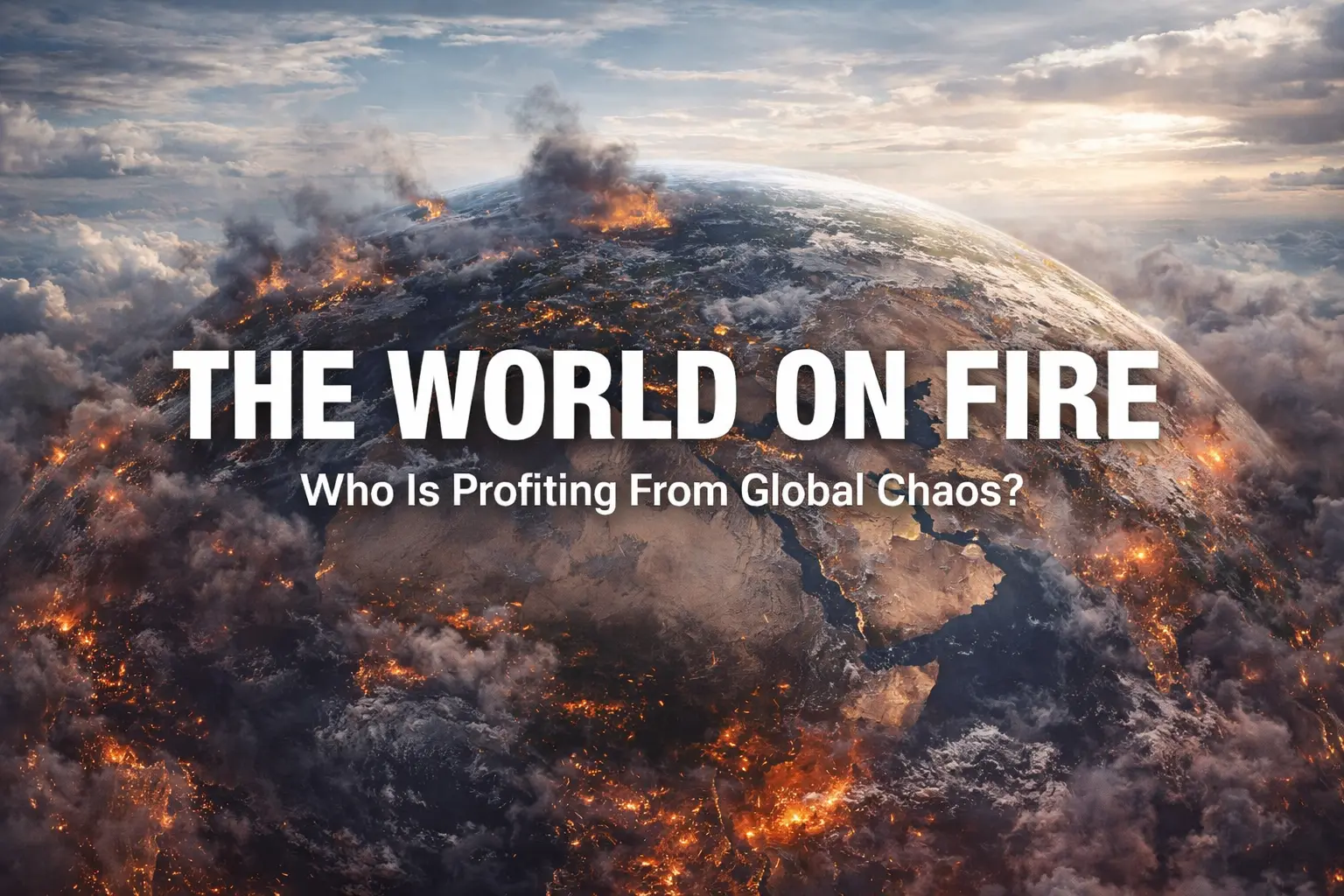

From Iran’s historic crisis to Ukraine, Pakistan, Sudan, and beyond — the world has been in near-constant turmoil since COVID-19. Here’s what’s really happening, who’s paying, and when it might end.
It started with a virus. By 2020, COVID-19 had shattered the global economy, killed millions, and exposed how fragile our interconnected world really is. Most assumed that once the pandemic faded, normalcy would return. It never did. Instead, the world stumbled from one crisis into another — Ukraine, Gaza, Iran, Sudan, Myanmar — in a cascade that shows no sign of stopping.
For ordinary Canadians and Americans, the question is no longer abstract. It shows up in grocery bills, heating costs, and tax dollars spent on foreign aid and defense. The world has been on fire since 2020. Here is why — and what it means for you.
🇮🇷 Iran
● Critical — Escalating
Khamenei killed Feb 28, 2026. U.S.-Israeli strikes. Strait of Hormuz disrupted.
🇷🇺 Russia / Ukraine
● Active — Year 5
1.1M+ Russian casualties. Peace talks stalled. Ukraine’s power grid near collapse.
🇵🇰 Pakistan / Afghanistan
● Volatile
Cross-border strikes. TTP terrorism. Pakistan on edge of economic collapse.
🇸🇩 Sudan
● Humanitarian Crisis
Tens of thousands dead. UN calls it one of the worst disasters on earth.
🇲🇲 Myanmar
● Civil War
Multi-front conflict since 2021 coup. 50%+ population below poverty line.
🇻🇪 Venezuela / 🇲🇽 Mexico
● Unstable
Maduro reportedly captured Jan 2026. Mexico under severe cartel control.
Iran Update — March 2026 The Conflict That Could Reshape the Middle East
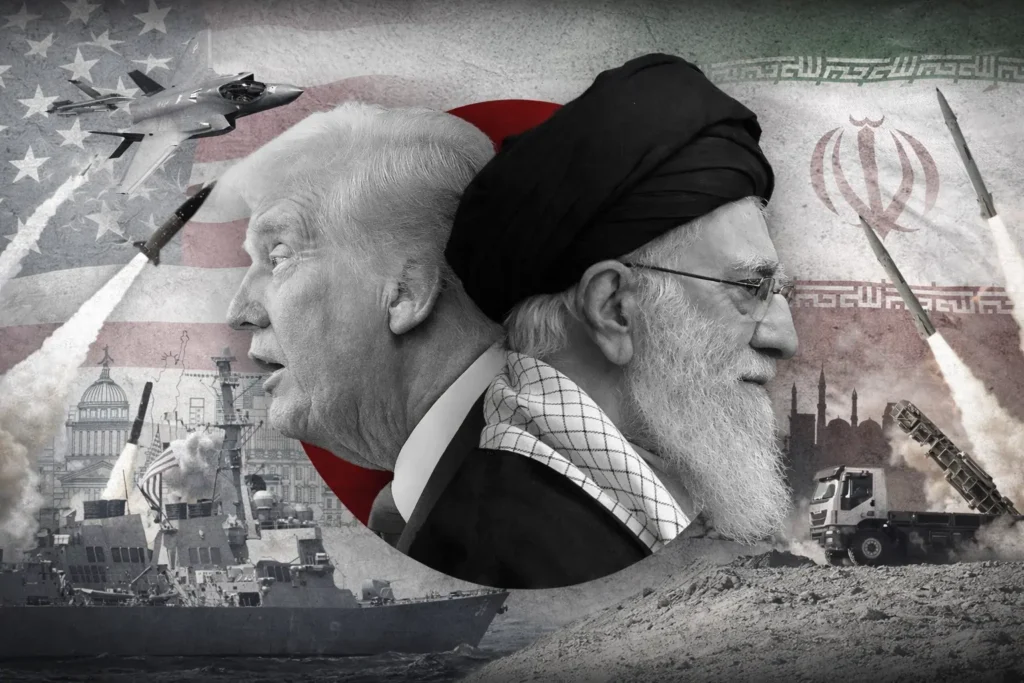
No situation in the world today carries higher stakes than the U.S.-Israel-Iran confrontation. What began as a nuclear standoff has exploded into direct military action with global consequences.
In June 2025, Israel launched the “Twelve-Day War” — targeted strikes on Iran’s nuclear and military infrastructure. Iran retaliated with drone and missile barrages against Israeli and American targets. A ceasefire was reached — but resolved nothing.
Inside Iran, economic collapse accelerated a domestic crisis that had been building for years. The Iranian rial hit 1.34 million to one U.S. dollar. Inflation reached 60 percent. The World Bank projected economic contraction through 2026. Mass protests erupted in all 31 provinces in late 2025 — and the regime’s crackdown was brutal. Human rights organizations estimate between 3,000 and 43,000 protesters killed. Over 26,000 arrested.
“On February 28, 2026, the United States and Israel launched a second wave of strikes on Iran. Supreme Leader Ali Khamenei was killed. Iran declared 40 days of mourning and vowed revenge.”
The Strait of Hormuz — through which roughly 20 percent of the world’s oil supply passes — is now severely disrupted. Global energy markets are in turmoil. Shipping giants like Hapag-Lloyd have suspended Strait transits. Every gas pump in North America will feel this.
Iran: Key Numbers
- 1.34 million Iranian rial = 1 U.S. dollar (currency collapse)
- ~60% annual inflation projected for 2026
- 26,541+ protesters arrested during 2025–26 crackdowns
- 20% of global oil supply passes through the Strait of Hormuz
- Khamenei had ruled Iran since 1989 — 37 years of supreme leadership ended Feb 28, 2026
The critical unknown: who leads Iran next? The IRGC, reformists, hardliners, and a battered pro-democracy movement are all jockeying for power. What comes next could be more dangerous than what preceded it.
Russia – Ukraine: A War Without an Ending
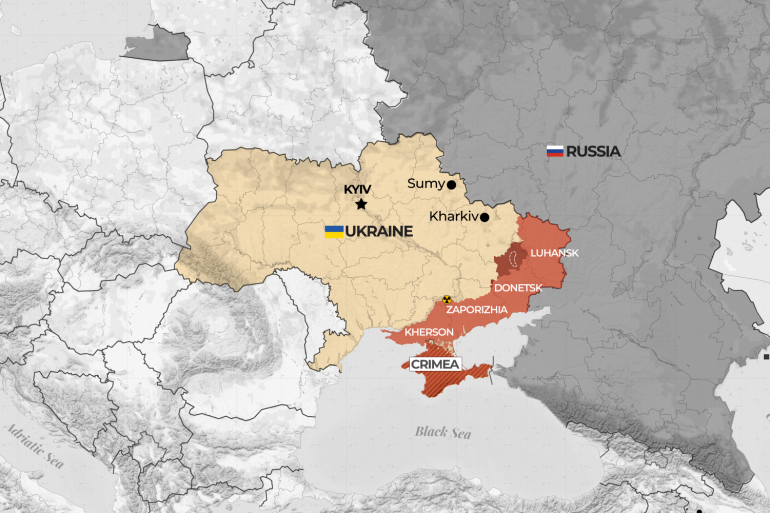
Now in its fifth year, Russia’s invasion of Ukraine grinds on with horrifying persistence. Russia has suffered over 1.1 million military casualties, according to former CIA Director William Burns. Ukraine’s toll is estimated between 400,000 and 600,000. Russia controls roughly 20 percent of Ukrainian territory.
Ukraine’s electrical grid is near collapse — available power generation has fallen from 33.7 gigawatts before the war to approximately 14 gigawatts by early 2026. Parts of the country endure multi-day blackouts in winter. Russia launched over 1,500 drones and missiles in a single week in late February alone.
Peace talks remain stalled. The fundamental gap — Ukraine demanding territorial integrity, Russia insisting on keeping its gains — has not closed. For Canadians and Americans, billions in taxpayer dollars have flowed to Ukraine’s defense. The debate over how long that continues is intensifying.
Other Flashpoints: Pakistan, Sudan, Myanmar, Venezuela
🇵🇰 Pakistan and 🇦🇫 Afghanistan are locked in a low-grade border war. Pakistan has launched cross-border strikes against Taliban-harbored terrorist groups (the TTP). Kabul condemns them. Pakistan’s economy is in crisis, requiring repeated IMF bailouts. Both countries possess nuclear weapons. This is one of the most underreported dangers on earth.
🇸🇩 Sudan is experiencing what the United Nations calls one of the worst humanitarian disasters alive today. Tens of thousands dead, millions displaced, famine spreading along the South Sudan border.
🇲🇲 Myanmar has been in multi-front civil war since the 2021 coup. Over half the population lives below the poverty line. The country is fragmenting.
🇻🇪 Venezuela made headlines in January 2026 when President Nicolas Maduro was reportedly captured in a U.S. operation. Mexico faces record-level cartel violence. Both crises are sending refugee waves northward — with direct implications for U.S. and Canadian border policy.
The Uncomfortable Truth: Who Is Really Profiting From Global Instability?
Here is a fact that deserves more attention than it receives: since COVID-19 struck, while ordinary households faced inflation, wage stagnation, and rising costs, corporate profits reached historic highs — across nearly every sector.
53% of U.S. inflation in Q2–Q3 2023 driven by corporate profit markups
(Groundwork Collaborative)
50%+ of European inflation post-Ukraine driven by corporate profits
(IMF Analysis)
11% historical share of inflation from profits over prior 40 years — before 2020
COVID provided cover to raise prices citing disrupted supply chains. Ukraine provided cover to raise energy prices citing geopolitical risk. The Iran crisis and Strait of Hormuz disruptions now provide fresh cover for another round of increases. Each crisis handed corporations a new justification — and consumers paid at every turn.
“Consumer prices rose 3.4%. Input costs for producers rose 1%. The difference went straight to the bottom line — not to workers, not to consumers, but to shareholders.”— U.S. Bureau of Labor Statistics data, 2024
Defense contractors, energy companies, pharmaceutical firms, and consumer goods manufacturers have all posted record earnings during this era of cascading crisis. For the family in Mississauga or Minneapolis trying to afford groceries and rent, this is not an abstraction. It is every bill.
The Big Question: When Will the World Stabilize?
The most searched geopolitical question of 2026 is the hardest to answer. Here is an honest assessment:
Conflict Outlook: Near-Term Assessment
- Iran: Deeply uncertain. Post-Khamenei power struggle could last months or years. Risk of escalation remains very high through 2026.
- Ukraine: A negotiated ceasefire — not victory — is the most likely outcome. A durable peace agreement is unlikely before 2027 at the earliest.
- Pakistan/Afghanistan: No near-term resolution. Requires international investment in governance that no major power is currently willing to provide.
- Sudan/Myanmar: Both conflicts are in early-to-mid stages. Neither has a clear path to resolution in the next 12–24 months.
- Venezuela/Mexico: Political flux in Venezuela could either stabilize or worsen. Mexico’s security crisis will deepen before it improves.
History offers cautious reasons for hope. The Cold War — which once seemed permanent — ended within a generation. Russia’s war in Ukraine is grinding against the limits of Russian demographic and economic capacity. Iran’s young population has repeatedly demonstrated its desire for a different future. Economic pain eventually produces political change.
But “eventually” is cold comfort for families paying $300 for groceries that cost $180 five years ago.
North American Perspective: What Canadians and Americans Are Actually Getting
The strategic argument for Western involvement in these conflicts rests on a genuine principle: the rules-based international order — built after World War II — serves North American interests. When authoritarian powers go unchecked, the entire system weakens. The cost of containing aggression now is less than the cost of containing it later.
That argument is not without merit. A world where Russia successfully absorbs Ukraine changes the map of Europe. A nuclear-armed Iran changes the Middle East permanently. Chronic Strait of Hormuz disruptions mean permanently higher energy costs for every North American household.
But ordinary Canadians and Americans are entitled to ask harder questions. Why do defense budgets receive emergency supplemental funding while hospitals are understaffed? Why do oil companies report record profits in the same quarter consumers pay record prices at the pump? Why, after five years of cascading crises, have the wealthiest emerged wealthier while median real wages have barely budged?
These are not fringe questions. They are the questions of a citizenry that is paying for a world order it often cannot see the benefits of — and deserves honest answers about the costs.
Bottom LineThe Shape of What Comes Next
The world since 2020 has delivered a brutal education. COVID-19 exposed the fragility of supply chains and public health. The wars that followed have exposed the fragility of the rules-based order itself. None of these crises are unconnected — they feed each other, creating instability that empowers the next conflict’s accelerants.
For Canadians and Americans, the energy prices that make heating a home expensive in February are linked to decisions made in Washington, Tel Aviv, Moscow, and Tehran. The food prices that strain budgets are connected to disrupted supply chains, climate stress, and wars that tear up agricultural land.
The world is being remade. The question is not whether it will change, but what it changes into — and whether ordinary people have the agency to shape that change.
The world has been on fire since 2020. When it finally cools — and it will — the shape of what remains will depend on whether citizens demanded accountability, or simply paid the bill in silence.
Stay Ahead of the Story
Iran 2026Russia UkraineGeopoliticsGlobal InstabilityCorporate ProfitsPakistan AfghanistanSudanInflationKhameneiWorld War RiskNorth America EconomyPost COVID World
Sources: Groundwork Collaborative; IMF; Federal Reserve Bank of Kansas City; U.S. Bureau of Labor Statistics; Institute for the Study of War; Iran International; House of Commons Library; UNHCR; World Bank; UN Development Programme; Carnegie Endowment for International Peace; Foreign Affairs Magazine.