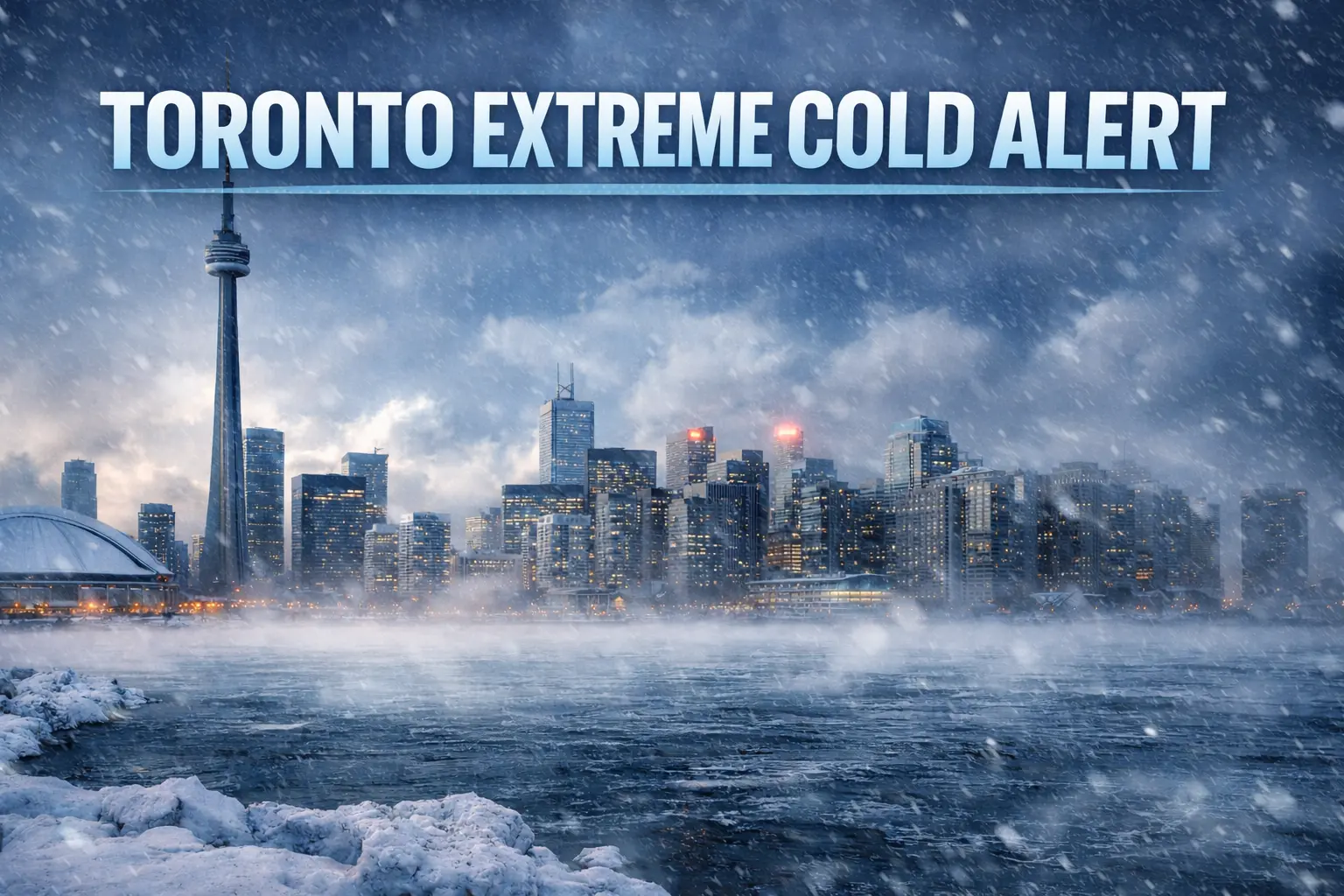

Toronto, Ontario — January 24, 2026 — Southern Ontario, including the Greater Toronto Area (GTA), is currently experiencing a significant cold snap combined with winter storm conditions that are impacting travel, daily life, and safety. Environment and Climate Change Canada (ECCC) has issued multiple weather alerts for extreme cold and accumulating snowfall, with wind chill values reaching dangerous lows this weekend.
Current Temperature and Forecast
- Temperatures across Toronto and the GTA remain well below seasonal averages, with wind chill values in the minus-30s Celsius expected through Saturday morning.
- Although earlier social media rumors circulated about temperatures as low as -50°C, meteorological data indicates that Toronto itself is forecast to see extreme cold in the range of −25°C to −33°C with wind chill, not the lowest on Earth. Much colder conditions near −45°C to −50°C are confined to parts of northwestern and central Ontario and the Prairies, not the city centre.
- These bitterly cold conditions are predicted to continue through the next few days, with a winter storm expected to bring 20-30 cm of snow on Sunday, creating low visibility and hazardous travel conditions.
Government and Public Sector Response
Federal, provincial, and municipal authorities have activated emergency and public safety measures to protect residents during this extreme cold event:
Environment Canada Alerts
- ECCC has issued Yellow and Orange weather warnings for the GTA and parts of Ontario, indicating both extreme cold and upcoming winter storm conditions.
City of Toronto Preparations
- The City of Toronto has winter services plans and warming centre activations in place that extend through extreme cold events. These plans increase shelter capacity and open dedicated warming centres for people experiencing homelessness when cold weather events are declared.
Public Health Advisories
- Health units across Ontario are urging residents to take precautions against frostbite and hypothermia. Officials recommend staying indoors where possible, keeping exposed skin covered, and checking on vulnerable people such as seniors and those without adequate housing.
Public Reaction and Preparations
Residents and local communities are adjusting to the ongoing cold and preparing for continued disruption:
Grocery Shopping and Home Readiness
- Many households in Toronto have increased grocery and supply shopping to reduce the need for travel during the harshest weather. Stocking up on essentials like food, water, medicine, and heating fuel is common ahead of anticipated severe conditions.
Power Outage Awareness and Preparations
- With winter storms often leading to utility disruptions, residents are preparing for possible power outages by keeping flashlights, blankets, battery-powered radios, and non-perishable food on hand. Utility providers such as Toronto Hydro are actively working to maintain service and restore any outages promptly.
- City guidance also recommends unplugging sensitive electronics and ensuring safe practices around backup heating equipment to reduce fire risks.
Transportation and Travel Adjustments
- Public transit riders and drivers are adapting to slower schedules due to snow and ice, while airports around the country, including Toronto Pearson and Billy Bishop, have reported weather-related delays and cancellations.
Risks and Public Safety Concerns
The combination of extreme cold and heavy snow poses several risks:
Health Effects of Cold Exposure
- Frostbite and hypothermia concerns are heightened when wind chill is below -30°C. Exposed skin can develop frostbite in minutes, with vulnerable groups at greatest risk.
Infrastructure Stress
- Prolonged cold can strain heating systems, lead to frozen water pipes, and increase energy demand. Utility companies may experience stress on infrastructure, requiring coordinated response efforts.
Travel and Mobility Hazards
- Snow accumulation and icy roads slow traffic and can cause closures or delays. Motorists are advised to exercise caution or avoid travel during peak storm periods.
Summary
Ontario, particularly the Toronto region, is in the midst of a significant winter weather event marked by extreme cold and an incoming snowstorm. Forecasts do not confirm record-setting Arctic lows of −50°C in Toronto proper, but dangerous wind chills near −30°C are expected through the weekend. Governments at all levels are issuing warnings, opening warming centres, and reinforcing public safety messaging, while residents are preparing by stocking essentials and adjusting travel plans. Continued vigilance and preparedness are essential as this winter weather persists.