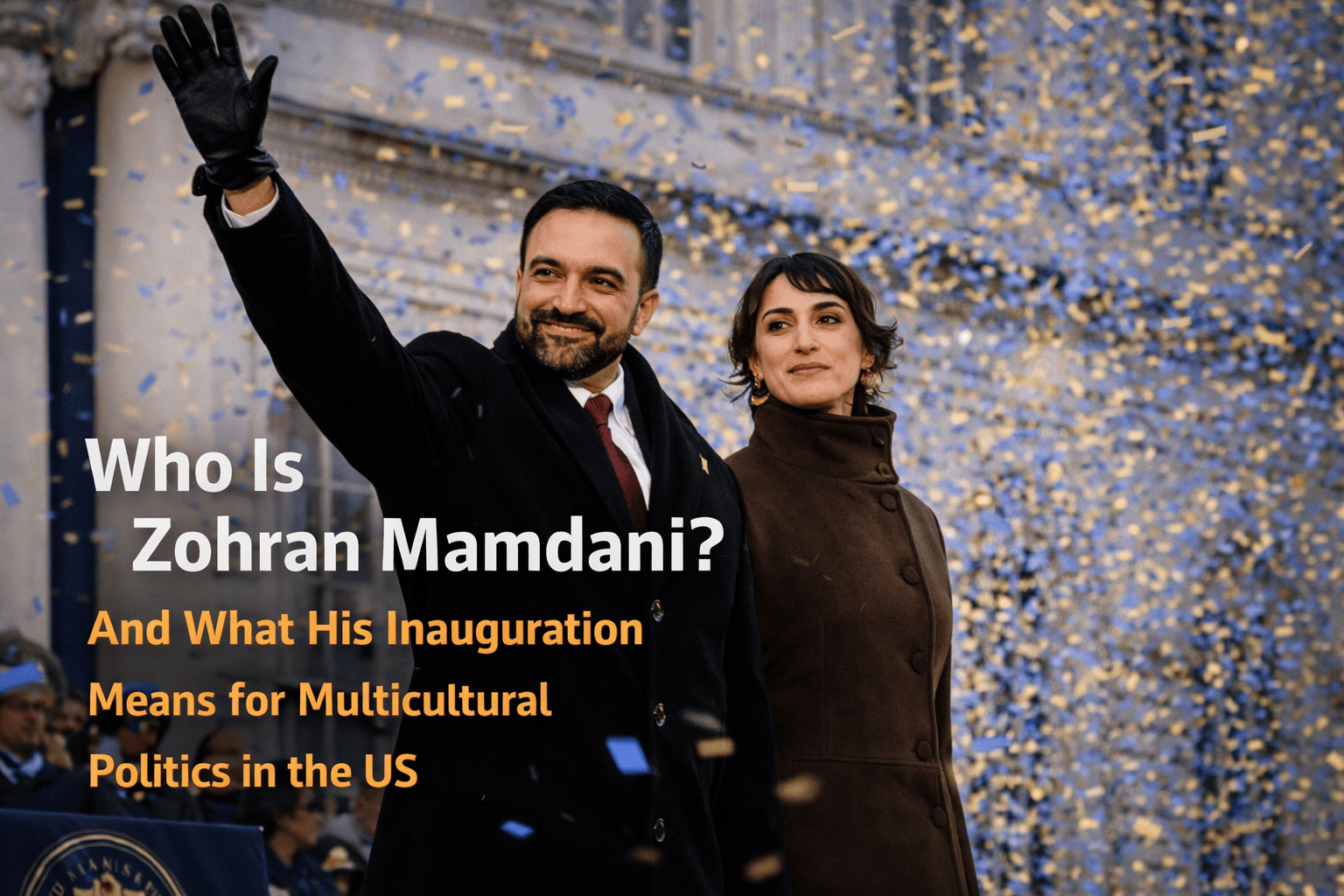

Zohran Kwame Mamdani made history on January 1, 2026, when he was sworn in as the Mayor of New York City, becoming a defining figure in American urban politics. His rise represents not just a political victory but a symbolic moment in a nation grappling with identity, representation, and the meaning of diversity in power. PBS+1
His background includes:
- Education in Africana studies
- Early work as a housing counselor
- Community organizing and political activism
A New Kind of Mayor in a Global City
At 34 years old, Mamdani is among the youngest mayors in New York City’s history. His background is emblematic of global migration and multicultural identity: born in Kampala, Uganda, to parents of Indian descent, he moved to the United States as a child and became a U.S. citizen in 2018. The Times of India
He is the first Muslim, first South Asian, and first African-born person to lead New York — the largest and most diverse city in the United States, home to millions of immigrants and communities from around the world. Anadolu Ajansı
Before becoming mayor, Mamdani served as a member of the New York State Assembly, building a reputation as a progressive Democrat with a focus on affordability, housing, and grassroots organizing. Insights Magazine
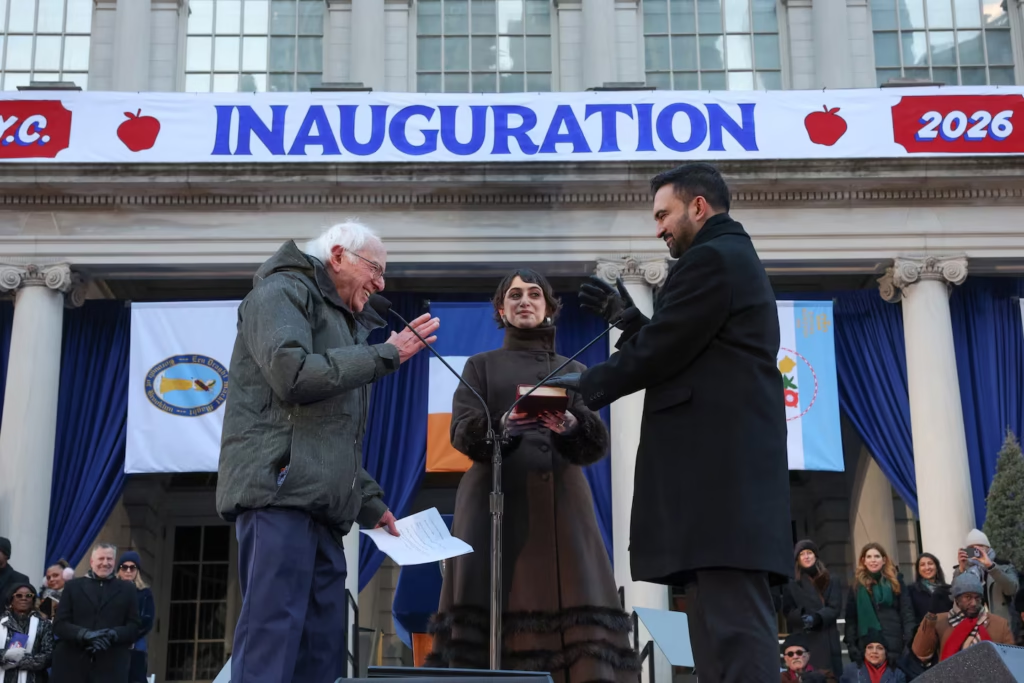
The Inauguration: Symbolism Over Ceremony
Rather than a conventional mayoral swearing-in staged solely for optics, Mamdani’s inauguration conveyed layered meaning about identity, inclusivity, and civic heritage.
Oath on the Quran
In a historic first for New York City, Mamdani chose to take his midnight oath of office on a Quran, using two copies — one belonging to his grandfather and a centuries-old edition from the New York Public Library’s Schomburg Center for Research in Black Culture. ABC7 New York
Most previous mayors used a Bible for the oath, though the constitution does not require any specific religious text. Mamdani’s choice was deliberate: it underscored the longstanding presence and contributions of Muslim communitiesin the city and acknowledged the faith of millions of New Yorkers. PBS
The historical Quran from the library, with connections to Black and Islamic heritage, added another layer — suggesting not just religious, but cultural pluralism woven into the city’s story. mint
Public Ceremony and Community Celebration
Hours later, a public inauguration at City Hall reaffirmed the ceremonial significance of his leadership. The oath was administered by longtime progressive ally Senator Bernie Sanders, with political figures across the spectrum in attendance and crowds gathered to witness the moment. Anadolu Ajansı
Social media clips from the day included multicultural music — including Punjabi beats — echoing the city’s diverse cultural tapestry and reflecting how community expression was woven into political ceremony. The Times of India
What Mamdani Represents for Multicultural Politics
Representation in the Political Center
Mamdani’s victory is not simply an identity milestone. It reflects the realities of New York’s electorate — a city where no single cultural group dominates and where voters prioritize everyday issues like housing affordability, transit cost, and economic opportunity. His campaign blended grassroots engagement with a message that resonated across ethnic lines, drawing broad support from working-class and immigrant communities. AOL
For readers who may be skeptical of ideologically “left-wing” narratives, Mamdani’s story highlights three key points:
1. Diversity Is Structural, Not Just Symbolic:
New York’s demographic reality — with languages, religions, and cultures from around the world — makes multicultural leadership a reflection of its population, not a political fad.
2. Practical Urban Issues Drive Voters:
His focus on affordability and quality of life aligned with everyday concerns rather than abstract theory. Immigrant and working-class communities saw these issues as more relevant than political labels.
3. Inclusivity Has Tangible Meaning:
Choosing a Quran for the oath and celebrating cultural expressions at the ceremony did more than signal identity; it acknowledged communities that have long been part of the city’s fabric. These gestures can deepen civic engagement and redefine who feels represented in government.
Why This Moment Matters Beyond New York
New York City is often described as a bellwether for broader trends in American society. Mamdani’s rise illustrates how multiculturalism — in both leadership and lived experience — is now central to political legitimacy in diverse urban centers.
Critics often frame such developments as divisive or identity-centric. Yet Mamdani’s inauguration suggests a different implication: that pluralism and policy focus can coexist. His oath ceremony wasn’t merely symbolic ritual; it was a public acknowledgement of the plurality of traditions, histories, and contributions that define modern American cities.
As debates over immigration, identity, and national cohesion continue in the U.S. and globally, Mamdani’s leadership offers a case study in how representation and governance interact — not as opposing forces, but as complementary aspects of democratic politics.
Conclusion
Zohran Mamdani’s inauguration is historic not because it was different, but because it was accurate to the city it now leads. His story — from immigrant roots to mayoral office — and his choices on Day One signal a political moment rooted in inclusion, representation, and civic diversity.
For readers seeking to move beyond simplistic ideological framing, his story provides a lens to understand how multicultural politics is shaping governance in major democracies — and why representation at the highest levels matters both symbolically and substantively.