
Women’s sports have always been seen as secondary to men’s sports in the past. But in recent years, women’s sports across North America have evolved from niche competitions into cultural and economic powerhouses.
From Iowa women’s basketball dominating the viewership for the 2025-2026 basketball season so far and producing mega-star athletes such as Caitlin Clark who became the NCAA all-time leading scorer before going pro to the NCAA Volleyball courts, record-breaking viewership numbers aren’t just about statistics. It reflects broader cultural, economic, and technological shifts that are reshaping how fans engage with sports, how leagues operate, and how athletes build their personal brands.
The Numbers Are Rising And Speaking For Much More Than Ratings
An average of over 666,000 viewers tuned in across the 15 matches for the 2025 NCAA Women’s Volleyball Tournament on ESPN platforms for a total of over 1.3 billion minutes streamed. 666,000 people is not a huge number for a sports tournament when compared to recent tournaments including the 2024 Tour de France, the 2022 FIFA World Cup, and the 2025 NBA Finals. 666,000 isn’t even a fraction of the millions of people watching major men’s sports tournaments. But that 666,000 is more than a number. It represents a growth for women’s sports.
“There has been such a tremendous shift in support for women’s sports,” said Jessica McDonald, Soccer Analyst for NWSL. “In my honest opinion, I think the biggest impact was the USWNT lawsuit against USSOCCER. It became a global movement for not just women in sports but women in all career fields. It gave a spark for women. It gave hope to women. Since the program has been so successful, it was recognized and supported from those who have been fans since day one. Then it became a global movement. That’s where I think the pivotal moment in the rise of women’s and its fanbase had started. It just seems like everyone else followed suit. And it’s incredible to witness and to have been a part of.”
For women collegiate athletes and professional players alike, this visibility has created new opportunities to build personal brands. Caitlin Clark, the standout Iowa women’s basketball star, for example, draws massive online attention for her performances, highlights, and interviews on social media which helps the team gain visibility as well as her having sponsorships with major companies including Nike, Gatorade, and Wilson.
Businesses Are Increasing Investment
High viewership translates directly into dollars for leagues, teams, and sponsors. Brands are beginning to recognize women’s sports as a viable investment, leading to increased sponsorships, merchandising deals, and advertising partnerships.
The NCAA, WNBA, NWSL, and USWNT have all benefited from this attention. Merchandise sales have surged, ticket demand has risen, and corporate partners are increasingly allocating marketing budgets toward women’s leagues.
This trend is reshaping sports marketing in North America. Teams are no longer dependent solely on game-day attendance; online streaming, social media engagement, and digital content are key revenue drivers, much like in the creator economy.
Fans Are Speaking Out for Equity
The rising popularity of women’s sports is also tied to broader cultural shifts. Fans are increasingly aware of disparities in media coverage, pay, and investment, and they are actively seeking out and supporting women’s leagues and athletes.
Movements like #CoverTheAthlete highlights equity in sports and has spurred both discussion and action. Fans want to see representation, inspiring stories, and the high-level competition that women’s sports consistently deliver.
This cultural momentum has created a feedback loop: more attention drives investment, which drives more coverage, which drives more fans — creating a sustainable growth cycle.
Pay Equity Remains A Challenge
Despite the progress, women’s sports still face challenges. Possibly the biggest challenge to women’s sports right now is still the massive pay gap difference for athletes.
Average Athlete Compensation by Gender
| Sport | Men | Women |
| Basketball (NBA & WNBA) | $10,776,383 | $113,295 |
| Golf (PGA & LPGA) | $1,042,917 | $346,360 |
| Soccer (MLS & NWSL) | $471,279 | $54,000 |
| Tennis Top 100 (ATP & WTA) | $1,589,024 | $1,039,141 |
Chart from Adelphi University
Young Girls Are Dropping Out Of Sports
Despite rising viewership and growing investment, women’s sports continue to face structural challenges that begin long before athletes reach collegiate or professional levels. One of the most persistent issues is the high drop-out rate among girls in sports, particularly during adolescence. Studies consistently show that girls are significantly more likely than boys to quit sports by their teenage years, often due to a lack of access, unequal funding, limited role models, or cultural pressure that discourages long-term participation.
This early attrition has lasting consequences. Fewer girls staying in sports means smaller talent pipelines, reduced competitive depth, and fewer opportunities for women’s leagues to grow organically. While record-breaking tournaments demonstrate what’s possible at the highest level, sustaining that success requires investment in grassroots programs that keep young athletes engaged.
Women Athletes Are Still Being Harassed
Harassment and abuse also remain serious obstacles. Women athletes frequently report facing online harassment, gender-based criticism, and disproportionate scrutiny, particularly as visibility increases. Social media, while a powerful tool for fan engagement and athlete branding, often exposes women to targeted abuse that can affect mental health and career longevity.
Recipients of abuse and frequency of posts
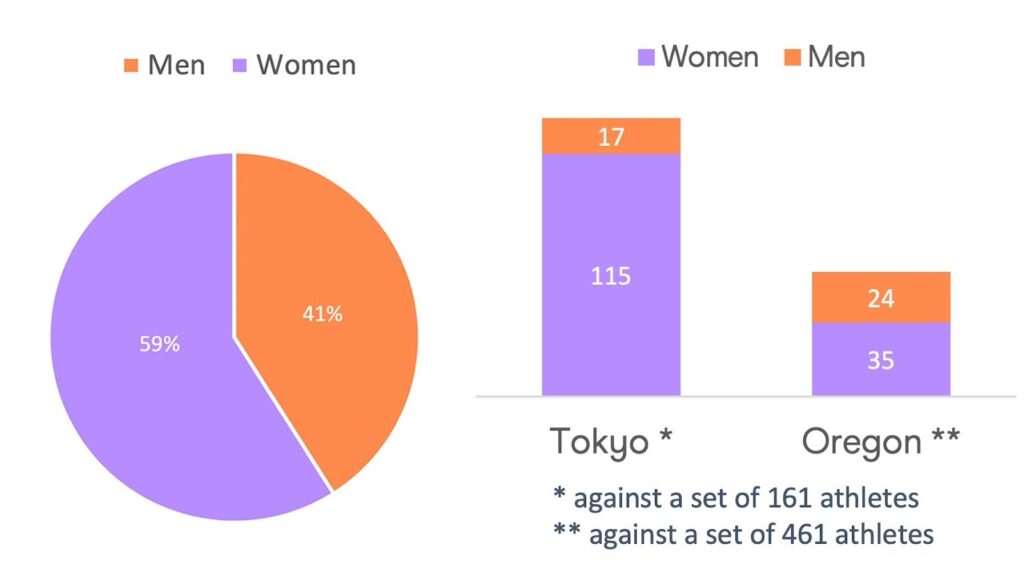
Several high-profile athletes including British pole vaulter Holly Bradshaw, tennis star Sloane Stephens, and Algerian boxer Imane Khelif are just some of the numerous cases of online harassment highlighting the need for stronger protections, moderation policies, and institutional support. As women’s sports continue to grow in prominence, addressing these challenges becomes increasingly urgent.
Final Thought: Women’s Sports’ Growth Means A Lot
The 2025 NCAA Women’s Volleyball Tournament may have set a record, but the bigger story is what it represents: a sustainable rise in viewership, investment, and cultural relevance for women’s sports. Fans, athletes, and institutions are all part of this ecosystem, creating opportunities for growth that extend well beyond any single game or tournament.
For brands, leagues, and investors, the strategic lesson is clear: women’s sports are no longer a secondary market — they are a primary entertainment product with measurable cultural and economic impact.
For athletes and fans, the takeaway is equally compelling: engagement drives change, and visibility matters. The era when women’s sports operated in the shadows is ending. Record-breaking tournaments, rising viewership, and growing fan communities show that the future of sports is more inclusive, dynamic, and exciting than ever.