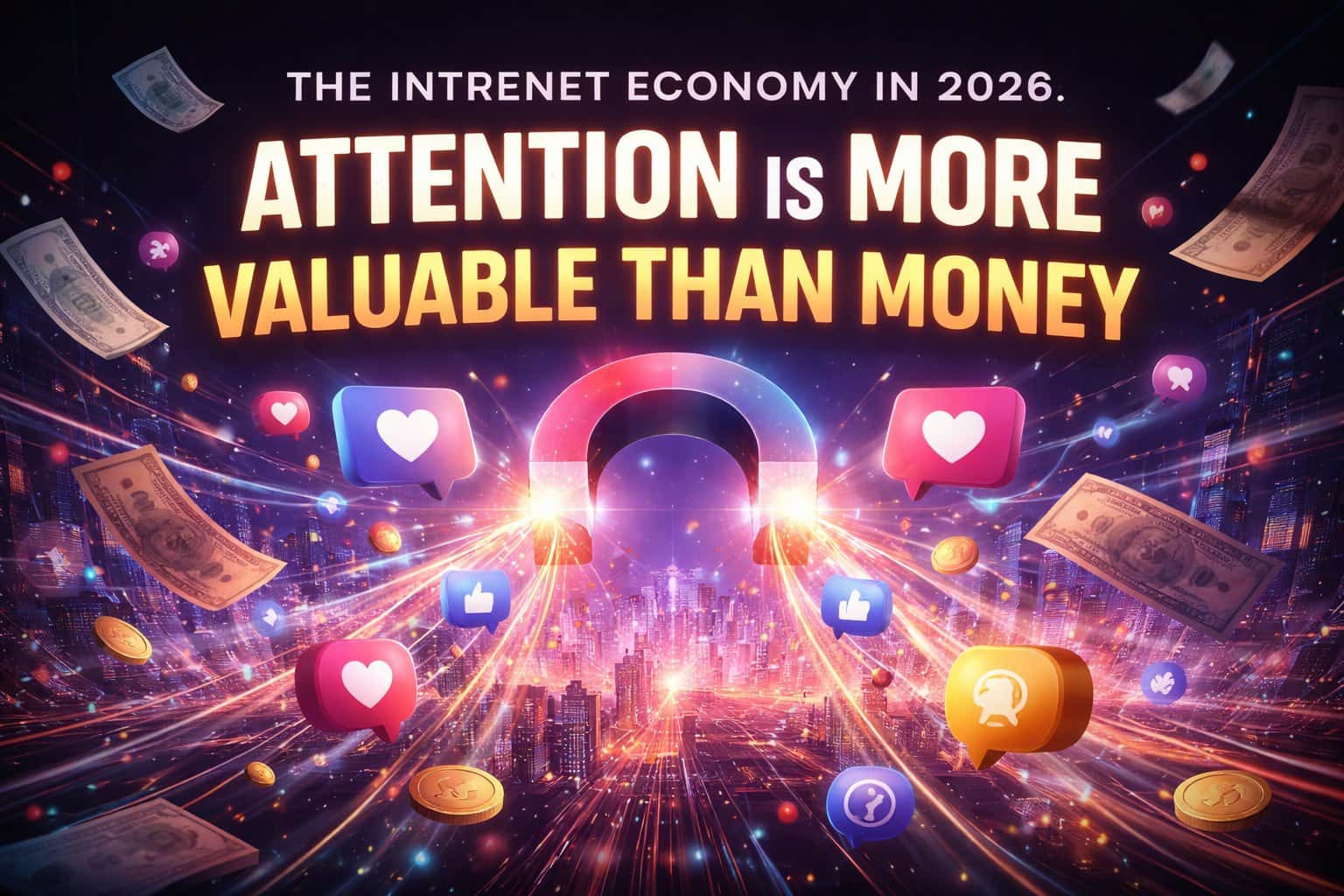

“If you control attention, money follows.”
In 2026, this is no longer a motivational quote or a Silicon Valley cliché. It is an economic reality that defines who wins, who scales, and who gets left behind.
The modern internet economy has crossed a critical threshold: attention has overtaken capital as the most valuable asset. Startups with little or no revenue—but massive audiences—are securing partnerships, valuations, and market influence that profitable yet invisible companies struggle to achieve. Traditional businesses focused purely on balance sheets are discovering a hard truth: without attention, growth eventually stalls.
This shift is fundamentally reshaping how companies are built, funded, marketed, and acquired.
And it is not accidental.
Attention by Design: How Platforms Engineered the New Economy
Social platforms are not designed to inform first—they are engineered to capture and retain attention at scale. Infinite scrolling, autoplay, short-form video, and algorithmic personalization are all optimized to maximize time spent, not understanding or value.
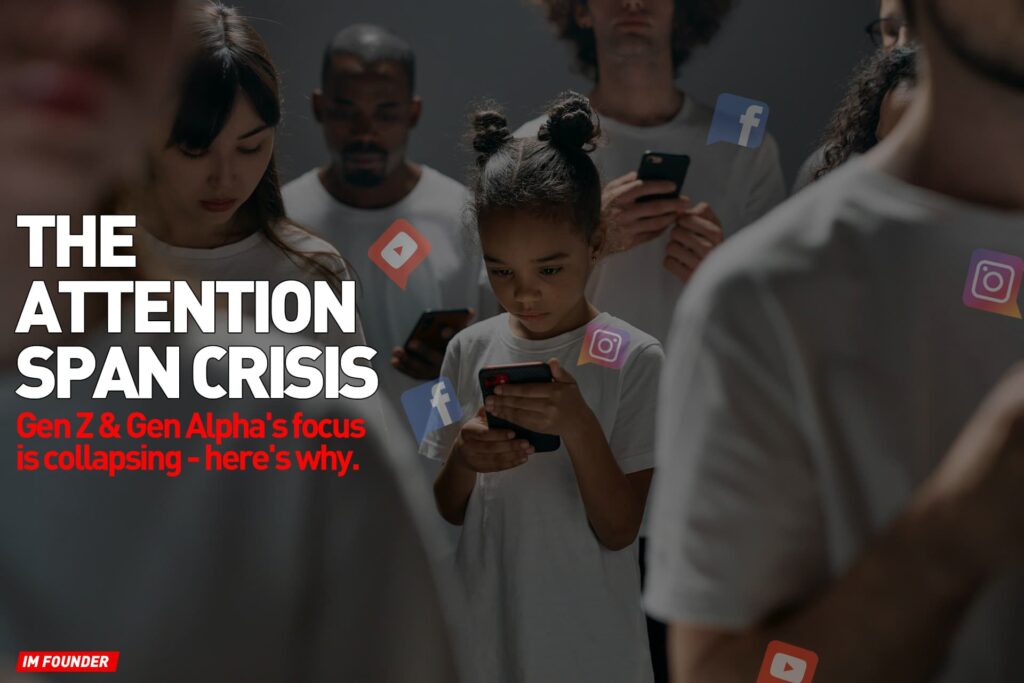
This attention-first architecture has consequences far beyond business. Its effects are increasingly visible in how younger generations process information, focus, and learn. As platforms compete for every second of engagement, the cognitive cost is being paid by users—especially Gen Z. We explored this impact in depth in Gen Z’s Attention Span Crisis, where the human side of the attention economy becomes impossible to ignore.
In short: attention is the fuel, and platforms are built to burn it.
The New Internet Economy: From Cash Flow to Attention Flow
Historically, business power came from:
- Revenue
- Profit margins
- Physical assets
- Distribution control
In 2026, power increasingly comes from:
- Audience ownership
- Distribution reach
- Cultural relevance
- Algorithmic visibility
Attention has become the gateway resource. Money, talent, partnerships, and even media coverage now flow toward those who already control an audience.
This explains why:
- Influencers with zero revenue secure better deals than profitable startups with no audience
- Media-first startups outpace product-first companies in early growth
- Investors ask about audience traction before financials
Why Attention Beats Money in 2026
1. Attention Is Scarcer Than Capital
Capital is abundant. Attention is not.
Users are overwhelmed by:
- Infinite content
- Endless apps
- Constant notifications
- AI-generated media at scale
Human attention has become the true bottleneck.
Money can buy impressions. Attention creates loyalty.
2. Distribution Is the New Competitive Moat
Building a product is no longer the hardest part. Distribution is.
A mediocre product with massive attention often outperforms a superior product no one sees. Algorithms on platforms like TikTok, YouTube, Instagram, X, Substack, and LinkedIn reward those who already command engagement.
Attention compounds faster than revenue ever did.
Real Startup and Business Examples
Influencers With Zero Revenue, Massive Deal Power
In 2026, mid-tier influencers routinely secure six-figure brand deals without selling a single product. A creator with 1.5 million followers can command:
- Equity partnerships
- Revenue-share agreements
- Product co-creation offers
Brands prefer them over profitable startups because they control demand, reduce acquisition costs, and deliver instant reach.
Attention lowers risk. Revenue does not.
MrBeast: The Blueprint for Attention-First Business

MrBeast did not start with products. He started with attention.
Only after capturing massive audience scale did he launch:
- Feastables
- MrBeast Burger
- Licensing and media partnerships
These businesses scaled faster than traditional startups because demand already existed. In 2026, this model—build audience first, monetize later—has become standard.
Substack Creators vs VC-Backed Media Companies
Independent Substack writers with 100,000 engaged subscribers and minimal overhead often generate more profit and influence than venture-backed media startups burning millions.
Why?
- Direct audience ownership
- Trust-based monetization
- No algorithm dependency
Attention owned is more valuable than attention rented.
Community-First Tech Startups
Companies like Notion, Webflow, and early-stage Figma built massive communities before monetization peaked. Today:
- Open-source AI tools with large GitHub communities close enterprise deals faster
- SaaS founders with strong LinkedIn or YouTube audiences sell without ads
Trust follows familiarity.
Why Profitable Companies Are Losing
Many profitable companies stall because:
- They rely entirely on paid advertising
- They lack organic distribution
- They have no narrative or cultural relevance
In contrast, attention-first companies:
- Launch instantly to warm audiences
- Test ideas without capital risk
- Pivot faster using real-time feedback
Profit without attention is fragile.
Attention without profit is optional.
AI Has Accelerated the Attention Economy
AI has made product creation cheaper and faster than ever. Anyone can now:
- Build software
- Generate content
- Launch brands
What AI cannot replicate:
- Trust
- Personality
- Human connection
- Cultural relevance
As creation becomes cheaper, distribution becomes priceless.
Investors Have Already Adapted
Modern investors now evaluate:
- Audience size
- Engagement depth
- Founder personal brand
- Community strength
Revenue has become a lagging indicator. A founder with 500,000 engaged followers often raises capital faster than a silent founder with $1M ARR.
The Dark Side of Attention as Currency
This economy carries risks:
- Algorithm dependency
- Burnout culture
- Short-term virality over long-term value
- Misinformation amplification
Businesses that convert attention into owned channels—email lists, communities, apps—are best positioned to survive long-term.
What This Means for Founders in 2026
Winning strategies now include:
- Building in public
- Creating content alongside products
- Owning distribution
- Treating audience as a core asset
The new hierarchy is clear:
Attention → Trust → Distribution → Monetization
Reversing this order limits scale.
Final Thoughts: Attention Is the New Currency
In the modern internet economy, money no longer guarantees growth.
Attention does.
Influencers with zero revenue outperform profitable but invisible companies because they control demand, not supply. Businesses that understand this shift will dominate the next decade. Those that ignore it may remain profitable—but small.
If you control attention, money follows.