
The New Arms Race Being Built by Startups
For most of the past two decades, Silicon Valley sold the world a different dream.
It was the dream of social networks, ride-sharing apps, food delivery platforms, and artificial intelligence designed to recommend movies or generate images. The tech industry promised convenience, connectivity, and productivity.
War was someone else’s business.
But something has changed.
Today, venture capitalists in Silicon Valley — the same investors who once funded photo-sharing apps and crypto exchanges — are pouring billions of dollars into defense technology startups. Autonomous drones, AI battlefield software, robotic submarines, satellite surveillance networks, and predictive military intelligence are now some of the most aggressively funded technologies in the startup ecosystem.
In 2025 alone, defense-technology startups raised a record $49.1 billion globally, a dramatic increase from $27.2 billion the year before. (Defense News)
For the venture capital world, war technology has quietly become the next frontier of innovation — and profit.
But the story behind this shift is deeper, more complicated, and far more unsettling.
The Turning Point: War Changed the Investor Mindset
For years, many Silicon Valley investors avoided defense startups. The culture of the Valley leaned heavily toward consumer products and socially positive technologies.
Then geopolitics intervened.
The Russian invasion of Ukraine, rising tensions in the Middle East, and intensifying rivalry between the United States and China forced governments to rethink military technology. The battlefield was no longer dominated by tanks and aircraft carriers.
Instead, it was dominated by software, drones, satellites, and AI.
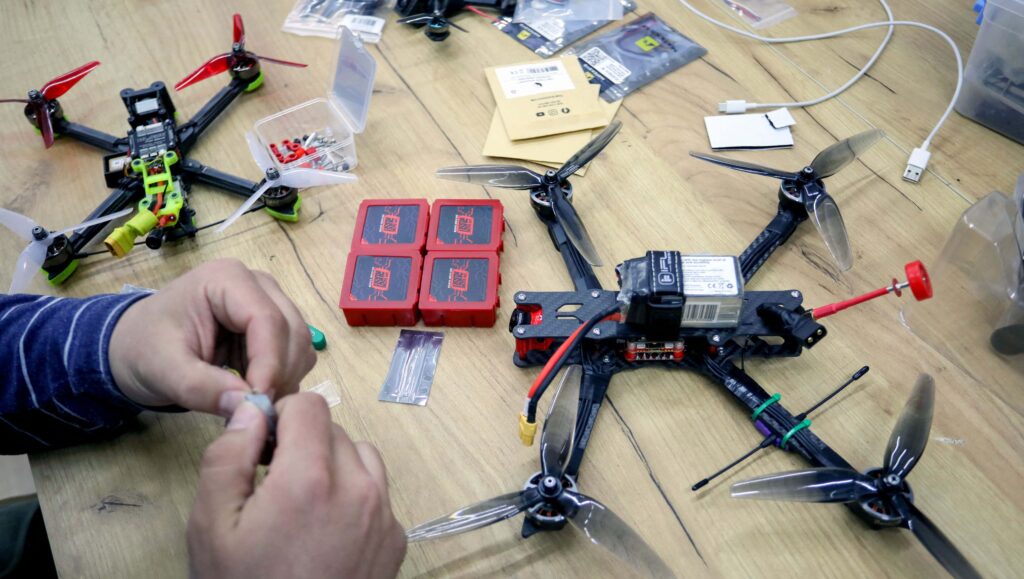
Ukraine became a real-time demonstration of this transformation. Cheap drones guided by artificial intelligence could destroy multi-million-dollar tanks. Autonomous surveillance systems could track troop movements faster than human analysts.
As one industry analyst noted, the war demonstrated the real effectiveness of drones and autonomous systems in combat, fundamentally shifting how investors view defense technology. (Defense News)
Suddenly, the startup ecosystem realized something profound:
The next technological revolution might not be built for consumers.
It might be built for battlefields.
Silicon Valley’s New Defense Giants
Several companies have become the face of this transformation.
Among them is Anduril Industries, founded by Palmer Luckey, the entrepreneur who previously created Oculus VR.
Anduril builds autonomous surveillance systems, AI-powered battlefield software, and military drones designed to operate with minimal human intervention.
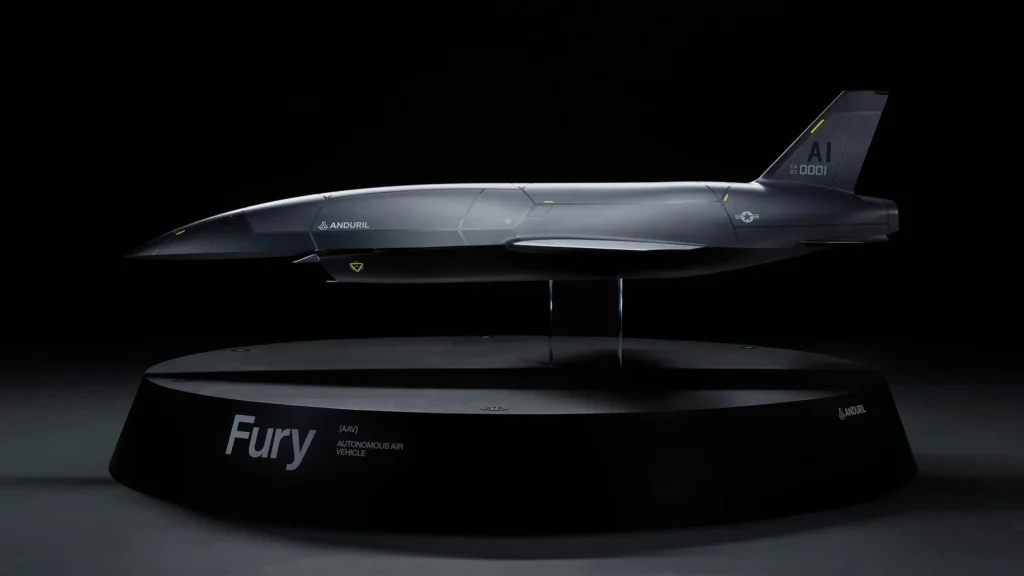
Investors are betting heavily on its future.
The company is reportedly raising around $4 billion in new funding, which could push its valuation to roughly $60 billion, doubling its previous valuation. (Reuters)
Another major player is Palantir Technologies, whose software helps intelligence agencies analyze massive volumes of data to identify threats and coordinate military operations.
The company recently secured major U.S. defense contracts worth billions, including deals with the Army and Navy. (Barron’s)
These companies represent something entirely new: Silicon Valley-style startups becoming defense contractors.
The Venture Capital Equation: Why Investors Are Betting on War Tech
At first glance, investing in military technology might appear ethically controversial.
But venture capital operates on a simple logic: follow the largest markets.
And the defense market is enormous.
The United States alone spends hundreds of billions annually on defense procurement. Globally, military budgets continue to rise as nations respond to geopolitical instability.
For venture investors, this means three things.
1. Governments Are Reliable Customers
Unlike consumer apps that rely on unpredictable user growth, defense companies often secure long-term government contracts.
These contracts can last decades.
Once a technology becomes integrated into military systems, replacing it becomes difficult.
For investors, that creates extremely stable revenue streams.
2. AI Is Transforming Warfare
Artificial intelligence is now central to modern military strategy.
AI systems can:
- Analyze satellite imagery
- Predict enemy movement
- Coordinate drone swarms
- Detect cyber attacks
- Automate battlefield decisions
Defense startups are building the software infrastructure that enables this transformation.
And investors see AI-driven warfare as one of the most valuable technology markets of the coming decades.
3. Startups Can Move Faster Than Governments
Traditional defense contractors — companies like Lockheed Martin or Boeing — operate slowly and rely on bureaucratic procurement processes.
Startups operate differently.
They iterate faster, adopt commercial technology, and build products the way Silicon Valley builds software: rapidly and aggressively.
Governments are increasingly turning to startups because they can innovate faster than legacy defense giants.
That shift is opening a massive new market.
The Moral Debate Inside Silicon Valley
The Moral Debate Inside Silicon Valley
The rise of defense startups has also triggered a philosophical debate inside the tech world.
For years, many engineers resisted working on military technologies. In 2018, Google employees protested a Pentagon AI program known as Project Maven.
Project Maven was designed to use artificial intelligence to analyze drone surveillance footage and automatically identify objects such as vehicles, buildings, and potential threats. The goal was to help military analysts process vast amounts of battlefield video faster and more efficiently.
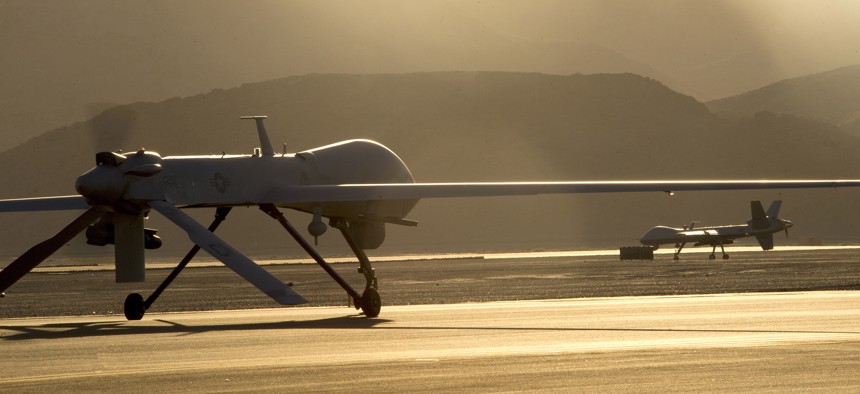
The project sparked a major internal backlash at Google, with thousands of employees arguing the technology could contribute to warfare. Facing mounting pressure, Google eventually chose not to renew the contract. After the company stepped away, Amazon and Microsoft later secured roughly $50 million in Pentagon contracts to continue developing AI systems for drone surveillance and battlefield intelligence.
But the cultural tide is shifting.
Some investors now argue that advanced democracies must build their own technology to compete with authoritarian regimes. One venture capital initiative even frames defense investment as supporting “democratic values” and national resilience.
Others see the trend differently.
They worry Silicon Valley is entering a new era where profit and warfare are becoming increasingly intertwined.
A New Military-Industrial Ecosystem
Perhaps the most striking development is how closely Silicon Valley and the defense establishment are now collaborating.
Major venture firms are launching dedicated defense funds.
AI startups are partnering with military agencies.
And a new generation of founders is building companies specifically designed for national security technology.
Some analysts call this the birth of “the new military-industrial complex — powered by venture capital.”
But unlike the Cold War era, this ecosystem is not dominated by giant corporations.
It is driven by startups.
The Future of War May Be Written in Code
The technologies now being built in startup offices across California may determine how wars are fought in the coming decades.
Autonomous weapons.
AI command systems.
Drone swarms controlled by algorithms.
Satellite intelligence networks powered by machine learning.
These technologies promise efficiency, speed, and strategic advantage.
But they also raise difficult questions.
What happens when machines make battlefield decisions faster than humans can intervene?
Who is accountable when autonomous weapons fail?
And what does war look like when software engineers become the architects of military power?
Final Reflection
Silicon Valley once promised to connect the world.
Now, it may be redesigning how nations defend it.
The shift toward war technology is not just an investment trend. It reflects a deeper transformation in how innovation, geopolitics, and capitalism intersect.
The same ecosystem that created smartphones, social networks, and artificial intelligence is now building tools of warfare.
And the consequences of that transformation may shape the next century.
For investors, it is a new frontier.
For the world, it is an uncomfortable reminder:
The most powerful technologies are rarely neutral.