
Startup failure rate 2026 remains one of the most searched topics among founders — and for good reason. Despite more funding, better tools, and AI-powered development, most startups still fail.
In 2026, the numbers haven’t improved much. If anything, competition and speed have made survival harder.
This article breaks down:
- Latest startup failure statistics
- Why startups fail
- Real startup failure case studies
- Most common startup failure reasons
- What founders must do differently in 2026
Startup Failure Statistics (2026)
The startup failure continues to hover around the same levels seen over the last decade.
Latest Data (2026)
- 90% of startups fail
- 10% fail within first year
- 70% fail between year 2–5
- Only 1% become unicorns
- 34% fail due to poor product-market fit
- 22% fail due to cash flow problems
- 19% fail due to wrong team
- 18% fail due to competition
- 15% fail due to pricing issues
These startup failure statistics show that the biggest problems are not technology — they are strategy, market, and execution.
Why Startups Fail in 2026
The startup failure rate is driven by a few consistent mistakes founders keep repeating.
1. No Product-Market Fit
This is the #1 startup failure reason.
Startups build products nobody actually needs.
Common mistakes:
- Building before validating
- Assuming demand exists
- Ignoring customer feedback
- Solving a small problem
Startups that validate early survive longer.
2. Running Out of Money
Cash flow kills startups faster than competition.
Founders underestimate:
- Marketing cost
- Hiring cost
- Customer acquisition cost
- Infrastructure scaling
Many startups raise funding but burn too fast without revenue.
3. Weak Founding Team
The startup failure rate is heavily influenced by team quality.
Teams fail when:
- Founders have same skillsets
- No technical cofounder
- Poor decision making
- Internal conflicts
- No leadership clarity
Investors often say: team matters more than idea.
4. Building Too Early
Many founders launch before:
- validating users
- testing demand
- understanding market
- refining positioning
This leads to:
- low adoption
- wasted development cost
- pivot after pivot
5. Wrong Business Model
Startups fail when they:
- underprice
- overprice
- ignore unit economics
- depend only on funding
Revenue clarity matters from day one.
Real Startup Failure Case Studies
Case Study 1: IRL Social App
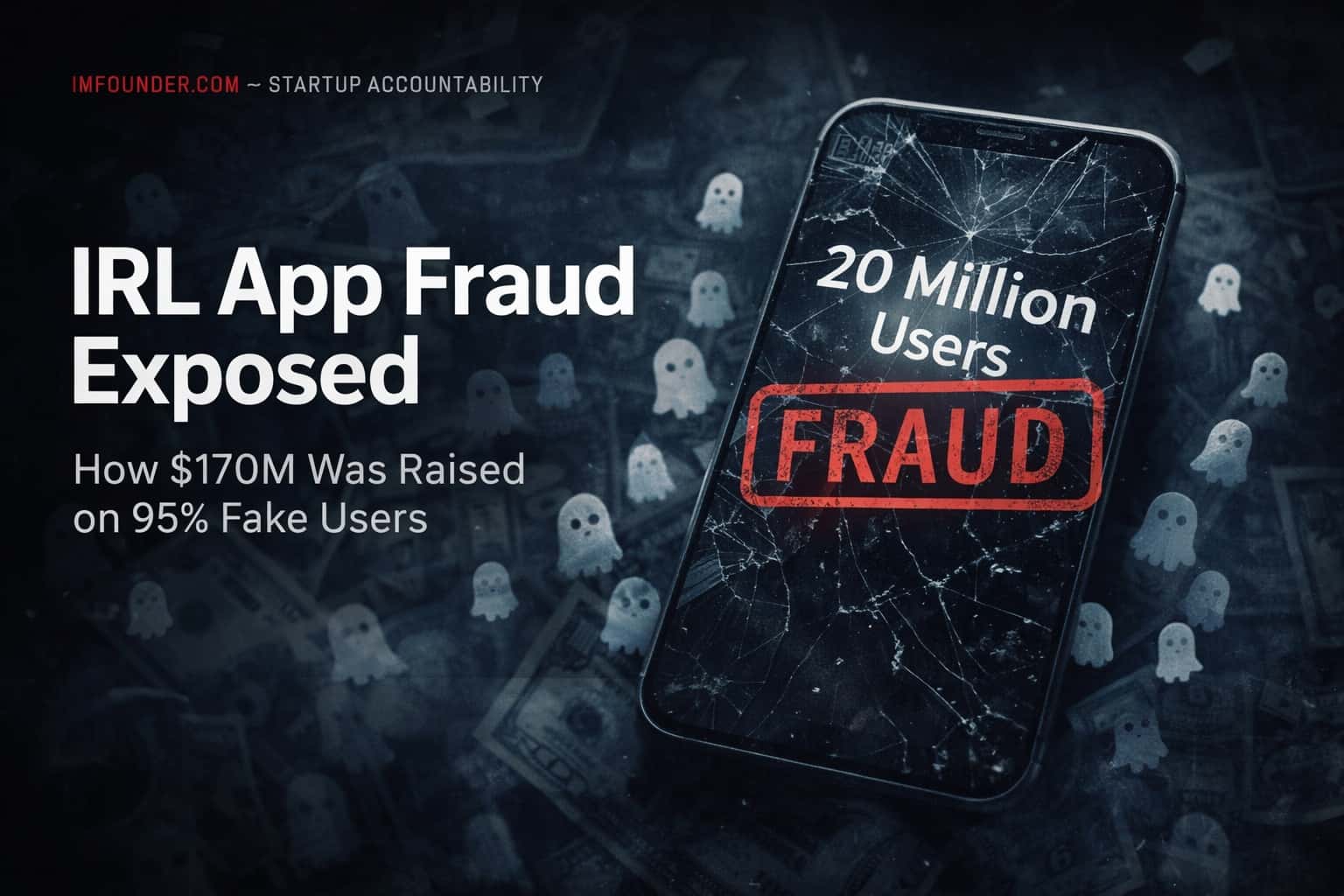
The IRL social platform raised over $200M but collapsed in 2023–2024.
Why it failed:
- Fake user growth
- No real engagement
- Burn rate too high
- Investor pressure
This became a classic startup failure rate example.
Lesson:
Growth without retention is meaningless.
Case Study 2: Quibi
Quibi raised $1.75 billion and failed within months.
Startup failure reasons:
- Wrong timing
- Misunderstood user behavior
- Premium pricing
- No demand
Users preferred free platforms.
Lesson:
Money doesn’t guarantee product-market fit.
Case Study 3: Fast (One-click Checkout)
Fast raised massive funding and shut down.
Why startups fail example:
- No sustainable revenue
- High burn
- Competitive space
- Weak differentiation
Lesson:
If your margins are zero, growth kills you.
Startup Failure Rate vs Startup Success Rate
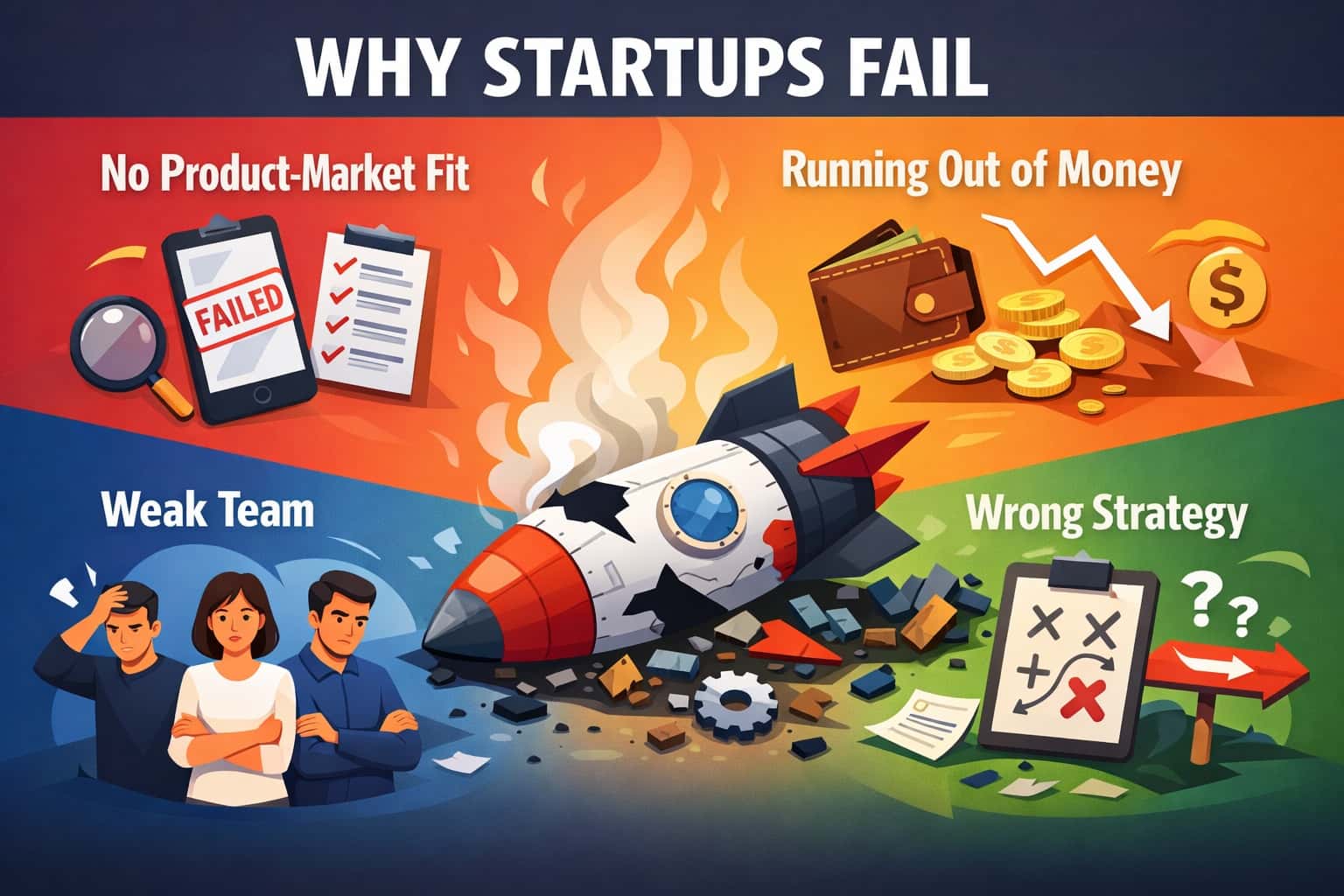
The startup failure rate looks scary, but successful startups follow patterns.
Successful startups:
- Validate before building
- Focus on niche users
- Solve painful problems
- Monetize early
- Build lean teams
Failure happens when founders skip fundamentals.
Top Startup Failure Reasons (Ranked)
Based on startup failure statistics, here are the biggest reasons:
- No product market fit
- Running out of cash
- Wrong team
- Strong competition
- Poor marketing
- Wrong pricing
- Legal issues
- Pivot too late
- Scaling too early
- Founder burnout
These account for majority of startup failure rate.
How Founders Can Beat Startup Failure Rate
1. Validate Before Building
Use:
- waitlists
- landing pages
- surveys
- pre-orders
If users don’t sign up, don’t build.
2. Build MVP First
Avoid:
- complex features
- full platform
- scaling early
Start simple.
3. Focus on One Problem
Startups fail when trying to solve everything.
Niche wins.
4. Monetize Early
Revenue proves demand.
Even small pricing validates product.
5. Track Real Metrics
Ignore vanity metrics:
- downloads
- followers
- impressions
Focus on:
- retention
- revenue
- engagement
The Truth About Startup Failure Rate
The startup failure rate is high — but predictable.
Startups don’t fail randomly.
They fail because:
- founders build blindly
- markets are misread
- growth is forced
- money is burned
The good news: these mistakes are avoidable.
Most successful founders study failures first.
Final Thoughts
The startup failure rate shows one clear pattern — startups fail due to strategy, not ideas.
Ideas are easy.
Execution is hard.
Validation is everything.
If founders:
- validate early
- build lean
- focus on users
- track revenue
They drastically improve survival chances.
The difference between failure and success is rarely luck — it’s decision making. At IMFounder, we analyze real startup failures, founder decisions, and market signals to help entrepreneurs avoid costly mistakes. Our Founder Review breaks down what worked, what failed, and what founders should do differently using real data and case studies. If you’re building a startup, these reviews can help you validate faster, reduce risk, and improve your chances of surviving the 2026 startup failure rate.
Explore Founder Review at IMFounder → Founder Review
Related Articles on IMFounder
- $170M Was Built on 95% Fake Users — IRL App Fraud Exposed
- 7 Explosive AI Updates in April 2026 That Will Shock Every Founder
- 7 Deadly Pitch Deck Red Flags That Instantly Kill Deal
- Community Coders: The Story of a Startup That Didn’t Scale
- The Emotional Rollercoaster of Building a Startup. The side of entrepreneurship no one talks about