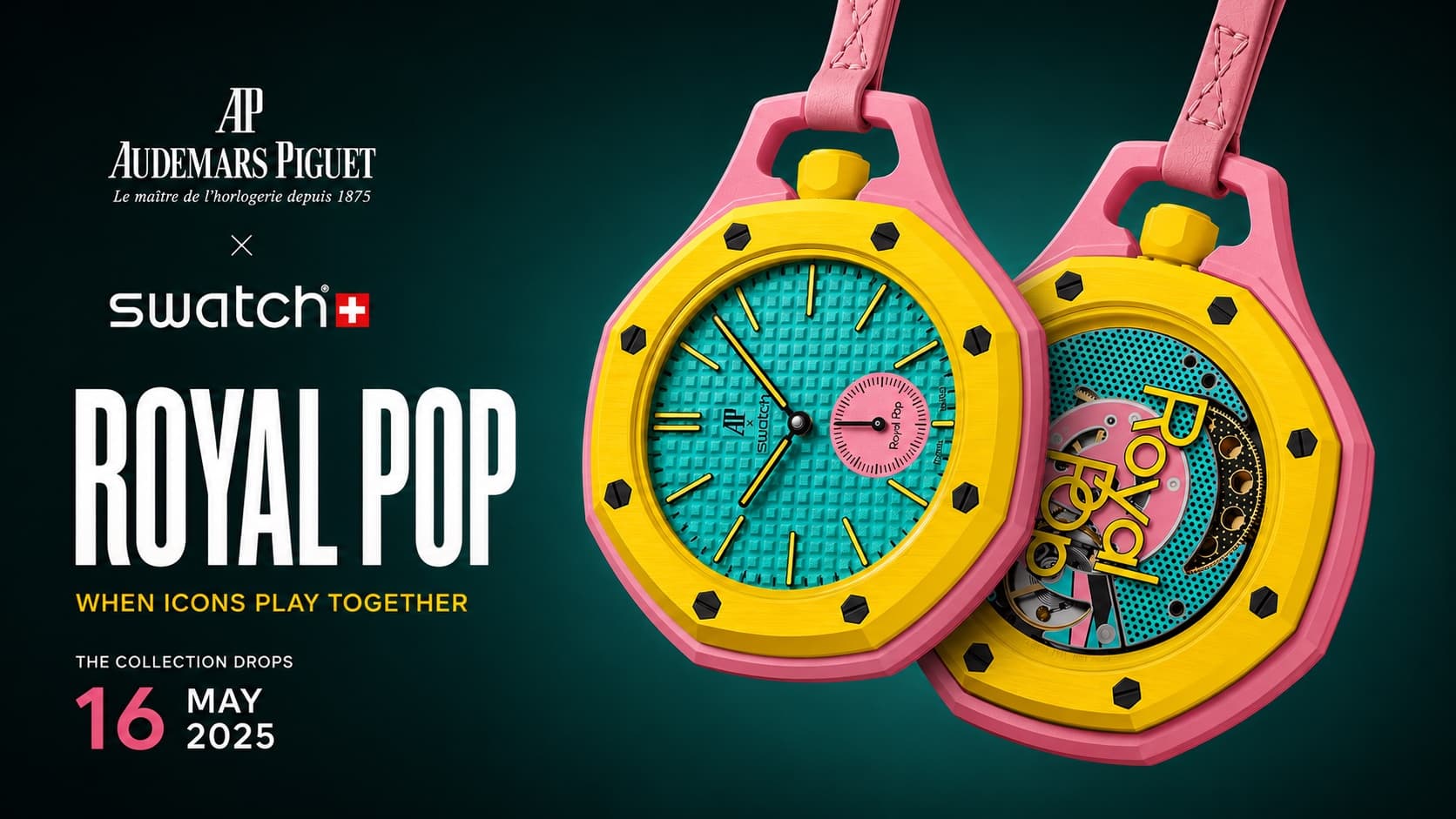

Luxury watch collectors are confused. Purists are angry. Resellers are watching nervously. And founders everywhere should be paying attention.
As the Audemars Piguet Swatch collaboration officially launches worldwide today — May 16, 2026 — collectors, hype buyers, and curious first-time watch fans are already lining up outside Swatch stores across major cities.
From Tokyo to London to New York, the Royal Pop release is beginning to look less like a watch launch… and more like a global cultural event.
Because what just happened between Audemars Piguet and Swatch may not just be a watch collaboration.
It may be a masterclass in modern brand survival.
And if you think this is simply “another MoonSwatch-style cash grab,” you are probably missing the real story.
The Brand That Built an Empire on One Watch
Before understanding the collaboration, you need to understand the pressure AP has been living under for years.
The Royal Oak is not just a successful watch.
It is Audemars Piguet.
Designed by legendary watch designer Gérald Genta in 1972, the Royal Oak changed the luxury watch industry forever:
- exposed screws,
- octagonal bezel,
- integrated bracelet,
- industrial design language,
- and a luxury steel sports watch concept that sounded insane at the time.
Today, nearly every major luxury sports watch category traces some DNA back to the Royal Oak.
And that became both AP’s greatest strength and biggest vulnerability.
The Dangerous Side of Becoming “Too Iconic”
Most brands dream of becoming culturally recognizable.
But there is a hidden danger:
when everyone copies you long enough, your uniqueness starts dissolving into the market itself.
That is exactly what has happened to the Royal Oak silhouette.
For decades:
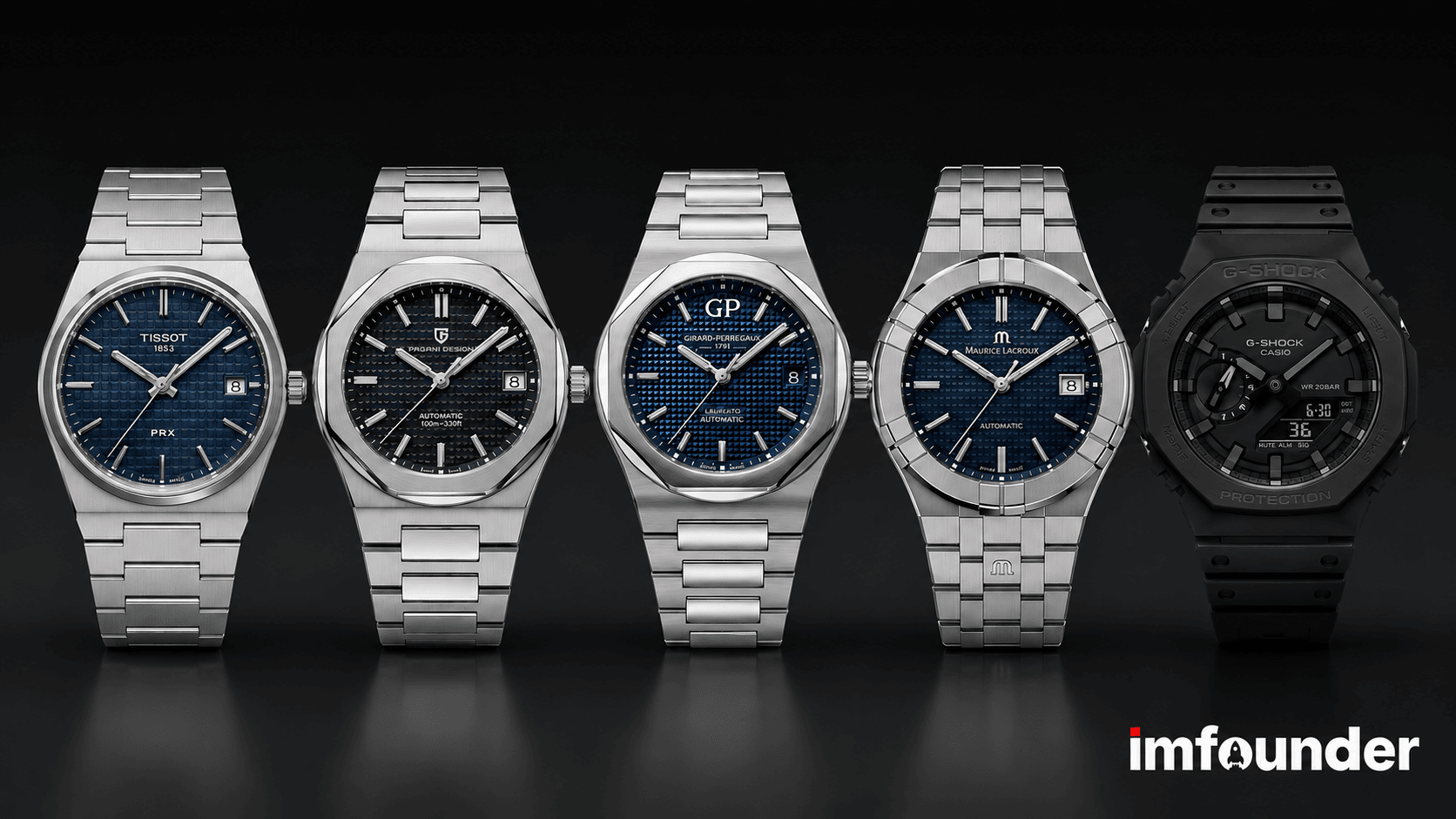
- microbrands copied it,
- fashion brands copied it,
- homage watches copied it,
- Chinese manufacturers copied it,
- even luxury competitors borrowed heavily from its design language.
At some point, the Royal Oak stopped looking rare.
It started looking familiar.
That is a terrifying position for a luxury house.
Because luxury pricing depends on:
- scarcity,
- distinction,
- and symbolic exclusivity.
When your design becomes the template for an entire industry, legal protection becomes much harder.
The Lawsuit Problem Nobody Outside Watch Circles Discusses
One of the most fascinating discussions around AP in recent years has been its struggle to fully protect the Royal Oak’s shape legally.
Trademark law becomes complicated when:
- a design is widely imitated,
- heavily normalized,
- and consistently presented alongside logos and brand names.
The core legal challenge is simple:
Can consumers recognize the shape alone?
Or do they only recognize it because “Audemars Piguet” is written next to it?
That distinction matters enormously in intellectual property law.
And whether AP officially intended it or not, the Swatch collaboration may help rebuild something incredibly valuable:
mass public association between the Royal Oak silhouette and the AP identity itself.
That alone makes this collaboration strategically fascinating.
Why the Pocket Watch Detail Matters More Than You Think
This is where things become brilliant.
Most people expected:
“MoonSwatch, but Royal Oak.”
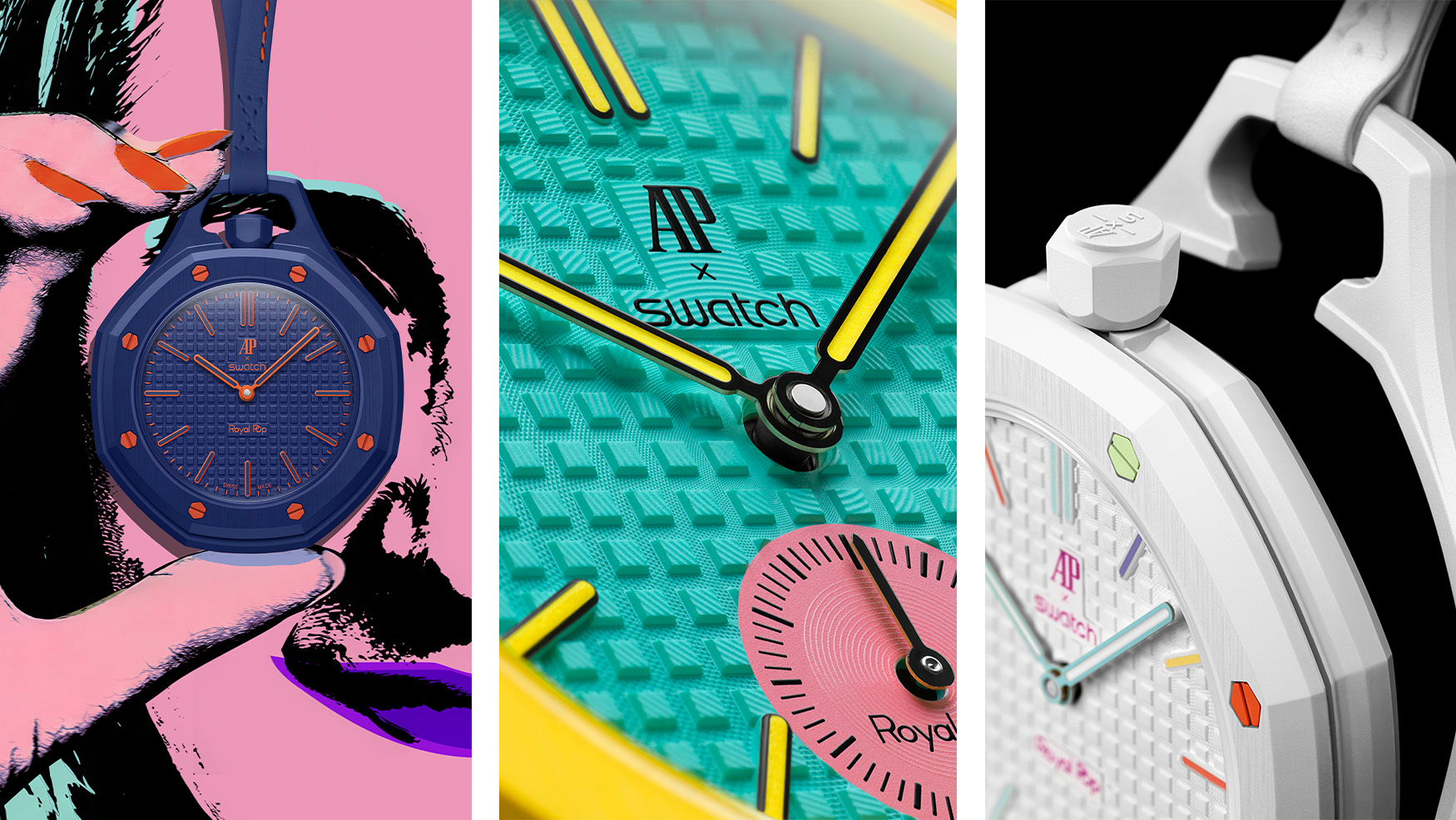
Instead, AP and Swatch shocked everyone by launching a pocket-watch-inspired concept.
At first glance, it looked bizarre.
But strategically?
It may be genius.
A cheap Royal Oak-style wristwatch could have:
- diluted exclusivity,
- angered collectors,
- cannibalized AP’s own image,
- and blurred the line between luxury and mass-market too aggressively.
The pocket-watch format changes the psychology entirely.
It becomes:
- collectible,
- playful,
- artistic,
- culturally shareable,
- but not a direct substitute for a real Royal Oak.
That distinction matters.
A $400 novelty object does not threaten a $40,000 luxury identity the same way a cheap wristwatch clone would.
That is sophisticated positioning.
Swatch Understands Something Luxury Brands Often Forget
The collaboration also reveals something deeper about modern branding.
Luxury brands historically believed:
“Protect exclusivity at all costs.”
But the internet changed everything.
Today:
- memes create brands,
- virality drives desire,
- cultural relevance moves faster than heritage,
- and younger audiences care about participation as much as prestige.
Swatch understands cultural energy better than almost anyone in watches.
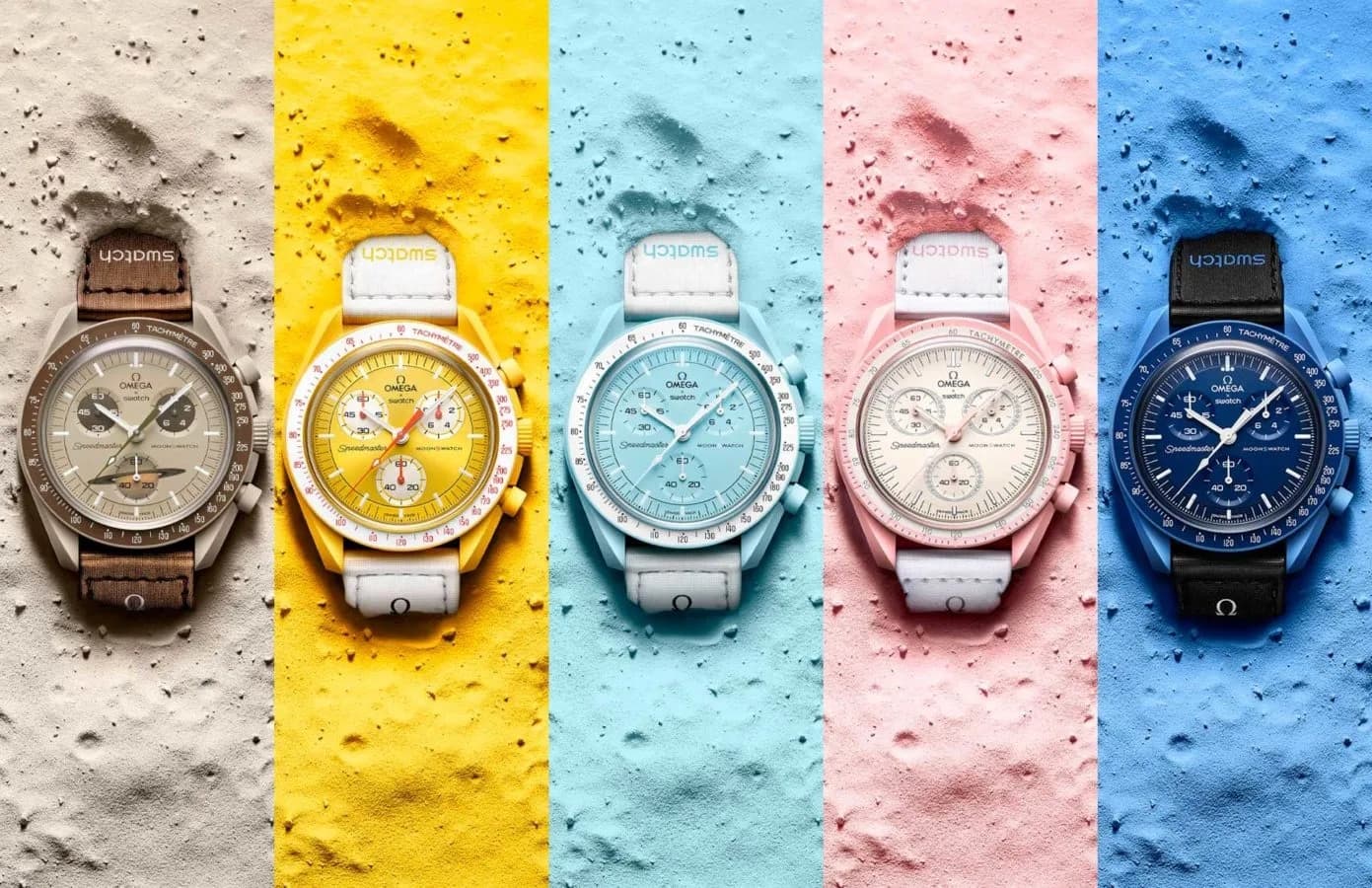
The MoonSwatch proved that modern hype culture can:
- revive attention,
- dominate social media,
- create lines outside stores,
- and reintroduce legacy brands to Gen Z audiences overnight.
The MoonSwatch was not merely a product.
It was a global conversation engine.
Now AP is entering that machine.
The Most Important Business Lesson: Control the Cheap Version Yourself
This is the lesson founders should study carefully.
If the market is already creating cheap versions of your identity…
you may eventually need to participate in that reality strategically instead of pretending it does not exist.
Think about it:
- counterfeit Royal Oak-inspired watches already flood the internet,
- homage watches already exist,
- TikTok creators already normalize AP aesthetics daily.
So what happens when the original creator enters the affordable conversation first?
Suddenly:
- the “fake luxury look” loses some power,
- AP controls the narrative,
- AP controls the design language,
- AP controls the media cycle,
- and AP benefits from every headline.
That is incredibly difficult to execute without damaging prestige.
But if done correctly, it becomes defensive branding at scale.
Why Founders Should Be Obsessed With This Collaboration
This story is much bigger than watches.
It is about what companies do when:
- the market copies them,
- culture moves faster than exclusivity,
- and younger consumers stop engaging with traditional luxury marketing.
The AP × Swatch collaboration reveals a brutal modern truth:
In 2026, attention itself is infrastructure.
The companies winning today are not always the most exclusive.
They are the brands that:
- understand internet psychology,
- weaponize cultural participation,
- create conversation loops,
- and transform products into social events.
That is why people lined up for MoonSwatches.
Not because they needed another watch.
Because they wanted to participate in a moment.
The Real Genius of the Collaboration
The smartest part may not even be the product itself.
It is the framing.
AP gets:
- massive global visibility,
- younger audience exposure,
- renewed cultural relevance,
- design conversation dominance,
- and emotional brand energy.
Without permanently changing the core Royal Oak ecosystem.
That is extraordinarily hard to achieve in luxury.
Most luxury collaborations fail because they either:
- feel desperate,
- look diluted,
- or betray the brand’s identity.
This collaboration feels different because it understands modern luxury psychology:
People no longer only want ownership.
They want access to the story.
Final Thought
Watch enthusiasts will debate this collaboration for months.
Collectors will argue.
Purists will complain.
Resellers will speculate.
But founders should pay attention to something deeper:
The world’s strongest brands are no longer defending themselves the old way.
They are adapting in public.
And sometimes the smartest move a luxury company can make…
is to shock everyone before the market forces them to.
Related Articles on IMFounder
- Apple AirPods Max 2 Review: New Features, Same Price, Still Heavy?
- Apple MacBook Neo: Gimmick or Game Changer?
- Samsung Galaxy S26 Ultra Leads the Innovation War
- Pet Owners’ Guide to the Best Vacuums & Robot Cleaners in 2026
- Why Breville launched the Oracle® Dual Boiler when the Oracle® Jet already exists