
Part I: The Price of Moving the World’s Food
Before the world’s agricultural commodities reach international markets, they travel through a commercial network of trucks, railroads, warehouses, river barges and export terminals. Government transportation data, regulatory filings and corporate disclosures reveal what that journey costs, how its prices are set, and why the routes themselves have become competing businesses.
A soybean harvested in the Brazilian state of Mato Grosso can cost more to move to the Atlantic coast than to ship from Brazil to China.
That is not a hypothetical problem. It is a measurable feature of one of the world’s most important agricultural trade routes.
During the first six months of 2026, trucking soybeans from northern Mato Grosso to the Port of Santos cost an average of $97.22 per metric ton, according to the United States Department of Agriculture. Shipping those soybeans from Santos to Shanghai cost another $49 per ton.
The domestic trucking leg cost nearly twice as much as the ocean voyage.
Together, the two components amounted to $146.22 per ton. For a hypothetical 63,000-ton cargo, that represents approximately $9.21 million in transportation expenses before the value of the soybeans themselves is considered.
USDA’s model uses a Mato Grosso farm-gate price of $340.08 per ton, which brings the calculated landed cost in Shanghai to $486.30. Transportation accounted for 30 percent of that figure.
These are benchmark costs, not the invoice for an individual commercial shipment. The ocean figures are volume-weighted averages of rates actually negotiated between shippers and carriers. Even so, the data exposes a defining feature of the international food economy: the price of reaching the coast can matter more than the price of crossing an ocean.
Global food trade is not simply a market for agricultural production. It is a market for the capacity to move that production.
The $20 Billion Trade Route
Brazil’s soybean industry offers an unusually clear view of this system. Its export volumes are enormous, and much of its production sits far from its principal ports.
Between January and June 2026, Brazil exported 69.6 million metric tons of soybeans, approximately 7 percent more than in the same period of 2025. Of that volume, 48.3 million tons went to China, with an export value of $20.2 billion. China accounted for 69 percent of Brazil’s soybean exports during the period.
Soybeans originating in Mato Grosso have three broad options. They can travel south by truck toward Santos or Paranaguá. They can be trucked to a railhead and continue by rail. Or they can use northern corridors that connect highways and the Amazon river system with Atlantic-facing terminals.
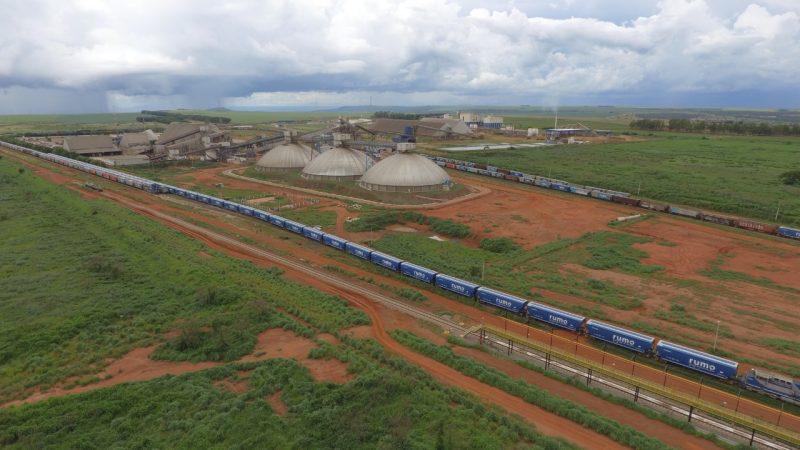
The geography of departure is shifting. In the first half of 2026, 40.2 million tons left through southern ports, while 29 million tons departed through northern and northeastern ports. The northern and northeastern share was almost 42 percent.
Santos remained the country’s largest soybean gateway, handling approximately 25 million tons. Barcarena handled 9.8 million, São Luís 7.6 million, Manaus 4.4 million and Santarém 2.8 million.
Brazil’s export capacity is no longer defined exclusively by its traditional southern gateways. Each route brings a different set of trucking companies, railroad operators, barge lines and terminal owners into the transaction, and each adds a different transportation cost to the same crop.
Three Routes, Three Different Prices
USDA’s data demonstrates how much the route matters.
For soybeans originating in northern Mato Grosso and destined for Shanghai, the average transportation cost in the first half of 2026 was:
- $146.22 per ton when trucked directly to Santos
- $137.04 when trucked to a rail terminal and carried by rail to Santos
- $120.31 when trucked north to the Amazon port of Santarém
The difference between the direct trucking route to Santos and the Santarém route was $25.91 per metric ton. Applied to an illustrative 63,000-ton shipment, that equals approximately $1.63 million.
The entire advantage is generated on land. Trucking to Santarém cost $68.08 per ton, $29.14 less than trucking to Santos. The ocean voyage from Santarém to Shanghai actually cost $3.23 more than the voyage from Santos.
The northern route wins on inland freight, not on ocean freight.
The calculation does not establish that every exporter could achieve those savings. Route capacity, timing, terminal access and contractual commitments determine which options are actually available. Nor does it reveal who keeps the difference. An exporter with access to a cheaper corridor may:
- offer a more competitive delivered price;
- preserve room within its trading margin; or
- pay a different price for grain at origin.
The transportation advantage is real. Its allocation among farmers, merchants, logistics companies and buyers is a commercial question, and the businesses operating the competing corridors take an active part in answering it.
The Railroad That Prices Against Its Competition
The difference between two export routes is not simply a saving waiting to be collected. In Brazil, the operators of competing corridors adjust their prices to attract the same cargo.
That commercial tension has become the subject of a regulatory dispute.
In December 2024, the Brazilian agribusiness publication The AgriBiz reported that Abiove, Brazil’s vegetable oil industry association, had filed a formal complaint with the National Land Transport Agency, ANTT. The complaint concerned the pricing practices of railroad operator Rumo on its Malha Norte network.
According to that reporting, the complaint was based on an independent audit. It argued that pricing according to where cargo originates conflicts with ANTT Resolution 5,944/2021, which requires equal contracting criteria.
The dispute centers on the Rondonópolis–Santos corridor, the country’s principal rail export route. According to the complaint as reported, shippers using the same rail segment can pay different rates depending on where their grain originates. Customers located farther from the Rondonópolis terminal can receive lower rail prices that offset the longer truck journey required to reach it.
Rumo confirmed that its pricing considers customers’ total logistics cost, including the road journey before the grain reaches the tracks. Rumo stated that its tariff policy complies with all ANTT requirements, including the regulatory ceiling and limits on tariff variation.
The allegation has not been established as a regulatory violation. Public reporting has not disclosed an ANTT decision on the complaint.
What the dispute documents is the commercial logic of the corridor market. If trucking plus rail becomes too expensive, exporters can send grain north toward the river terminals. Several of the largest trading houses have invested heavily in those northern routes. A railroad competing for that cargo has a reason to price against the alternative, not merely against the cost of running its own trains.
Rumo’s financial disclosures show how pricing responded to market conditions. After three years of price increases, the company described a commercial repositioning in 2025 to defend its market share. Its North Operation’s average transportation yield fell 5.8 percent for the year, from R$158.2 to R$149.1 per thousand ton-kilometers, and declined 12.8 percent in the fourth quarter. Rumo carried 54 percent of grain exports through Santos in 2025 and 41 percent of grain exports originating in Mato Grosso.
That yield is an average across all cargoes and distances. It is not a disclosed soybean tariff for any individual exporter.
ANTT periodically adjusts the maximum tariffs permitted on Brazil’s federally regulated rail concessions. On June 18, 2026, the agency approved a 4.72 percent increase in Rumo Malha Norte’s tariff schedule. For soybeans, the updated ceiling consists of a fixed component of R$28.24 per metric ton plus distance-based charges ranging from R$0.1597 to R$0.2658 per ton-kilometer.
Malha Norte is only one of the two concessions traversed by shipments traveling from Rondonópolis to Santos. The Malha Paulista segment has a separate tariff schedule. These published figures are regulatory ceilings, not the prices negotiated with individual agricultural exporters.
The public record therefore offers three distinct numbers:
- A regulatory ceiling: the legal maximum a railroad may charge.
- A company-wide realized yield: the operator’s average revenue per ton-kilometer across all cargoes.
- USDA’s route benchmark: $50.14 per ton for the rail leg to Santos in the first half of 2026.
What it does not offer is the contract price agreed between a railroad and an individual commodity trader. USDA states that Brazil has no published rail or barge rates, and that both depend on volumes and contract terms.
That missing price is where the corridor competition is settled. Brazil’s export routes do not compete only through geography. They compete through pricing decisions made by the businesses that operate them.
The Freight Bill Is Changing
The first half of 2026 shows how quickly those economics can move.
According to USDA, the cost of trucking a ton of soybeans 100 miles rose 22 percent year over year, from $7.66 to $9.31. Ocean freight to Shanghai rose 31 to 34 percent, depending on the port. On the northern Mato Grosso-to-Santos trucking route, combined transportation cost increased from $121.94 to $146.22 per ton, approximately 20 percent in one year.
USDA attributed the pressure to several overlapping conditions:
- a record harvest overlapping with corn shipments;
- stronger export demand;
- restricted truck availability;
- congestion in the main corridors; and
- continued enforcement of Brazil’s minimum truck freight policy.
Higher freight charges do not automatically mean higher profits for the companies collecting them. A trucking operator may benefit from stronger demand while absorbing higher fuel and labor costs. A railroad may move more volume while accepting lower yields, as Rumo did in 2025.
An exporter’s financial performance cannot be read from commodity prices alone. It depends on the relationship between the purchase price, the contracted sale price and every cost incurred between them.
Who Actually Pays for the Journey?
Contracts allocate the journey’s costs.
Brazilian soybean exports are commonly traded on standard contracts from ANEC, the national grain exporters’ association. Its soybean contract, ANEC 41, revised in April 2025, prices cargo as delivered free on board, stowed and trimmed aboard a bulk carrier, with reference to the Chicago Board of Trade.
Under Free on Board terms, the seller bears the cost of moving and loading the grain until it is placed aboard the vessel, and the buyer arranges and pays the ocean freight. Under Cost, Insurance and Freight terms, the seller arranges and pays for the main carriage and insurance to the destination port, although risk generally transfers when the cargo is loaded at origin.
These terms determine who arranges each leg and bears particular risks. They do not determine who profits.
Inland freight also shapes what farmers receive. Brazilian market analysts, including Mato Grosso’s agricultural economics institute, IMEA, calculate interior soybean prices through export parity. The method starts from the Chicago futures price plus the port export premium, converted to reais. It then subtracts port expenses and freight to the port. Under that method, the farther a farm is from port, the lower its parity price.
A trader may also secure transportation capacity months before shipment and hedge its price exposure. The commercial outcome depends on the purchase and sale contracts, freight commitments, financing costs and timing.
The same caution applies to headline figures. The $20.2 billion in Brazilian soybeans exported to China in the first half of 2026 is the reported value of the goods. It is not a measure of freight revenue, trading-house profit or the combined earnings of the businesses that delivered them.
A Transportation Market That Can Reshape Trade
Brazil is not unique.
American grain moves by railroad, highway and the Mississippi River system to Gulf Coast and Pacific Northwest ports. USDA’s January 2026 Grain Transportation Report found that transportation represented 43 percent of the landed cost of shipping corn from Minneapolis to Japan through the U.S. Gulf in the third quarter of 2025. The figure is specific to that commodity, route and period. It illustrates the same principle visible in Brazil: transportation is a substantial component of the delivered product’s economics, not an incidental expense.
International buyers compare delivered prices, not farm prices. A lower farm price does not produce a lower delivered price if the journey costs more. A new rail connection, river corridor or export terminal can change trade competitiveness without changing the crop.
The most productive agricultural region is not automatically the most competitive exporter. The most competitive exporter combines supply, infrastructure access, transportation capacity and commercial execution at an attractive delivered cost.
Owning the Capacity
Agricultural exports begin with a physical problem. Crops are harvested across dispersed regions, while ocean vessels require large, concentrated cargoes.
Each stage of the chain is handled by a different kind of facility:
- Grain elevators receive deliveries, assess quality and assemble commercial quantities.
- Trucks move grain to rail terminals, river ports or coastal facilities.
- Railroads carry larger volumes over long distances.
- Barges carry bulk cargo where navigable rivers allow.
- Export terminals receive, store, inspect and load the grain.
Several of these functions may sit inside one integrated trading group, so the number of businesses involved does not equal the number of times the soybeans change ownership. Some participants earn handling or transportation fees. Some buy and resell the commodity. Some provide infrastructure without ever owning the cargo.
Access to that infrastructure is increasingly secured through long-term capacity commitments. Under take-or-pay arrangements, a shipper pays for reserved rail or terminal capacity whether or not it uses the full volume. Rumo’s disclosures identify revenue from contracted volumes that were not shipped under such agreements. Take-or-pay places the risk of a weak harvest on the customer rather than on the infrastructure owner.
The commercial value of that capacity is drawing direct investment from the companies that trade the grain.
On January 27, 2025, Rumo announced that COFCO International, the international trading arm of China’s state-owned COFCO, would invest R$1.2 billion in 979 rail wagons and 23 locomotives. COFCO owns the equipment. Rumo operates the rail service on the concessions it runs, carrying grain and sugar to COFCO’s export terminal at STS11 in the Port of Santos. The fleet can carry up to 4 million tons a year.
COFCO has said the terminal will expand its own port capacity in Brazil from 3 million to 14 million tonnes, with operations phased in between 2025 and 2026. Trade press, citing a company executive, reported the terminal investment at approximately R$1.6 billion.
Trade press also reported a planned shift in COFCO’s commercial position: previously a buyer of take-or-pay terminal services, the company said it would begin offering them. Whether any third-party capacity contracts have been executed, and on what terms, has not been disclosed.
What is documented is the ownership. A trading company controlled by the government of the world’s largest soybean buyer now owns rolling stock that Rumo operates on Brazil’s principal export railway. It also operates its own export terminal in the country’s largest soybean port.
The infrastructure map is also being redrawn from the production end.
USDA’s rail benchmark assumes soybeans are first trucked 382 miles from Sorriso, in northern Mato Grosso, to the rail terminal at Rondonópolis. That truck leg is the reason the rail route costs only $9.18 per ton less than trucking all the way to Santos.
On June 20, 2026, Rumo inaugurated the first 162 kilometers of the Ferrovia de Mato Grosso and a new rail terminal on highway BR-070 in Dom Aquino, beginning operational commissioning. According to BNDES and the company, the terminal can handle up to 10 million tons of grain a year.
When complete, the railway is planned to extend approximately 743 kilometers in five phases, connecting Rondonópolis with Lucas do Rio Verde, with a branch to Cuiabá. Rumo reported R$2.02 billion in capital expenditure on the Mato Grosso expansion in 2025. Separately, in December 2025, Brazil’s national development bank, BNDES, approved the subscription of R$2 billion in Rumo debentures to finance completion of the first phase. The two figures measure different things: one is a year’s capital spending, the other a financing commitment. They should not be added together or treated as matching.
The railway was authorized by the state of Mato Grosso rather than granted as a federal concession. Under Mato Grosso’s state railway law, prices on railways operated under authorization are free, subject to prohibitions on anticompetitive practices and abuse of economic power. Regulated tariff ceilings apply only to railways operated under the state’s public-law concession regime. Whether Rumo’s authorization contract with the state adds further pricing conditions is not set out in the public materials reviewed for this article.
A rail terminal closer to production changes the geometry of the route comparison. Whether it changes the price, and who captures any difference, will be determined by the same negotiations that govern the rest of the corridor.
The Business Hidden in the Journey
The global food economy depends on agricultural production. International trade depends on the infrastructure that connects production with demand.
Brazil’s soybean exports show how consequential that second business has become. A single ton can incur more than $140 in transportation costs on a major route. Alternative corridors can reduce that expense by tens of dollars. Across cargoes of tens of thousands of tons, those differences reach millions of dollars.
The routes are not fixed costs imposed by geography. They are competing commercial markets. Railroads price against river corridors. Regulators set ceilings on some lines and leave prices free on others, while negotiated rates stay private. Traders and foreign state-backed companies buy the wagons and terminals that secure their access.
Farmers, traders, railroads, trucking companies, terminal operators, shipowners and overseas buyers each participate under different contracts and different financial models. Some earn fees. Some earn trading spreads. Some invest in physical assets. Others contract for capacity they do not own.
That is the commercial architecture behind the world’s food pipeline. It raises the question that follows the money: who owns the infrastructure, controls the capacity and arranges the contracts that determine how competitively food can move?
The answer runs through the financial statements of the world’s largest agricultural merchants, the divisional results of global logistics companies, and the acquisitions of governments seeking more direct control over their food supply.
That is where Part II, The Companies Behind the Cargo, begins.
Primary sources
- USDA Agricultural Marketing Service — Brazil Soybean Transportation, Mid-Year 2026 (September 2026): https://www.ams.usda.gov/sites/default/files/media/1st-2nd_Quarter_2026.pdf
- USDA — Soybean Transportation Guide: Brazil: https://www.ams.usda.gov/services/transportation-analysis/soybean-brazil
- USDA — Brazil Soybean Transportation Cost Indicators: https://agtransport.usda.gov/stories/s/Brazil-Soybean-Transportation-Cost-Indicators/fvuv-b6b2/
- USDA — Grain Transportation Report, January 8, 2026 (Third-Quarter 2025 Corn and Soybean Total Landed Costs): https://www.ams.usda.gov/sites/default/files/media/GTR01082026.pdf
- ANTT — Decisão SUFER nº 57, Rumo Malha Norte tariff schedule (June 18, 2026; published June 30, 2026): https://anttlegis.antt.gov.br/action/ActionDatalegis.php?acao=abrirTextoAto&cod_menu=9230&cod_modulo=623&numeroAto=00000057&orgao=SUFER%2FANTT%2FMT&seqAto=000&tipo=DCS&valorAno=2026
- Rumo S.A. — 4Q25 Results Report (March 4, 2026): https://api.mziq.com/mzfilemanager/v2/d/003f6029-d45a-44ac-9c9e-869fe5df83fc/60f1105f-0223-48ab-1f7c-4a41defe85f8?origin=2
- Rumo S.A. — COFCO International rail equipment investment announcement (January 27, 2025): https://www.rumolog.com/sala-de-imprensa/cofco-international-investe-r-12-bilhao-na-compra-de-vagoes-e-locomotivas-em-operacao-com-a-rumo/
- COFCO International — “COFCO International Brasil SA awarded new Santos port terminal” (March 30, 2022): https://www.cofcointernational.com/newsroom/cofco-international-brasil-sa-awarded-new-santos-port-terminal/
- COFCO International — “COFCO International starts construction on Santos port terminal expansion” (August 14, 2023): https://www.cofcointernational.com/newsroom/cofco-international-starts-construction-on-santos-port-terminal-expansion/
- BNDES — R$2 billion debenture subscription for the Ferrovia de Mato Grosso (December 23, 2025): https://agenciadenoticias.bndes.gov.br/infraestrutura/BNDES-aprova-R%24-2-bi-para-Rumo-construir-162-km-de-ferrovia-em-Mato-Grosso/
- BNDES — Inauguration of the Ferrovia de Mato Grosso first phase (June 20, 2026): https://agenciadenoticias.bndes.gov.br/infraestrutura/BNDES-apoiou-com-R%24-2-bi-ferrovia-que-Rumo-entrega-antes-do-prazo-previsto/
- Assembleia Legislativa de Mato Grosso — Lei Complementar nº 685/2021, Sistema Ferroviário do Estado de Mato Grosso: https://www.al.mt.gov.br/norma-juridica/urn:lex:br;mato.grosso:estadual:lei.complementar:2021-02-25;685/gerar-pdf-redacao
- ANEC 41 — Brazilian Soybeans F.O.B. Contract for Parcels (revised April 17, 2025): https://www.gafta.com/media/pqolkgsy/gn2025094anec41-brsoybeans-parcels.pdf
- IMEA — “Entendendo o mercado da soja” (June 17, 2015): http://appssenarmt.org.br/portal/arquivos/03072015033509.pdf
- International Chamber of Commerce — Incoterms Rules: https://iccwbo.org/business-solutions/incoterms-rules/
Secondary reporting
- The AgriBiz — reporting on the Abiove complaint to ANTT (December 20, 2024): https://www.theagribiz.com/logistica/conflito-entre-tradings-e-rumo-esquenta-e-chega-a-brasilia/
- NovaCana — COFCO Santos terminal and take-or-pay services (January 2025): https://www.novacana.com/noticias/terminal-santos-cofco-amplia-capacidade-exportacao-brasil-130125
- Datamar News — COFCO STS11 investment, citing A Tribuna (March 24, 2025): https://datamarnews.com/noticias/cofco-international-to-launch-first-phase-of-new-terminal-at-port-of-santos/
- Safras & Mercado — Ferrovia de Mato Grosso first-phase commissioning (June 22, 2026): https://safras.com.br/?p=86222