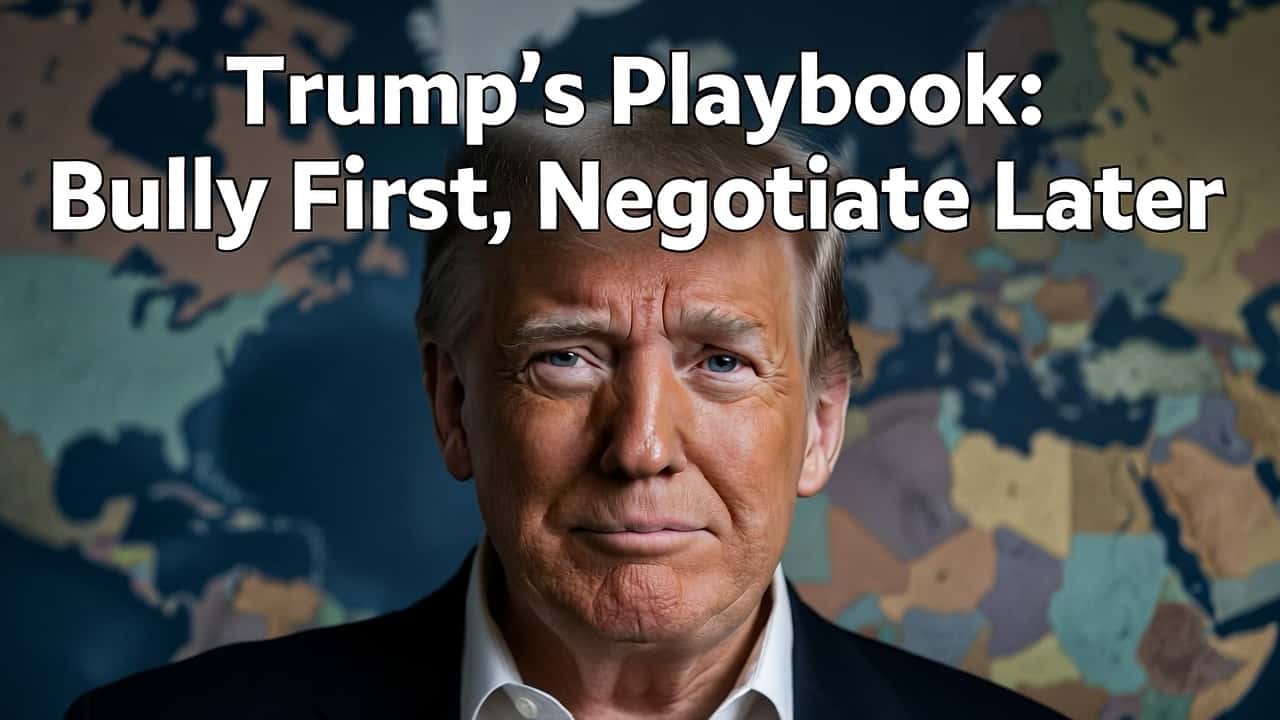

Donald Trump remains one of the most polarizing figures in modern global politics. Even outside formal office, his words continue to move markets, unsettle allies, and dominate international discourse. From threats of tariffs and territorial rhetoric to hardline stances on trade and security, many observers are asking the same question: what is Trump actually trying to achieve?
This article breaks that question into three parts—who Trump is as a political actor, why certain countries have become targets of pressure or speculation, and what his broader endgame appears to be, based on facts and observable patterns rather than ideology.
1: Trump’s Core Political DNA — Control, Leverage, and Narrative Power
Facts
Donald Trump does not operate as a conventional policy-driven politician. Across both his presidency and post-presidency influence, his actions consistently reflect three measurable priorities:
- Base Consolidation Through Conflict
Trump’s strongest political support emerges during moments of confrontation—whether with institutions, allies, or adversaries. Political scientists and media analysts have repeatedly noted that controversy increases his engagement, fundraising, and voter loyalty. - Media Cycle Domination
Trump understands that attention is power. Provocative claims, threats, or unconventional proposals force governments and media to respond, placing him at the center of the conversation regardless of formal authority. - Transactional Worldview
Alliances, treaties, trade norms, and even democratic conventions are framed as negotiable deals. Value is measured not by stability or long-term trust, but by immediate leverage and perceived wins.
Observation
Trump’s behavior is often misread as impulsive. In reality, it is strategically repetitive. Chaos is not a byproduct—it is a tool. By destabilizing norms, he increases his relative power within the system.
2: Venezuela, Greenland, and the Geography of Distraction vs. Strategy
First, a Critical Clarification (Fact)
Donald Trump has not invaded Venezuela.
There has been no U.S. military invasion under Trump or afterward. However, the confusion stems from:
- Severe economic sanctions
- Open discussion of regime change
- Rhetoric implying force “was on the table”
These actions created the perception of imminent invasion, even if it never materialized.
Venezuela: Oil, Drugs, and Pressure Politics
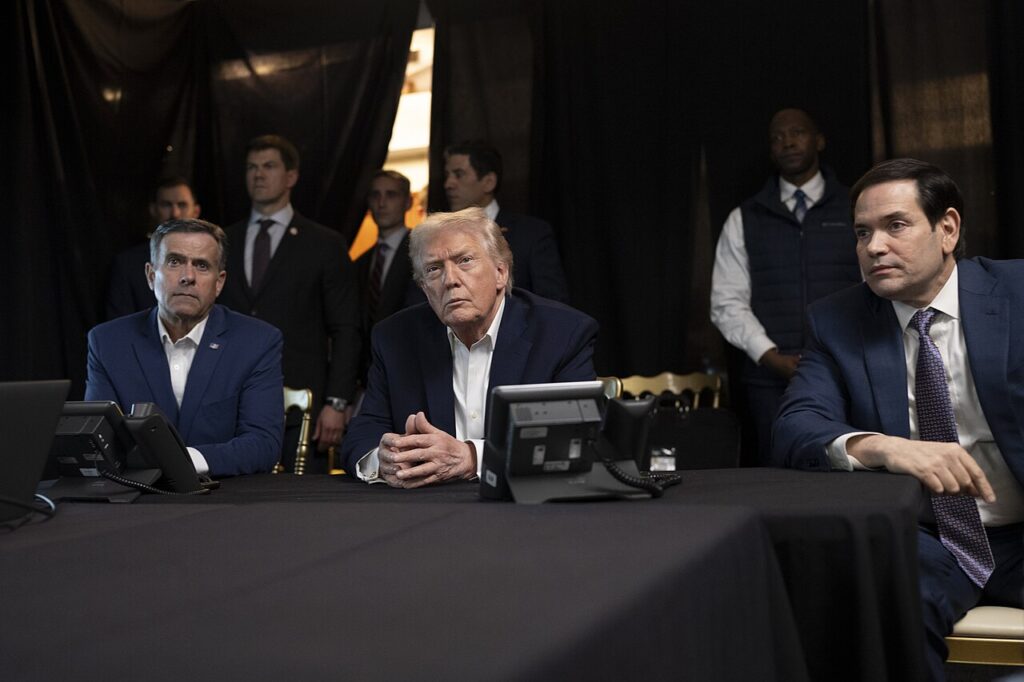
Facts
- Venezuela holds the world’s largest proven oil reserves.
- The U.S. accused the Maduro government of narco-trafficking and state corruption, backed by indictments from the U.S. Department of Justice.
- Trump imposed maximum pressure sanctions, effectively isolating Venezuela economically.
Observation
The Venezuela strategy was less about immediate regime change and more about signaling dominance in the Western Hemisphere. It reinforced Trump’s image as tough on socialism, drugs, and anti-U.S. regimes—key narratives for his domestic base.
Importantly, sanctions also serve as a low-cost alternative to war: they create suffering and leverage without deploying troops, while still projecting strength.
Greenland: Security, Not Absurdity
Facts
- Greenland is strategically critical due to:
- Arctic shipping routes
- Proximity to Russia
- Rare earth minerals
- The U.S. already maintains military presence there (Thule Space Base).
- Trump publicly suggested “buying” Greenland, which Denmark rejected.
Observation
While framed as bizarre, the Greenland episode was rooted in real geopolitical competition, particularly with China and Russia expanding Arctic influence. Trump’s mistake was not the interest, but the presentation. His blunt, real-estate framing overshadowed legitimate security concerns.
Why These Targets?
Countries like Venezuela and Greenland share one trait: they force reactions without immediate retaliation. Trump tends to pressure actors who:
- Cannot easily counter-punch
- Create global headlines
- Reinforce his “America First” persona
3: Tariffs, Trade Deficits, and the Real Objective Behind the Bullying
The Tariff Argument — Fact vs. Reality
Fact
Trump has repeatedly claimed:
“If countries don’t buy as much from the U.S. as we buy from them, we’ll put tariffs on them.”
Economic Reality (Fact)
This logic is structurally flawed:
- The U.S. is the world’s largest consumer economy
- Trade deficits are mathematically inevitable with most countries
- No major economy can “buy equally” from the U.S. in absolute terms
Trade deficits are not inherently losses; they often reflect capital inflows, currency strength, and consumption patterns.
So Why Use This Argument?
Observations
Trump is not using trade deficits as an economic diagnosis—but as a pressure mechanism.
Tariffs function as:
- A negotiation weapon
- A domestic political signal (“I’m fighting for you”)
- A tool to force concessions in unrelated areas (security, immigration, regulation)
In essence, trade becomes leverage, not policy.
Why Bully Allies Like Canada, India, or China?
Facts
- Trump has threatened tariffs or penalties against allies and rivals alike
- Canada, India, and China each play different roles in U.S. supply chains
- Tariff threats often precede renegotiations or political messaging
Observation
Trump’s approach deliberately blurs the line between ally and adversary. By treating everyone as a potential target, he:
- Maximizes negotiating leverage
- Reduces expectations of predictability
- Positions himself as the sole deal-maker
This unpredictability is intentional—it weakens coordinated resistance.
The Bigger Picture: What Trump Actually Wants
Synthesizing Facts and Observations
Trump’s ultimate objective is not balanced trade, global peace, or even long-term economic reform.
What he seeks is:
- Centralized Power — where outcomes depend on him personally
- Permanent Negotiation Mode — no settled norms, only deals
- Perceived Dominance — optics matter more than sustainability
By threatening everyone, he ensures relevance everywhere.
Conclusion: Strategy Disguised as Disorder
Donald Trump’s global posture appears chaotic, but beneath it lies a consistent pattern: pressure, distraction, and leverage. He weaponizes trade deficits, inflates security threats, and courts controversy not to resolve global issues—but to control the narrative and the negotiating table.
Whether this approach strengthens America or destabilizes the global system remains deeply contested. What is clear, however, is that Trump’s tactics are deliberate, not accidental—and the world continues to react on his terms.