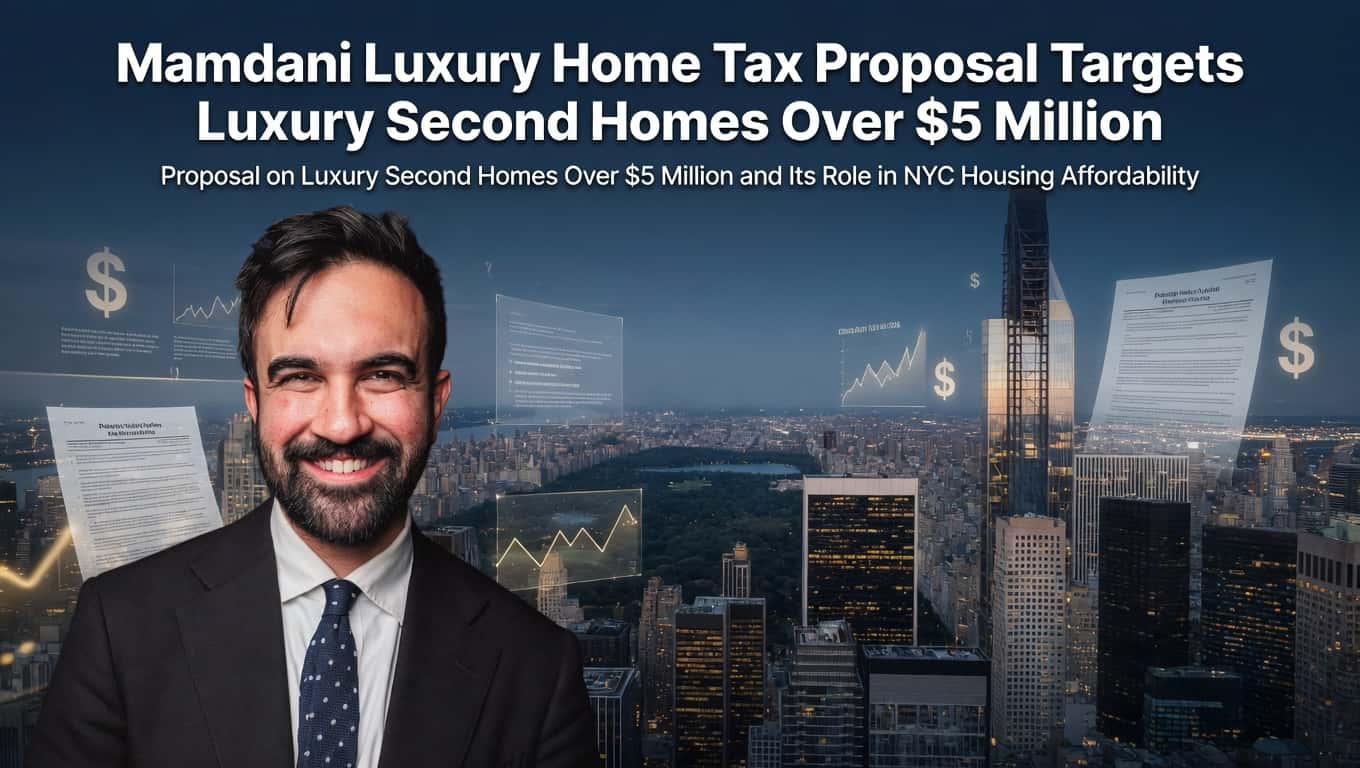

The Mamdani Luxury Home Tax is the latest high-profile initiative from New York City Mayor Zohran Mamdani, unveiled on April 15, 2026, in partnership with Governor Kathy Hochul. This proposal introduces New York State’s first pied-à-terre tax — an annual surcharge on luxury second homes valued at $5 million or more that are not the owner’s primary residence. nyc.gov
Designed to generate approximately $500 million in annual revenue, the Mamdani Luxury Home Tax aims to help close a projected $5.4 billion city budget gap while directing funds toward essential public services that directly influence the NYC housing affordability crisis. nytimes.com
What Is the Mamdani Luxury Home Tax?
At its core, the Mamdani Luxury Home Tax is a targeted levy on one- to three-family homes, condominiums, and co-ops in New York City worth more than $5 million when the owner’s primary residence lies outside the five boroughs. It specifically exempts primary residences and properties used as full-time rentals occupied as someone’s main home.governor.ny.gov
The policy targets absentee owners, ultra-wealthy non-residents, foreign investors, and global elites who treat high-end NYC real estate as a wealth-storage vehicle or occasional pied-à-terre rather than a full-time living space. Mayor Mamdani has publicly highlighted examples such as billionaire Ken Griffin’s $238 million penthouse to illustrate the scope. businessinsider
Unlike traditional property taxes, the Mamdani Luxury Home Tax functions as an additional annual surcharge, with exact graduated rates still under final negotiation as part of state budget talks. The measure has already sparked discussion about property valuation methods and potential legal challenges.
Background on Zohran Mamdani and the “Tax the Rich” Platform
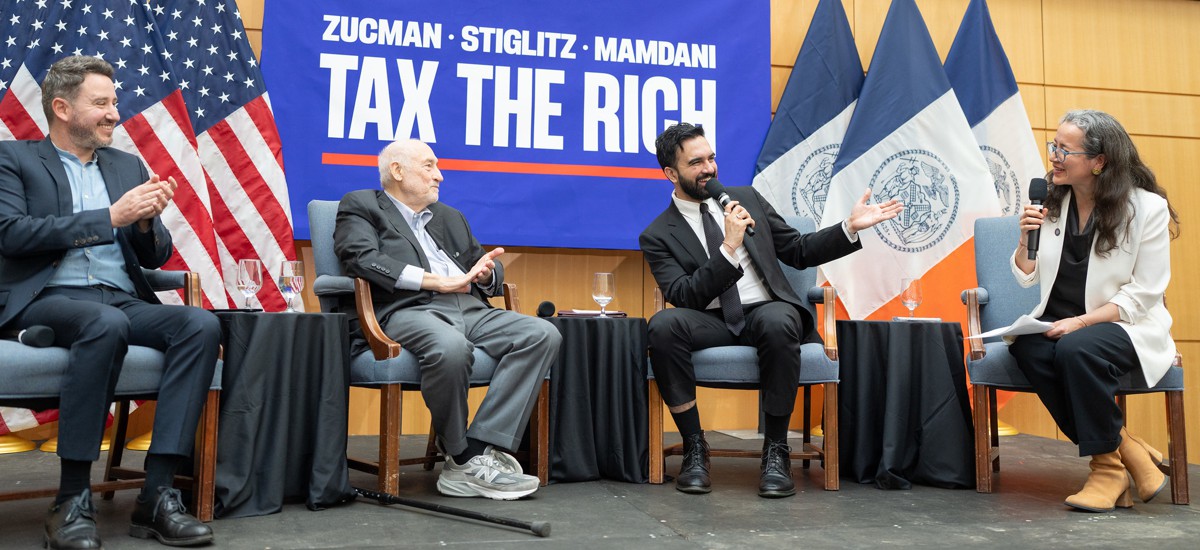
Mayor Zohran Mamdani campaigned on a platform centered on economic fairness and affordability. Elected in late 2025, he quickly prioritized measures to ease pressure on working New Yorkers amid rising living costs. The Mamdani Luxury Home Tax represents an early deliverable from that agenda, marking a rare point of alignment with Governor Hochul, who had previously resisted broader income-tax increases.
This proposal fits within wider efforts to address the NYC housing affordability crisis, where median rents continue to strain household budgets and homeownership remains out of reach for many middle-income families. By focusing on luxury second homes, the Mamdani Luxury Home Tax avoids burdening full-time residents while asking part-time ultra-wealthy owners to contribute more to the city they utilize.
How the Mamdani Luxury Home Tax Aims to Address the NYC Housing Affordability Crisis
The connection between the Mamdani Luxury Home Tax and housing affordability is primarily fiscal. Revenue generated — estimated at $500 million per year — would flow into the city’s general fund to help close the budget deficit without resorting to deeper cuts in services or broader tax hikes on working residents.
Officials have indicated that these funds will support priorities including expanded affordable housing initiatives, childcare subsidies, public safety, and infrastructure improvements that indirectly ease cost-of-living pressures. In a city where housing costs consume more than 30% of income for many households, preserving and expanding such programs is viewed as critical to preventing further displacement.
Supporters argue that the Mamdani Luxury Home Tax discourages speculative investment in ultra-luxury properties that sit vacant much of the year, potentially freeing up market dynamics that could benefit broader housing supply over time. By making non-resident owners pay their “fair share,” the policy seeks to reduce the fiscal load on full-time New Yorkers and create breathing room for affordability measures.
While the Mamdani Luxury Home Tax does not directly convert luxury units into affordable housing, its revenue stream is positioned as a practical tool to fund ongoing efforts within the city’s broader housing strategy. This includes preservation of existing affordable stock and support for new construction programs that target working families.
Potential Challenges and Criticisms of the Proposal
Real-estate industry groups and some economists caution that the Mamdani Luxury Home Tax could trigger legal disputes over property valuations and may dampen demand in the high-end market. Experts warn of possible ripple effects on construction jobs and overall property values if ultra-wealthy buyers shift investments elsewhere.
Implementation details, such as precise rate structures and assessment processes, remain under discussion, adding uncertainty as the proposal moves through Albany. Critics also note that while the Mamdani Luxury Home Tax addresses one symptom of the affordability crisis, it does not expand overall housing supply — a key long-term driver of lower costs.
Public Support and Broader Context
Polling cited by the mayor’s office indicates strong backing, with 93% of New Yorkers supporting a pied-à-terre tax on luxury second homes. The Mamdani Luxury Home Tax is framed as a measured step toward greater equity in a city long characterized by extreme wealth disparities.
As budget negotiations continue, the proposal stands as a test case for progressive taxation strategies in one of America’s most expensive real-estate markets. Its outcome could influence similar discussions in other high-cost cities facing parallel housing affordability challenges.
In summary, the Mamdani Luxury Home Tax offers a targeted revenue mechanism that city leaders hope will bolster public finances and indirectly alleviate pressures fueling the NYC housing affordability crisis. Whether it delivers on those goals will depend on final legislative approval, implementation, and complementary housing policies in the months ahead.
Source: NYC Mayor’s Office (Apr 15, 2026), Governor Hochul Announcement, NY Post, NYT, Business Insider, Robb Report, Archpaper
Related Articles on IMFounder
- Who Is Zohran Mamdani and What His Inauguration Symbolizes
- How Trump and Carney’s War of Words Could Reshape Canada–U.S. Business
- The Hidden Bill of War: How Geopolitics, Oil, and Power Are Reshaping the Global Economy
- Strait of Hormuz Crisis: Why Founders and Businesses Are in Serious Danger