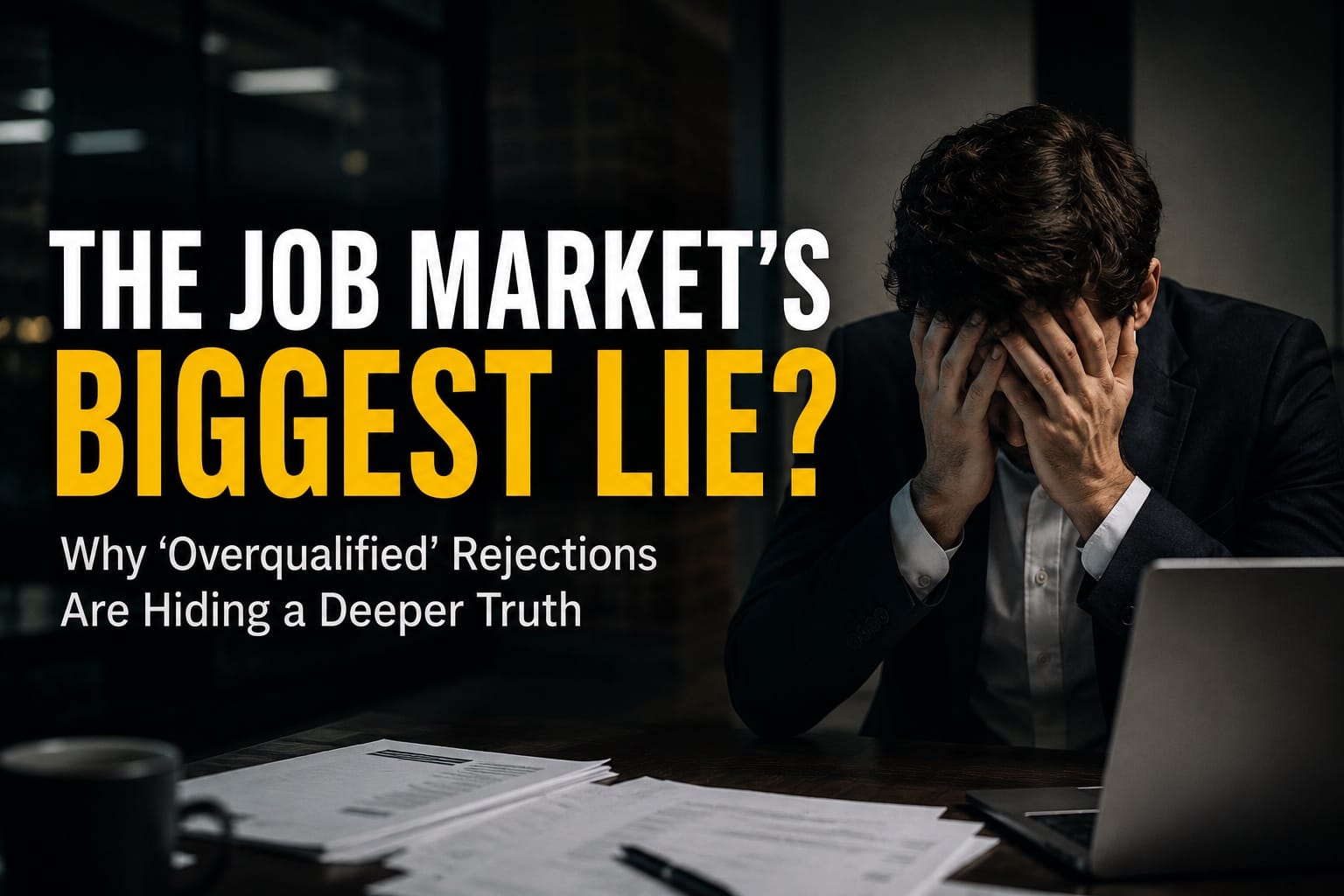

There is a strange kind of anxiety happening in the job market right now.
People are applying for jobs they genuinely know they can do. They have the experience. They have the results. They have years of proven work behind them. Some have managed teams, scaled companies, built strategies, increased revenue, or spent years mastering their craft.
Then the rejection email comes.
“Unfortunately, we feel you may be overqualified for this position.”
At first glance, it sounds almost flattering. Like a compliment wrapped inside a rejection.
But let’s be honest about what many candidates are starting to realize.
A lot of the time, “overqualified” does not actually mean overqualified.
In some cases, candidates and hiring experts argue it can reflect concerns about salary expectations or retention.
Or worse, it means uncomfortable.
Because hiring someone highly experienced forces companies to confront something they do not always want to admit. Skilled professionals know their value. They ask better questions. They recognize disorganization faster. They expect communication, structure, and compensation that reflects their experience.
And many companies are not prepared for that.
The modern hiring market has created a strange contradiction. Businesses say they want experts, leaders, and experienced talent. Job descriptions are filled with impossible wish lists requiring years of experience, multiple skill sets, advanced software knowledge, marketing expertise, content creation abilities, analytics understanding, project management, and often the workload of three separate positions rolled into one.
But when someone actually arrives with that level of experience, suddenly they become “too qualified.”
The truth is, many companies are not looking for the most experienced candidate. They are looking for the most affordable candidate who can still perform at a high level without questioning the system too much.
That distinction matters.
Over the last few years, layoffs, economic instability, and the rise of remote work have created massive competition across industries. Highly skilled professionals are now applying for positions below their previous titles simply because they want stability, flexibility, or a healthier work environment. Some are pivoting careers entirely. Others are leaving toxic corporate spaces and looking for something more sustainable.
But instead of recognizing this shift, parts of the hiring market still operate under outdated assumptions. Recruiters often assume experienced candidates will become “bored,” leave too quickly, or expect salaries outside the budget range. Sometimes companies reject strong applicants before even having a conversation with them.
Ironically, businesses constantly complain about talent shortages while filtering out people who already know how to solve the problems they are hiring for.
The emotional side of this issue is rarely discussed enough. Being labeled “overqualified” can make professionals feel trapped in a strange limbo. Too experienced for one role. Not the exact perfect match for another. Simultaneously encouraged to “dream bigger” while also being rejected for aiming lower.
It creates a kind of career FOMO that quietly eats away at confidence.
People start wondering if they should remove accomplishments from their resumes. Downplay leadership experience. Hide years of expertise. Shrink themselves just enough to appear acceptable.
Think about how backwards that really is.
Some professionals are now strategically removing qualifications simply to avoid intimidating hiring systems or salary expectations. In many cases, applicant tracking systems automatically screen candidates before a human even sees them. Others face recruiters who are under pressure to fill roles quickly and cheaply rather than thoughtfully.
Artificial intelligence is adding another layer to this problem. Many hiring systems now rely on automated screening tools to filter resumes based on keywords, salary assumptions, career progression patterns, and perceived “fit.” Researchers have warned that algorithmic hiring systems can unintentionally reinforce bias and eliminate strong candidates before meaningful human review ever happens.
Meanwhile, social media continues amplifying career comparison culture. Every scroll on LinkedIn feels like another announcement about promotions, layoffs, career pivots, or people landing “dream jobs.” It creates pressure to constantly level up while the actual hiring market becomes increasingly unstable underneath the surface.
The result is a workforce full of highly capable people questioning their worth simply because companies refuse to pay for experience appropriately.
And that is the part many people are finally saying out loud.
Sometimes “overqualified” is not about capability at all.
Sometimes it simply means a company wants senior-level work at entry or mid-level pay.
Of course, not every employer operates this way. Some companies genuinely worry about long-term fit or retention. Others are transparent about salary limitations from the start. But job seekers are becoming increasingly aware of how often “overqualified” functions as corporate shorthand for “we cannot afford what you bring to the table.”
The companies that will stand out moving forward are the ones willing to stop treating experience like a liability.
Because experienced professionals are not problems to manage around.
They are assets.
And in a hiring market filled with uncertainty, ghost jobs, burnout, and endless competition, people are getting tired of being told their expertise is somehow the reason they are being left behind.
Related Articles on IMFounder
- How Big Tech Is Quietly Taking Control of the Food Supply
- The Restaurant Industry: The Fastest Way Into the Economy Is Closing
- How Sysco Corporation Consolidated the Middle Layer of Food Distribution
- Trees Are the Rarest Resource on Earth
- Influencer-Founded Brands: The New Million-Dollar Empires
- How Netflix, Paramount, and Comcast Are Competing to Buy Warner Bros
Sources & References
- Harvard Business Review — AI hiring bias and resume screening research
- Forbes — Overqualification and hiring trend analysis
- LinkedIn Workforce Confidence & hiring trend reports
- Resume Builder — 2024 hiring trends and recruiter surveys