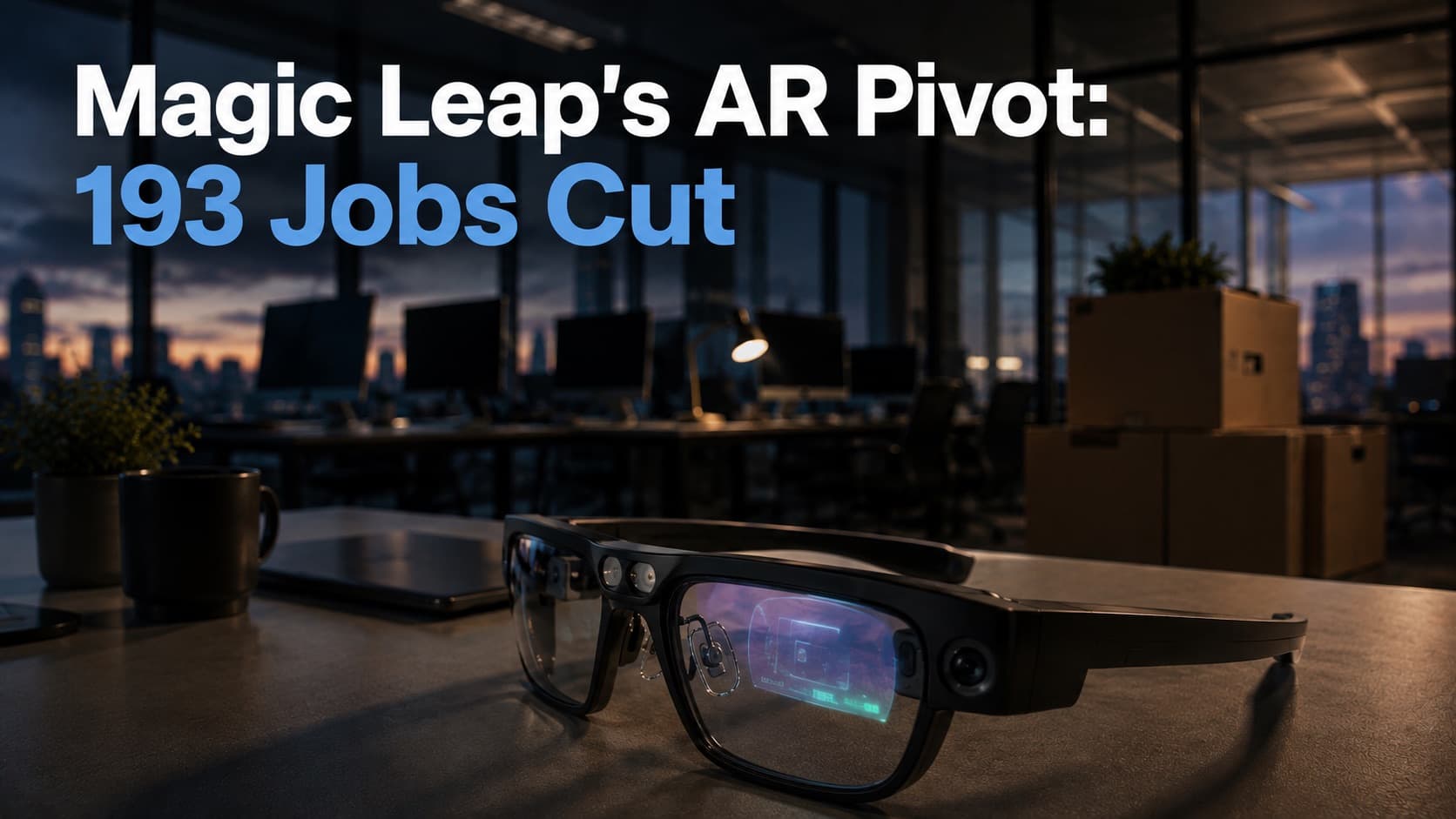

For over a decade, Magic Leap was the company Silicon Valley couldn’t stop talking about — and couldn’t quite explain. Now it’s cutting nearly 200 jobs and stepping out of the business that made it famous: building AR headsets.
On July 9, 2026, the Plantation, Florida-based augmented reality company announced a “strategic pivot,” saying it would stop developing its own-branded AR headsets and instead become a supplier of waveguide optics — the specialized lenses that project digital images into a wearer’s field of vision — and integration services to other companies building AR devices. A WARN Act filing with Florida state officials confirmed the human cost: 193 employees will be permanently laid off effective October 1, 2026, spanning software, hardware, UX and design, product management, manufacturing engineering, quality, technical program management, and senior engineering and executive leadership roles.
It’s the clearest sign yet that one of the most heavily funded hardware startups in history has stopped trying to out-build Meta and Apple, and started trying to out-supply them instead.
From “Neurologically-True Reality” to a Cautionary Tale
Magic Leap was founded in 2011 by Rony Abovitz, who pitched a vision far bigger than a headset: a display technology so advanced it would blend digital and physical reality seamlessly, something Abovitz later described as pursuing “neurologically-true reality.” A leaked 2015 demo video — jellyfish and solar systems floating through a office — went viral before the company had shipped a single product, and investors lined up behind the promise.
They kept lining up for years. Magic Leap raised roughly $3.48 billion across 12 funding rounds, according to startup data platform Tracxn, from a investor list that reads like a sovereign-wealth who’s-who: Google, Temasek, Alibaba, and a $461 million check from Saudi Arabia’s Public Investment Fund in 2018 alone. By the time the company finally shipped its first product, Magic Leap One, in 2018 — seven years after founding — it had already raised well over $2 billion without a product on the market.
The reception was underwhelming relative to the hype. Reviewers and customers found the field of view narrow and the use cases thin compared to years of teaser videos. The company kept raising anyway: a $500 million round in 2021 valued Magic Leap at $2 billion — the same valuation it had carried seven years earlier, despite having raised hundreds of millions more in between. That’s a startup working very hard to stay in place.
What Actually Went Wrong
Magic Leap’s troubles didn’t start in 2026 — this pivot is closer to the final chapter of a story that’s been unfolding for six years.
In April 2020, the company laid off roughly 1,000 employees — close to half its workforce at the time — and announced it was abandoning consumer ambitions to focus entirely on enterprise customers in healthcare, manufacturing, defense, and field service. Founder and CEO Rony Abovitz stepped down that same month, later replaced by Peggy Johnson, a former Microsoft executive vice president. The company said COVID-19 accelerated the decision, but the shift to enterprise had been telegraphed for a while: Magic Leap had spent years failing to land the kind of consumer traction that would justify its valuation, while also competing unsuccessfully against Microsoft’s HoloLens for military and enterprise contracts.
The enterprise-only Magic Leap 2 followed, and by most accounts performed better in its niche than its predecessor. But “better in its niche” was never going to justify a company that had raised over $3 billion. Signs that another shift was coming had already surfaced: Bloomberg reported as early as July 2024 that Magic Leap was quietly moving away from first-party device development, treating it as what one report characterized as a last-ditch effort to find commercial use for its optics technology rather than its finished headsets. By May 2026, Magic Leap had laid off its entire direct sales team — a far bigger tell than any press release, since a company doesn’t need salespeople for headsets it no longer plans to sell.
The fundamental problem, reported across multiple outlets covering the AR hardware category broadly, is one of economics: building consumer or enterprise AR hardware at scale requires balance sheets like Meta’s or Apple’s, companies that can subsidize hardware losses with software, advertising, or device ecosystems worth hundreds of billions of dollars. Magic Leap never had that luxury — it had venture capital, and venture capital eventually wants a return.
The Pivot, Explained
Rather than shut down, Magic Leap is betting its remaining value lies in what’s inside its headsets, not the headsets themselves. The company’s July 9 announcement framed the shift around scale: display engineering executive Scott Carden said the company is focused on “solving the toughest challenges of scaling waveguide production” — positioning Magic Leap as a manufacturing and licensing partner rather than a device brand.
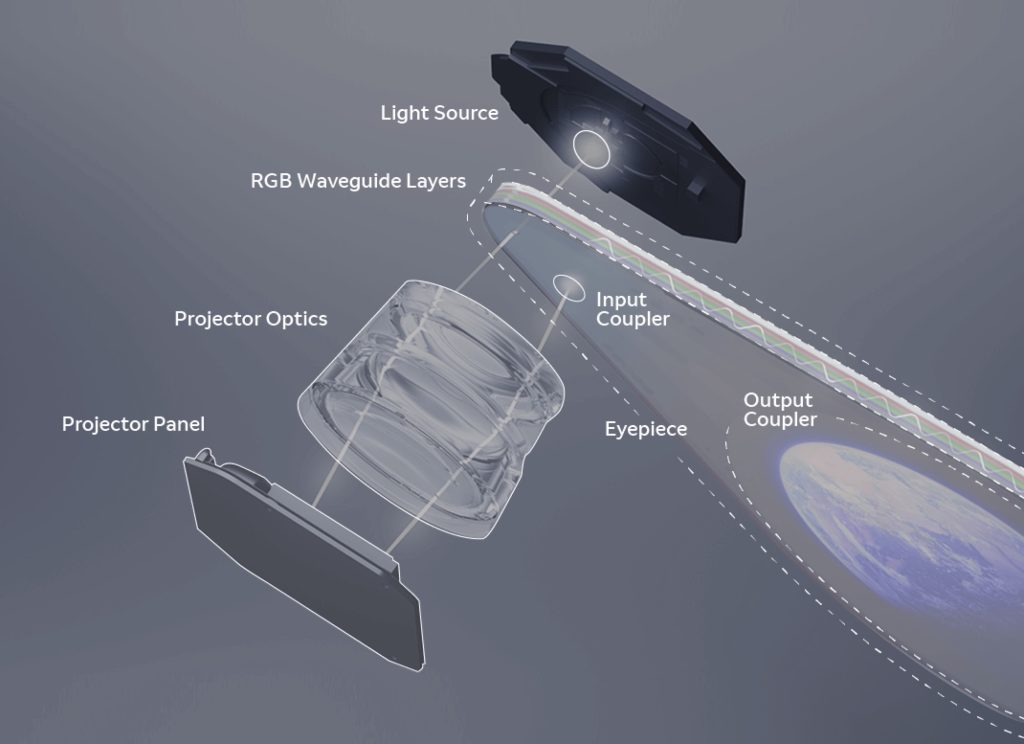
This isn’t a cold start. Magic Leap already has a hardware partnership with Google and a manufacturing partnership with Taiwan’s Pegatron, both centered on waveguide licensing and production, according to reporting from Road to VR. The company also pointed to IDC data it says shows XR device shipments grew 44.4% in 2025, arguing that demand for high-quality waveguide optics — a genuine bottleneck for smaller AR hardware makers who can’t build their own optics from scratch — is where the real opportunity now sits.
It’s worth being direct about what several outlets covering this story have concluded, even though Magic Leap itself avoided the word: VR.org’s headline put it bluntly, describing the move as Magic Leap “getting out of the headset business.” Whether “strategic pivot” or “quiet exit” is the more accurate framing may depend on whether Magic Leap ever ships a headset under its own name again — and right now, nobody outside the company knows if it will.
What Founders Should Actually Take From This
Strip away the AR specifics, and Magic Leap’s story is a compressed masterclass in the risks of capital-intensive hardware startups. A few lessons stand out for founders and investors watching from the outside:
1. Hardware moonshots eat far more runway than founders plan for. Magic Leap raised $3.48 billion over roughly 15 years and still had to abandon its core product. If your model assumes one or two funding rounds will get you from prototype to profitable device company, revisit that assumption against companies that have tried it with ten times your budget.
2. “Revolutionary” positioning creates expectations you may never close. The gap between Magic Leap’s 2015 demo reel and its shipped 2018 product defined the company’s reputation for years afterward. Overpromising on a hardware timeline is a debt that compounds — every delay makes the eventual product’s job harder, not easier.
3. A pivot to supplying components instead of selling finished products is a legitimate strategy, not automatically a failure signal. If your technology is more defensible than your ability to build, market, and support a consumer or enterprise product around it, licensing or supplying that technology to better-resourced players can preserve real value — Magic Leap’s existing Google and Pegatron deals suggest this route was already showing traction before the public pivot.
4. Watch the org chart, not the press release. Magic Leap cut its entire sales team roughly two months before announcing it was leaving the headset business. Quiet structural moves — dissolving a sales team, freezing a product roadmap, losing senior engineering leadership — usually tell you where a company is headed well before the official announcement does.
5. Sequencing a pivot before cash runs out preserves optionality; waiting until the money is gone doesn’t. Magic Leap still has active partnerships and apparent capital to fund a transition. Companies that wait for a cash crisis to force the decision rarely get to choose their next chapter this cleanly.
The Bigger Picture
Magic Leap’s announcement lands in a rough year for tech employment broadly. By early August 2026, layoff trackers had logged over 320 layoff events across the tech sector in 2026 alone, affecting more than 200,000 workers, according to data aggregated by Skillsyncer. Hardware and XR-adjacent companies have been particularly exposed, caught between underwhelming consumer demand for headsets and heavyweight competitors — Meta, Apple, and a fast-improving field of Chinese AR manufacturers — who can absorb losses that smaller players can’t.
For founders building anything in wearables, AR, or other capital-intensive hardware categories, Magic Leap’s arc is less a cautionary tale about one company’s execution and more a data point about the category itself: the market rewarded scale and balance-sheet depth over a decade of innovation and $3.48 billion in capital. That’s a hard fact for hardware founders to sit with — and exactly the kind of fact worth sitting with before writing the next pitch deck.
Sources: Road to VR, VR.org, Tracxn, TechCrunch, Glass Almanac, Skillsyncer Layoffs Tracker, Intellizence, CNBC, 36Kr.
Related Articles on IMFounder
- 5 Powerful Startups You Can Launch With Only $1,000
- The Complete Guide to Starting an AI Startup in Canada
- 50 Startup Mistakes That Kill Companies Before They Make Their First Profit
- Startup Failure Rate 2026: Why 90% of Startups Fail (Data + Real Case Studies)
- IRL App Fraud Exposed: How $170M Was Built on 95% Fake Users
- Community Coders: The Story of a Startup That Didn’t Scale and the Lessons It Offers