
From Asha Sharma’s ambitious first 100 days to sweeping layoffs and studio uncertainty, Xbox has entered the most critical chapter in its 25-year history.
Xbox Reset is no longer just an internal strategy—it has become one of the biggest stories in the gaming industry.
Only weeks ago, Xbox appeared to be entering a new era under CEO Asha Sharma. Microsoft presented a vision built around innovation, stronger first-party games, artificial intelligence, community engagement, and preparations for Xbox’s upcoming 25th anniversary. The message was optimistic. After years of criticism surrounding console sales, exclusive titles, and Xbox’s long-term direction, Sharma’s leadership promised something many fans had been waiting for: clarity.
At IMFOUNDER, we recently explored this transformation in our article, “Asha Sharma’s First 100 Days: How Xbox’s New CEO Is Preparing for the Company’s 25th Anniversary.” That article examined Sharma’s early priorities, her leadership philosophy, and Microsoft’s renewed commitment to making Xbox relevant again.
Today, however, the conversation has changed dramatically.
Instead of discussing future games and platform improvements, the industry is talking about layoffs, studio restructuring, cancelled projects, rising development costs, and a company searching for a sustainable business model after investing billions into gaming.
This isn’t simply another round of corporate cost-cutting.
It may be the defining moment that determines whether Xbox becomes stronger—or loses its position as one of gaming’s biggest brands.
From Vision to Reality
When Asha Sharma stepped into the role of Xbox CEO, she inherited a business unlike any other in gaming.
Microsoft had already spent years transforming Xbox from a traditional console manufacturer into a broader gaming ecosystem. The company acquired Bethesda, completed the historic Activision Blizzard acquisition, expanded Xbox Game Pass, invested heavily in cloud gaming, and continued growing Xbox Game Studios.
On paper, Xbox had never looked stronger.
Yet behind the impressive list of acquisitions and services, the business faced uncomfortable realities.
Console sales continued to lag behind PlayStation in several key markets. Development budgets for blockbuster games had reached unprecedented levels. New hardware had become increasingly expensive to manufacture. Meanwhile, gamers expected more exclusive titles while subscriptions alone were not growing fast enough to offset rising costs.
Sharma’s first 100 days acknowledged these challenges without pretending they didn’t exist.
Rather than promising instant success, she focused on rebuilding trust, improving execution, accelerating product development, and creating a healthier long-term strategy.
That honesty earned praise throughout the industry.
But honesty alone doesn’t solve financial problems.
The Xbox Reset Begins
The turning point arrived when Sharma and Xbox leadership introduced what they called the “Next 100 Days: Xbox Reset.”
Unlike traditional corporate announcements designed to reassure employees and investors, the internal communication painted a remarkably transparent picture of Xbox’s current position.
Microsoft acknowledged that despite investing tens of billions of dollars into gaming—including acquisitions, hardware, platform development, and content—the returns had not matched expectations.
The company reportedly highlighted declining operating margins, increasing development costs, and the growing pressure of maintaining one of the world’s largest gaming organizations.
For many inside the company, the message was clear.
The existing model could not continue indefinitely.
A reset was no longer optional.
It had become necessary.
Layoffs Signal Difficult Decisions Ahead
Almost immediately after discussions around the Xbox Reset emerged, reports surfaced that Microsoft was planning another significant round of layoffs affecting parts of its gaming division.
Various reports suggested that publishing teams, marketing departments, support functions, and several development studios would experience restructuring.
Although Microsoft has not publicly commented on every report, the broader message is impossible to ignore.
Xbox is entering a period of disciplined spending.
For employees, these decisions represent uncertainty.
For developers, they raise concerns about creative freedom and project continuity.
For gamers, they create questions about whether anticipated titles will arrive on schedule—or at all.
The gaming industry has witnessed similar restructurings across major publishers over the past two years, but Xbox attracts particular attention because Microsoft was expected to be one of the industry’s most financially secure companies.
Ironically, that financial strength may be exactly why these decisions are happening now.
Microsoft appears determined to address structural problems before they become larger.
Bigger Doesn’t Always Mean Better
For years, Microsoft’s strategy was straightforward.
Acquire more studios.
Expand Game Pass.
Increase cloud gaming.
Bring more players into the Xbox ecosystem.
Those goals made strategic sense.
But building one of the world’s largest gaming organizations also created enormous complexity.
Managing dozens of development studios across multiple continents isn’t simply about funding projects.
It requires aligning creative teams, managing technology, coordinating publishing schedules, supporting live-service games, integrating acquisitions, and balancing billions of dollars in investment.
Success becomes increasingly difficult as organizations grow larger.
Owning more studios doesn’t automatically produce more successful games.
If anything, expectations become even higher.
The AI Era Is Changing Everything
Another major factor influencing Xbox’s future rarely receives the attention it deserves.
Artificial intelligence.
Microsoft has positioned itself as one of the global leaders in AI through its investments across the company.
Gaming is naturally becoming part of that transformation.
AI is expected to accelerate game development, improve quality assurance, enhance non-player characters, optimize localization, strengthen customer support, and reduce repetitive production work.
For Xbox leadership, AI isn’t replacing creativity.
It’s becoming another productivity tool.
However, every major technological transition forces organizations to rethink budgets, staffing, workflows, and long-term investments.
Xbox’s restructuring cannot be viewed separately from Microsoft’s broader AI ambitions.
The two strategies are increasingly connected.
Why This Matters Beyond Xbox
Many gamers naturally compare Xbox with PlayStation.
But today’s competition extends far beyond consoles.
Gaming companies now compete for something far more valuable than hardware sales.
They compete for attention.
Every hour spent watching YouTube, scrolling TikTok, streaming Netflix, or playing Fortnite represents time that isn’t being spent elsewhere.
Consumer entertainment has become one massive battlefield.
Winning requires exceptional content—not simply more content.
That’s why Xbox’s current strategy appears to emphasize quality, operational efficiency, and sustainable profitability rather than endless expansion.
In many ways, Microsoft’s gaming division is experiencing the same transformation occurring throughout the technology industry.
Growth at any cost is giving way to disciplined execution.
IMFOUNDER Perspective
When we published our analysis of Asha Sharma’s first 100 days, we argued that Xbox had entered a leadership transition unlike any in its recent history.
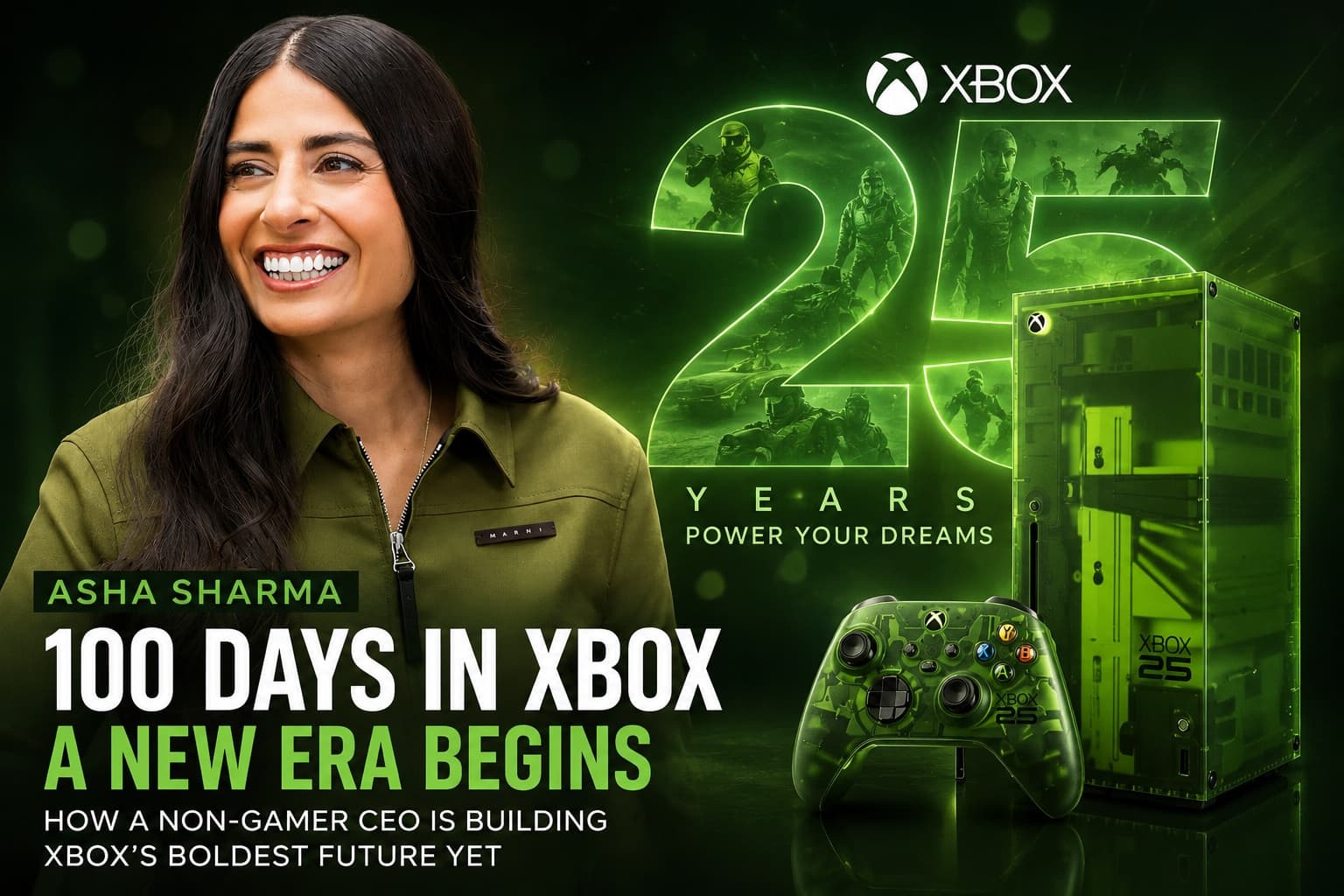
That observation feels even more relevant today.
The optimism surrounding Sharma’s appointment hasn’t disappeared.
Instead, it has evolved into something more difficult.
Execution.
It’s easy for any executive to announce bold visions.
It’s far harder to restructure a multi-billion-dollar organization while maintaining employee confidence, satisfying players, delivering blockbuster games, and meeting shareholder expectations.
That’s the challenge now facing Xbox.
History rarely remembers leaders for the promises they make during their first 100 days.
It remembers them for the decisions they make when circumstances become uncomfortable.
For Xbox, those uncomfortable moments have arrived much sooner than anyone expected.
The next year will likely determine whether Microsoft’s gaming business enters a new era of sustainable growth or spends the remainder of the decade trying to recover from another identity crisis.
One thing is already certain.
Our previous IMFOUNDER story about Asha Sharma’s first 100 days wasn’t the end of the story.
It was only the beginning.
The Xbox Reset is now the next chapter—and perhaps the most important one in the company’s 25-year journey.
Frequently Asked Questions
Why is Microsoft restructuring Xbox?
Microsoft is reducing costs, restructuring teams, and improving operational efficiency after years of major investments in gaming acquisitions and platform expansion.
Is Xbox shutting down?
No.
Microsoft has repeatedly confirmed its long-term commitment to Xbox. The restructuring aims to build a stronger and more sustainable gaming business.
Who is Asha Sharma?
Asha Sharma became CEO of Xbox and is leading Microsoft’s long-term transformation strategy, including platform improvements, AI integration, Game Pass growth, and organizational restructuring.
Is Xbox Game Pass affected?
Game Pass remains one of Microsoft’s biggest priorities and is expected to continue expanding despite organizational changes.
Why is Xbox focusing on AI?
Microsoft believes artificial intelligence will improve game development, player experiences, customer support, localization, and productivity across Xbox Studios.
Related Reading on IMFounder
- GTA 6 Pre-Order Sales Break the Internet: 7 Shocking Numbers Behind Gaming’s Biggest Launch Ever
- Xbox Game Pass leaked memo signals a major shift in Microsoft’s subscription
- Sony Raises PS5 Prices — and It Signals a Deeper Crisis in the AI Era
- Oracle Didn’t Just Lay Off Thousands — It Sent a Message About the Future of Work
- Apple, Nintendo, Playstation, XBOX Price Hike 2026: 7 Brutal Tech Increases Destroying Wallets Worldwide