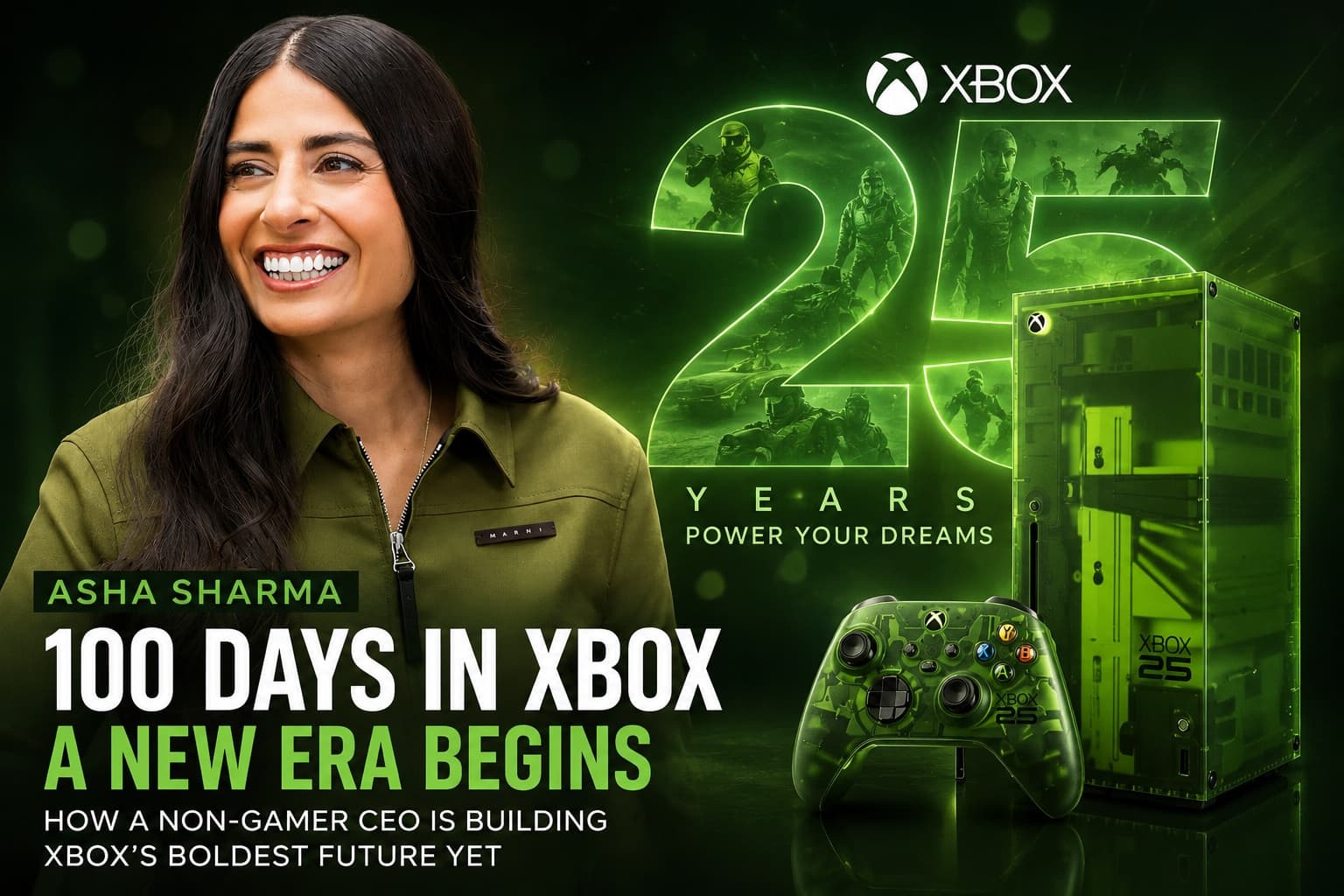

Xbox is celebrating 25 years — but its most dramatic transformation may be happening right now. Its most surprising leader may be proving that expertise isn’t always about playing the game—it’s about understanding the people who do.
Nobody Expected Asha Sharma
When Microsoft announced that Asha Sharma would become the new CEO of Xbox, the gaming world reacted with confusion.
Who was she?
Unlike many gaming executives before her, Sharma wasn’t known for building blockbuster games. She wasn’t a console architect. She wasn’t a legendary developer. She wasn’t a lifelong face of the gaming industry.
Instead, her résumé looked very different.
She had worked across technology, product innovation, consumer platforms, artificial intelligence, Meta, Instacart, and Microsoft. She understood ecosystems, user behavior, growth, and emerging technologies.
But gaming?
That wasn’t her world.
For many Xbox fans, the appointment felt like Microsoft had handed the keys to one of gaming’s most beloved brands to someone from outside the castle walls.
One hundred days later, that criticism is becoming one of the most fascinating leadership stories in technology.
Because while many expected Sharma to learn gaming, what actually happened is that she started changing Xbox.
And people noticed.
Xbox Turns 25 at a Critical Moment
The timing could not be more symbolic.
Xbox is celebrating its 25th anniversary.

A quarter-century ago, Microsoft entered a market dominated by Sony and Nintendo. The original Xbox was considered an underdog. Yet over the years, the brand produced some of the most influential moments in gaming history.
Halo.
Xbox Live.
The Xbox 360 era.
Online multiplayer gaming.
Game Pass.
Cloud gaming.
The Activision Blizzard acquisition.
But the journey was never smooth.
Xbox also experienced setbacks, controversial decisions, missed opportunities, and years of debate about its identity. As the brand enters its next 25 years, Sharma inherits both its greatest strengths and its deepest challenges.
And unlike many leaders before her, she appears willing to question assumptions that have existed for years.
The First Surprise: She Listened
Many executives arrive with a vision.
Sharma arrived with questions.
Over her first 100 days, one theme repeatedly emerged from interviews, announcements, and community discussions.
She listened. That may sound simple. In reality, it is incredibly rare.
Gaming communities are among the most passionate and vocal audiences in the world. Every decision is debated. Every change is analyzed. Every announcement generates thousands of opinions.
Most companies hear their communities. Few genuinely respond to them.
One of the strongest impressions Sharma has created is that Xbox players feel heard again.
Whether it involves branding, platform strategy, exclusives, subscriptions, or community initiatives, the message has been consistent:
Xbox belongs to its players.
Not executives.
Not investors.
Players.
That philosophy may ultimately become her biggest contribution.
The Return of Xbox Exclusives
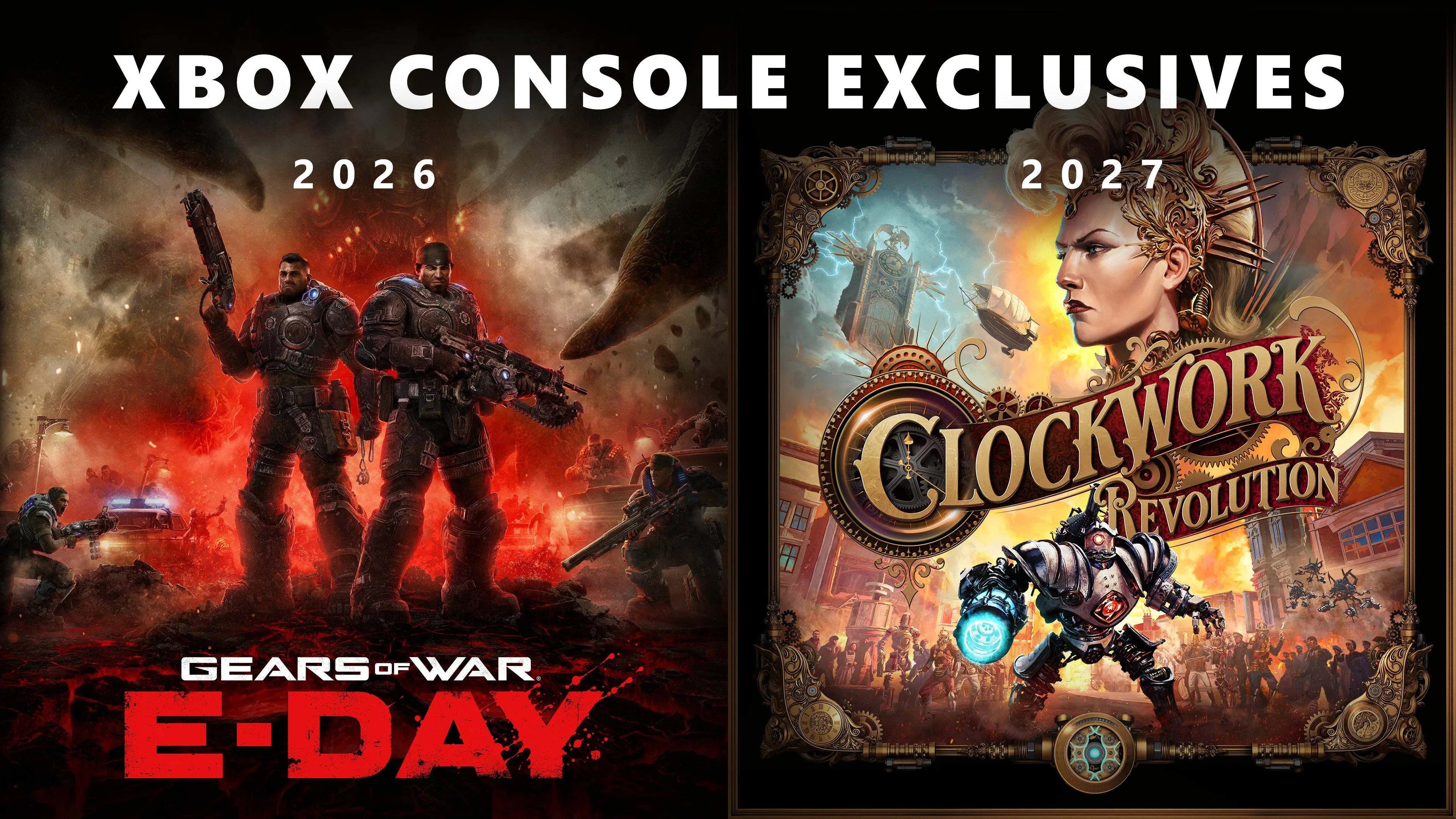
Perhaps no issue has divided Xbox fans more than exclusivity.
For years, Microsoft embraced a broader multiplatform strategy. From a business perspective, the logic made sense. More platforms meant more players. More players meant more revenue.
But many loyal Xbox fans worried that the company’s identity was becoming diluted.
What makes an Xbox special if everything can be played elsewhere?
During her first 100 days, Sharma signaled a renewed focus on exclusive content.
It was a move many fans had been requesting for years. More importantly, it demonstrated something significant about her leadership style.
She wasn’t afraid to reverse course.
In large corporations, leaders often defend existing strategies because changing direction can be interpreted as admitting mistakes.
Sharma appears less interested in protecting old decisions and more interested in solving current problems.
That distinction matters.
Killing Popular Internal Ideas Takes Courage
One of the most interesting aspects of Sharma’s leadership is her willingness to challenge assumptions.
Microsoft is one of the world’s biggest AI companies.
Satya Nadella has made artificial intelligence a central part of Microsoft’s future.
Yet Sharma has repeatedly emphasized that Xbox exists for gaming first. Not AI demonstrations. Not technology showcases.
Gaming.
That distinction may seem subtle, but it reveals something important.
Many executives try to align every division with the company’s latest trend.
Sharma appears focused on ensuring Xbox remains Xbox.
For gamers, that message has been welcomed.
Because regardless of technological shifts, people come to Xbox for one reason:
To play.
The Biggest Competition Isn’t Sony
One of Sharma’s most insightful observations may also be her most controversial.
She has suggested that Xbox’s biggest competitor isn’t Sony.
It isn’t Nintendo. It isn’t even another gaming company.
It’s attention.
Think about the modern teenager. Gaming competes against TikTok. YouTube Shorts. Instagram Reels. Streaming services. Social media. Artificial intelligence. Infinite content.
The battle is no longer about which console wins.
The battle is about which experience earns someone’s time.
That perspective changes everything. It explains why younger generations consume entertainment differently.
Why personalization matters.
Why shorter experiences matter.
Why community matters.
Why open ecosystems matter.
Sharma isn’t preparing Xbox for the last console war. She’s preparing it for the next attention war, and that may prove to be a far bigger challenge.
Seventy Billion Hours (70,000,000,000)
During discussions about whether Xbox is becoming more than a gaming company, Sharma pointed to a simple statistic.
People spent approximately 70 billion hours playing games across the Xbox ecosystem.
Think about that number.
Seventy billion. Not minutes. Not sessions.
Hours.
In a world overflowing with entertainment options, people still choose gaming on a massive scale.
For Sharma, the statistic represents something deeper.
Gaming isn’t a side business. Gaming isn’t merely content. Gaming is the heart of Xbox. The numbers speak for themselves. While Xbox may expand into new experiences, new platforms, and new technologies, the foundation remains unchanged.
The players. The games. The communities.
The Hidden Battle: RAM, AI, and the Cost of the Future
Most gamers never think about memory pricing. They do not need to. But Xbox executives cannot afford to ignore it.
One of the most revealing aspects of Asha Sharma’s first 100 days has been her willingness to openly engage with problems that most leaders in gaming prefer to keep abstract. The AI boom is fundamentally reshaping the economics of technology, and its impact is now extending directly into the gaming industry.
Data centers require more memory. AI systems demand significantly greater computational resources. Global demand continues to rise across both consumer and enterprise sectors.
The result is a structural shift: higher costs, tighter supply chains, and increasingly complex hardware decisions.
For Xbox, these pressures are not theoretical. They directly influence the design and economics of future consoles, from pricing strategies to performance ceilings to long-term innovation cycles.
This is where Sharma’s background in broader technology ecosystems becomes strategically significant. Unlike many gaming executives who come from studios or publishing, she brings experience from large-scale platforms, AI systems, and consumer tech infrastructure.
That perspective becomes most relevant in discussions around Project Helix and the next generation of Xbox hardware, where gaming, AI infrastructure, and global supply constraints increasingly intersect.
Hiring Matthew Ball May Be Her Boldest Move
Most executives hire supporters.
Most leaders surround themselves with people who agree.
Asha Sharma did something different. She brought Matthew Ball into the conversation. Ball is one of the most respected analysts in gaming.
He is also someone who has openly criticized Xbox when he believed the company made mistakes.
Most corporations avoid critics. Sharma embraced one.
Why?
Because criticism can be valuable. Because uncomfortable conversations often reveal the truth. Because the goal is improvement, not validation.
For founders, this may be one of the most important lessons from her first 100 days.
The smartest person in the room is not always the one praising your strategy.
Sometimes it’s the one challenging it.
The Moment That Defined Her First 100 Days
Then came the 25th Anniversary celebration, a moment expected to be defined by announcements, trailers, roadmaps, and new game reveals.
Instead, what unfolded was something far simpler and more unexpected: generosity.
The surprise giveaway of anniversary Xbox consoles shifted the tone of the entire event. For some attendees, it was a memorable perk. For others, it felt more personal — a rare moment of recognition from a platform they had supported for years.
It was not just about hardware. It became a symbolic gesture of acknowledgment, a reminder that Xbox’s 25-year journey was built not only by executives and engineers, but by millions of players who stayed with the platform through every generation.
The reaction was emotional, and in many ways, intentionally so.
Because in an industry dominated by scale, strategy, and billion-dollar marketing campaigns, some of the most powerful moments still come from something disarmingly simple: making the audience feel seen.
What Took Years Happened in Months
It would be unfair to compare 100 days against entire leadership eras.
Phil Spencer deserves enormous credit for rebuilding Xbox and positioning the company for the future.
Previous leaders faced different challenges and different market realities.
But there is one observation that is difficult to ignore. Several conversations that seemed stuck for years suddenly started moving.
Community feedback mattered.
Exclusivity discussions evolved.
Brand identity became clearer.
Future hardware conversations became more transparent.
Execution accelerated.
Whether every decision proves correct remains to be seen.
But momentum matters.
And right now, Xbox has momentum.
The Founder Lesson
Perhaps the most remarkable part of Asha Sharma’s story is that she was not expected to fit the role. The gaming industry has long assumed that leadership must come from lifelong gamers, people who have grown up inside the culture and understand its every convention.
Her first 100 days suggest a different possibility. She did not arrive carrying decades of gaming baggage, nor was she constrained by long-held assumptions about what Xbox should be. Instead, she approached the business with a simpler framework: what do players want, what does the future demand, and what needs to change to get there.
Those questions appear straightforward, but inside large organizations they are often the hardest to answer. Twenty-five years after Xbox first launched, one of its most consequential leaders may be someone who never originally set out to lead a gaming empire.
And perhaps that is the central lesson emerging from her early tenure. Industries are rarely transformed by those who already know every answer. They are reshaped by those willing to ask better questions.
One hundred days is not enough to define a legacy, but it is enough to reveal a mindset. In Sharma’s case, that mindset is becoming increasingly clear: listen first, act boldly, challenge assumptions, and never underestimate the power of seeing an industry differently.
Related Reading on IMFounder
- Xbox Game Pass leaked memo signals a major shift in Microsoft’s subscription
- Sony Raises PS5 Prices — and It Signals a Deeper Crisis in the AI Era
- The Grand Theft Auto Phenomenon: Costs, Revenue, Delays, and the Long Wait for GTA 6
- Apple Finally Unleashes Siri AI: The WWDC 2026 Announcement That Could Change the AI Race