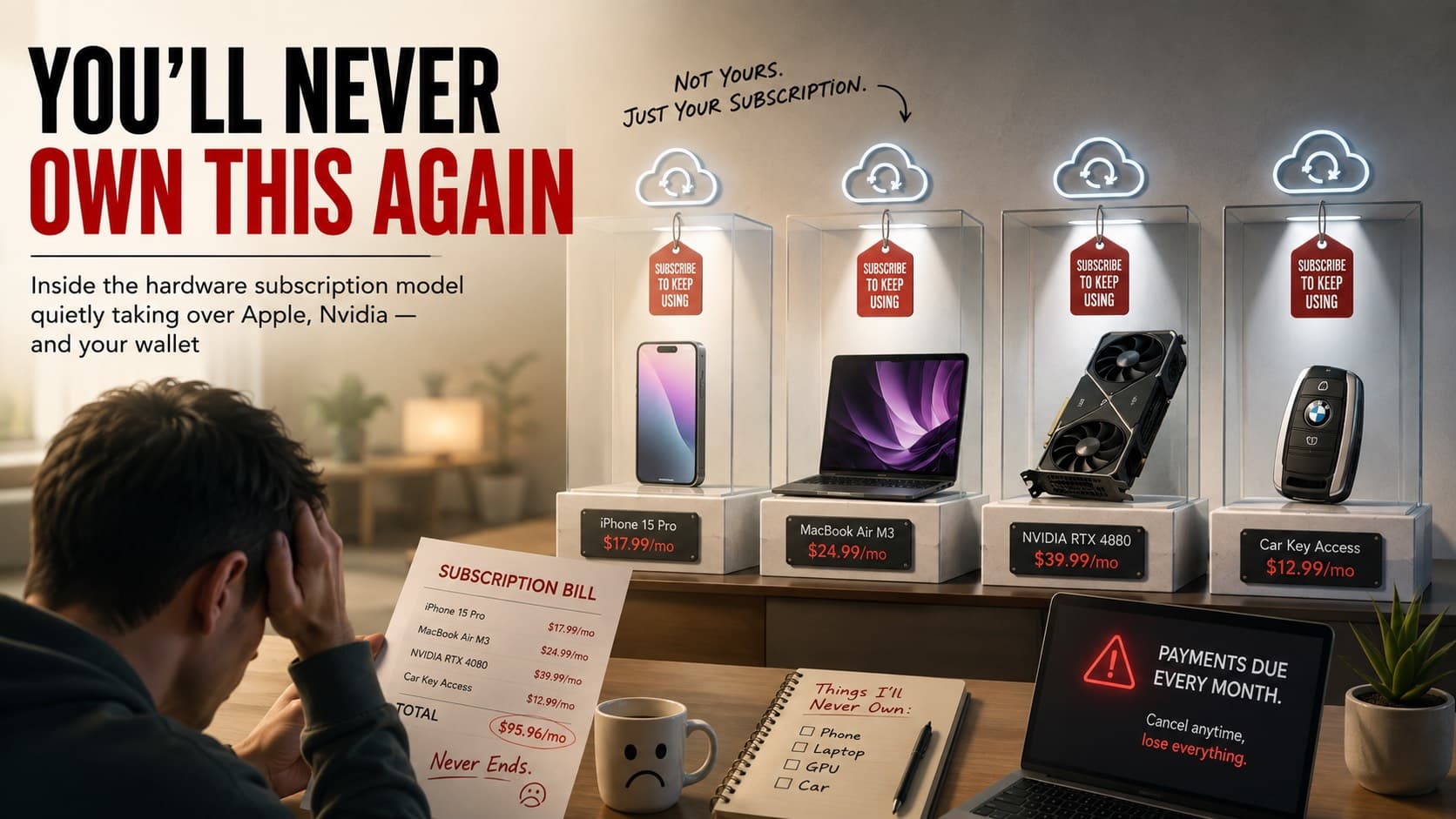

The hardware subscription model just went mainstream, and most people didn’t notice until their next iPhone bill looked suspiciously like a car lease. For over a decade, software quietly moved from something you bought to something you rent. Now the same playbook is coming for the physical object in your hand — the phone, the laptop, the graphics card. Apple and Nvidia have both rolled out programs in 2026 that let you pay every month, forever, for hardware you will likely never fully own. It’s not a rumor anymore. It’s live, it’s priced, and it’s spreading.
This is the story of how we got here, what Adobe’s subscription war reveals about where this is headed, and whether the hardware subscription model is actually good for consumers — or just a slower, more profitable way to take your money.
What Is the Hardware Subscription Model, Exactly?
The hardware subscription model flips the traditional purchase on its head. Instead of paying once and owning a device outright, you pay a recurring monthly fee — like a phone plan crossed with a car lease — for the right to use it. At the end of the term, you don’t own anything unless you pay again. You either upgrade to a newer model, hand the device back, or pay a lump sum to finally own what you’ve been using all along.
It sounds like financing. It isn’t, really. Financing ends in ownership. The hardware subscription model is designed so that ownership is the exception, not the outcome.
Adobe’s Subscription War: The Origin Story
To understand why the hardware subscription model is raising alarm bells, you have to go back to software’s version of the same experiment: Adobe.
Before 2013, if you bought Photoshop, you owned Photoshop. One purchase, one license, forever. Then Adobe killed the perpetual license entirely and forced everyone onto Creative Cloud, its subscription-only platform. The backlash was immediate and furious — petitions, boycotts, and a permanent shift in how creatives talked about the company. But Adobe held firm, and the financial results proved the strategy worked. Adobe’s subscription revenue ballooned from $7.7 billion in 2019 to $14.2 billion in 2023.
The real trouble came later, once customers tried to leave. In 2024, the Federal Trade Commission, through the Department of Justice, sued Adobe and two of its executives over its automatic renewal and cancellation practices. The complaint alleged Adobe buried a steep early termination fee inside its “annual, paid monthly” plan and made the cancellation process needlessly difficult, forcing customers through numerous confusing pages online and “resistance and delay” when calling customer service. A federal judge later refused to dismiss the case, ruling the cancellation process was “far from simple”. Adobe eventually settled, agreeing to pay $75 million to the Department of Justice and provide another $75 million in free services to affected customers, while still denying wrongdoing.
That’s the cautionary tale sitting quietly behind every new hardware subscription model launch in 2026: subscriptions grow revenue beautifully, right up until regulators start asking how hard it is to walk away.
Apple Just Made Your iPhone a Monthly Bill
In late July 2026, Apple made the hardware subscription model official with the launch of Apple Upgrade, a leasing program built in partnership with the fintech company Klarna. Apple Upgrade lets customers pay a monthly fee for a device instead of a one-time purchase, and at the end of the lease they can swap for a newer model, keep the device, or return it — with extra fees for upgrading early, buying out, or ending the lease early.
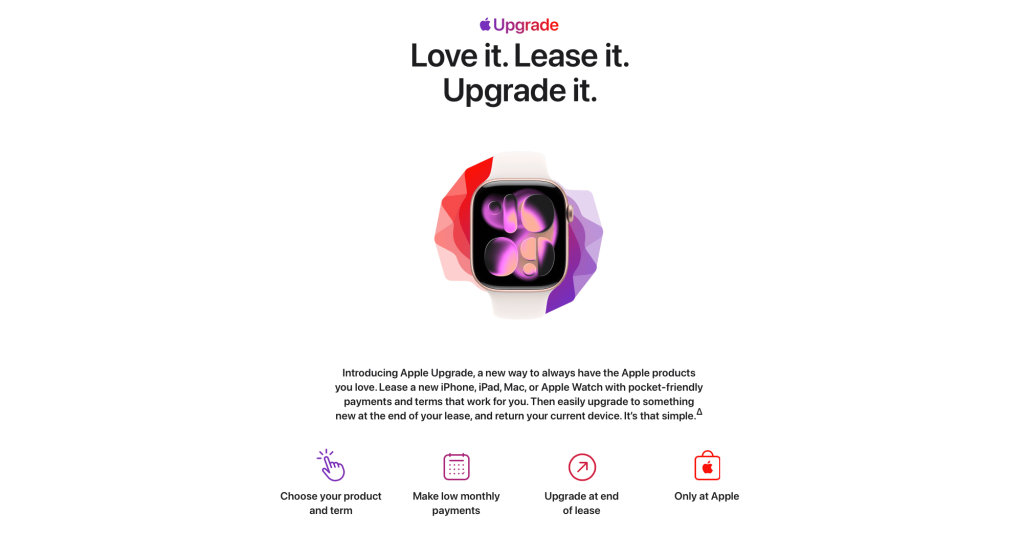
The pricing spans Apple’s entire hardware lineup. Monthly rates start at $17.99 for iPhone, $11.99 for Apple Watch and iPad, and $24.99 for Mac, with flagship models like the iPhone 17 Pro Max running $34.99 a month on a 24-month plan. It works less like a traditional payment plan and more like a car lease: customers make fixed monthly payments and can return the device, buy it outright with a final payment, or upgrade before the lease ends, with trade-ins lowering the monthly cost further.
Notably, Apple isn’t putting every product into this hardware subscription model. Entry-level devices like the Apple Watch SE, the base iPad, the iPhone 16, and the MacBook Neo are excluded — a detail analysts read as a deliberate push toward pricier hardware, dressed up as a monthly convenience rather than a bigger bill.
The timing is not a coincidence. Apple Upgrade is arriving as an “AI-driven memory crisis” has already pushed up prices across the iPad and Mac lineup, with more expensive iPhone and Apple Watch models expected this fall. Framed that way, the hardware subscription model isn’t just a new payment option — it’s a pressure valve for prices that are climbing faster than most buyers can absorb in one lump sum.
Nvidia’s Version: You Never Even Touch the Hardware
If Apple’s hardware subscription model still hands you a physical device, Nvidia’s goes a step further — you don’t get hardware at all. Through GeForce Now, Nvidia rents you access to its GPUs sitting in a data center, streaming the graphics to your screen while your actual computer does almost nothing.
It’s the purest version of the hardware subscription model imaginable: no chip, no card, no box — just a monthly fee for computing power you use and never possess. But even this “pure rental” is now getting metered like a utility bill. Starting January 1, 2026, Nvidia capped every GeForce Now subscription at 100 hours of play time per month, with extra 15-hour blocks available for $2.99 on the $9.99 Performance tier and $5.99 on the $19.99 Ultimate tier. Go over the limit and the meter starts running, no differently than a phone plan on data overage.
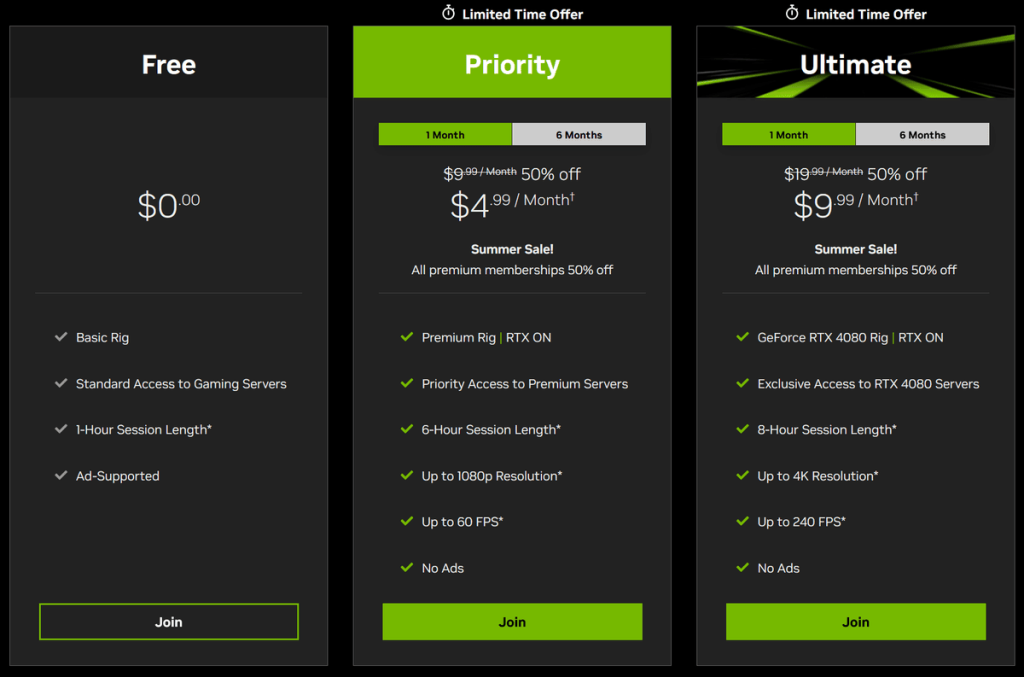
Nvidia insists this only affects a small slice of users. The company estimates the cap functions as a way to convert a small group of power users from a flat-rate cost center into a usage-based one, while leaving the vast majority of its subscriber base untouched. Underneath the reassurance, though, is the same structural shift as Apple’s: pay monthly, own nothing, and accept new limits whenever the company decides the math needs adjusting.
Is the Hardware Subscription Model Actually Concerning?
Yes — but with real nuance. The hardware subscription model isn’t inherently predatory. For someone who genuinely upgrades their iPhone every year anyway, or who only games occasionally and doesn’t want to sink $2,000 into a GPU, renting can be the more rational financial choice. A tech reviewer who tested Apple’s actual published rates concluded the program can save real money upfront, though whether it works out depends heavily on the specific device — for some products it’s a genuine saving, for others “just a slower way to pay full price for something you’ll never own”.
The concern isn’t the existence of the option. It’s what Adobe’s history shows happens once a hardware subscription model matures: prices creep up, usage gets capped, and cancellation gets quietly harder, because the company’s incentive has flipped. A one-time sale rewards a company for making a great product once. A subscription rewards a company for keeping you paying indefinitely — and the two incentives don’t always point the same direction.
There’s also a structural risk unique to hardware subscriptions that software never had: you can lose access to a physical object you were actively using. Miss a lease payment on a MacBook you use for work, and Apple’s financing partner can, in principle, reclaim a machine holding your files. A missed Adobe payment locks you out of an app. A missed hardware lease payment can mean losing the device sitting on your desk.
Who Else Is Building the Hardware Subscription Model?
Apple and Nvidia are the loudest 2026 headlines, but the hardware subscription model has been creeping across industries for years, often disguised as something else entirely.
- Tesla sells Full Self-Driving as a monthly add-on rather than a one-time purchase, meaning a feature physically built into the car you bought can vanish the moment you stop paying.
- BMW experimented with charging a monthly fee to unlock heated seats — hardware already installed in the car, gated entirely by software.
- John Deere has long faced criticism for locking tractor repairs behind proprietary software, effectively renting farmers the right to fix equipment they legally own.
- HP runs “Instant Ink,” a subscription that owns the printing experience itself — cartridges can stop working the moment the subscription lapses, even if ink remains inside them.
- Sony and Microsoft increasingly push game subscriptions (PlayStation Plus, Xbox Game Pass) where the console is hardware you own, but the library of games you “have” evaporates the day you cancel.
Across every one of these, the pattern from the hardware subscription model repeats: convenience and lower upfront cost, traded for a permanent monthly obligation and a company that can change the terms whenever it wants.
Will the Hardware Subscription Model Actually Work?
Financially, it’s already working — for the companies. Adobe’s revenue nearly doubled under the subscription model despite the backlash, and Apple’s Upgrade program is explicitly designed to normalize a permanent monthly relationship with customers instead of a one-time transaction every few years. Recurring revenue is more predictable, more valuable to investors, and stickier than one-off sales. From a pure business standpoint, the hardware subscription model is a rational, even inevitable, evolution.
Whether it works for consumers long-term depends on three things playing out differently than they did with Adobe:
- Transparent pricing. Adobe’s legal trouble wasn’t about subscriptions existing — it was about hidden fees and confusing exits. If Apple and Nvidia keep leasing terms upfront and cancellations simple, the backlash may never materialize the same way.
- Regulatory pressure staying high. The FTC’s action against Adobe sets a precedent other regulators can point to. Any hardware subscription model that buries an early termination fee is now operating with a very public roadmap of what not to do.
- Genuine consumer choice. As long as buying a device outright remains just as available as leasing it, the hardware subscription model stays a legitimate option rather than a forced one. The moment outright ownership quietly disappears from the shelf, that’s the moment to worry.
The Bottom Line
The hardware subscription model isn’t some fringe experiment anymore — it’s Apple’s default upgrade path and Nvidia’s core gaming business model in 2026. Adobe already ran this experiment on software and proved two things simultaneously: subscriptions are extremely profitable, and they invite serious regulatory scrutiny the moment cancellation gets hard. Apple and Nvidia are betting they can capture the profit without repeating Adobe’s mistakes.
For now, the hardware subscription model is optional. You can still buy an iPhone outright. You can still build your own PC instead of streaming through GeForce Now. The real test comes a few years from now — when we find out whether “optional” was ever meant to last.
Related Articles on IMFounder
- How Netflix, Paramount, and Comcast Are Competing to Buy Warner Bros
- Why Apple’s Subscription Strategy and Unfixed Bugs Are Pushing Users Away?
- Why Every App Is Becoming a Subscription — And Why Users Hate It
- Why American Farmers Are Fighting Back Against Tractor Giants
- How TikTok’s AI Algorithm Is Helping Small Businesses Scale Overnight