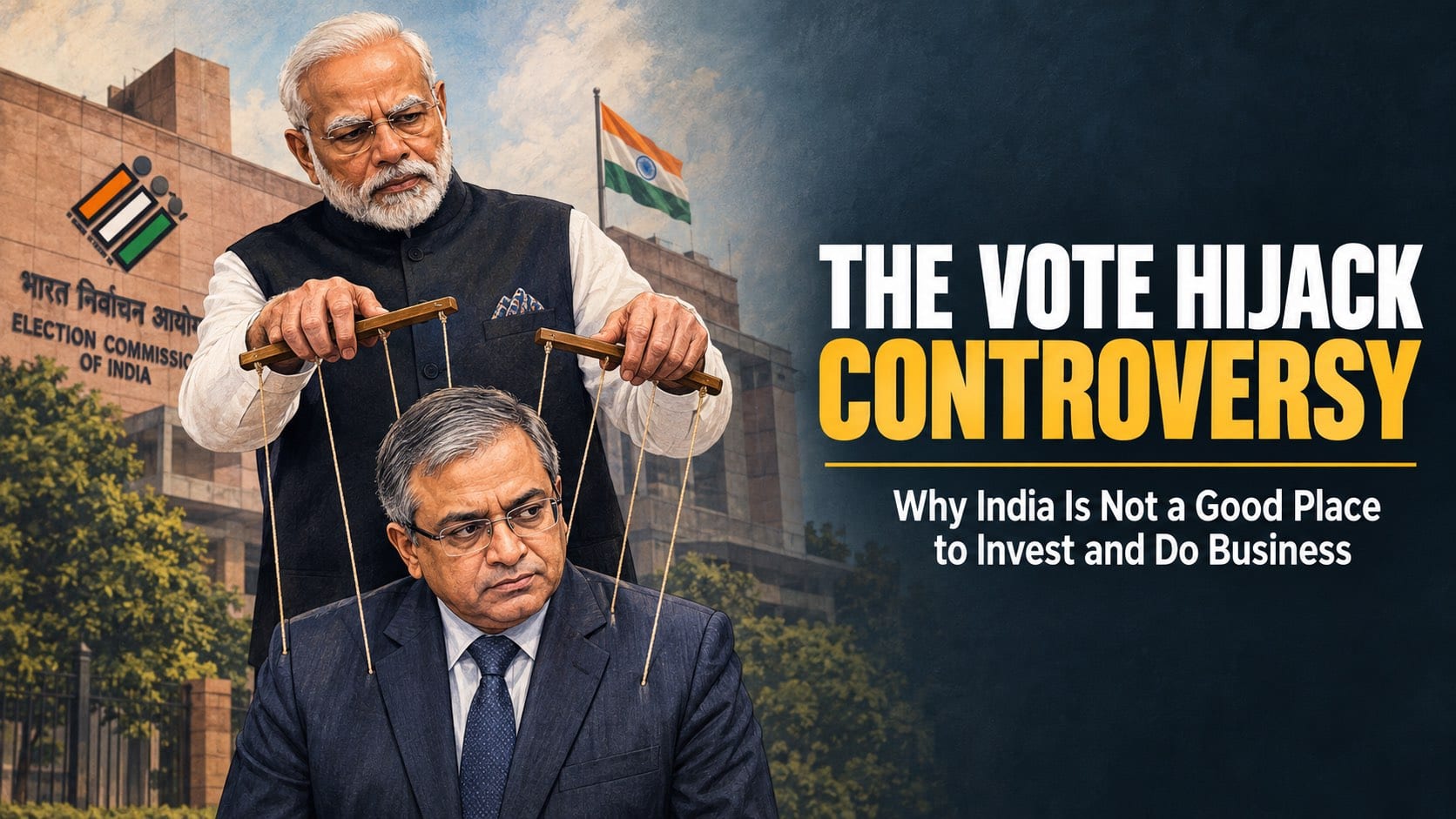

India is having its loudest argument about its own elections in decades. At the center of the Vote Chori controversy are three things happening at once: a bitter dispute inside the Election Commission of India (ECI), a nationwide “vote theft” campaign led by opposition leader Rahul Gandhi, and a string of denied protest permits at Delhi’s Jantar Mantar. Layer on a shaky run of foreign investment numbers, and you get a genuinely messy year for India’s democratic and economic story — one that deserves more than a headline.
This piece separates what’s documented from what’s alleged. Both matter. Neither should be flattened into the other.
What Is the Vote Chori Controversy, Exactly?
“Vote chori” — Hindi for “vote theft” — is the phrase Rahul Gandhi, the Leader of the Opposition in the Lok Sabha, has used since August 2025 to describe what he says is systematic manipulation of India’s electoral rolls in favor of the ruling Bharatiya Janata Party (BJP). Gandhi first stated on 1 August 2025 that his party had found evidence of electoral fraud during the 2024 general election. A week later, he alleged the Election Commission had added fraudulent voters in Karnataka’s Mahadevapura constituency, and claimed Congress lost the linked Lok Sabha seat by 114,000 votes despite leading in the other six assembly segments that made up it. He challenged the EC to publish the electronic voter list and CCTV footage to prove him wrong. 2025 Indian electoral controversy +2
The controversy escalated in September 2026 when an internal rift inside the Election Commission itself became public — which is the part that’s turned this from a routine opposition talking point into a genuine institutional story.
Who Is Gyanesh Kumar, and Why Is He the Center of the Vote Chori Controversy?
Gyanesh Kumar is India’s sitting Chief Election Commissioner (CEC), the constitutional post responsible for overseeing national elections. He became the public face of this controversy after a report by The Indian Express — not an opposition source — revealed friction inside the three-member Commission.
The 14 Objections That Triggered the Political Storm
The Indian Express investigation reported that the two other Election Commissioners, Sukhbir Singh Sandhu and Vivek Joshi, had recorded at least 14 formal objections over a 10-month period on issues connected to voter registration, deletion of names, and the Special Intensive Revision (SIR) of electoral rolls. The report said more than 13 crore (130 million) names were removed from draft electoral rolls across 30 states and union territories during that exercise. One specific objection concerned changes made to Form 6, the form citizens use to register as new voters. Gyanesh Kumar and SIR controversy explained: 5 key persons, 14 objections and what happened inside ECI | Politics – PTC News +2
That single report set off a chain reaction:
- Arvind Kejriwal demanded the entire SIR exercise be scrapped and called for Gyanesh Kumar’s arrest. Outlook India
- West Bengal Chief Minister Mamata Banerjee called for his arrest and demanded repolling in her state. News Karnataka
- Tamil Nadu Chief Minister M.K. Stalin demanded Kumar leave office. News Karnataka
- Opposition parties accused the Commission of acting like a “BJP spokesperson” and floated an impeachment motion — which the Rajya Sabha Chairman and Lok Sabha Speaker formally declined to admit. tribuneindianewsonair
What the Election Commission Actually Says
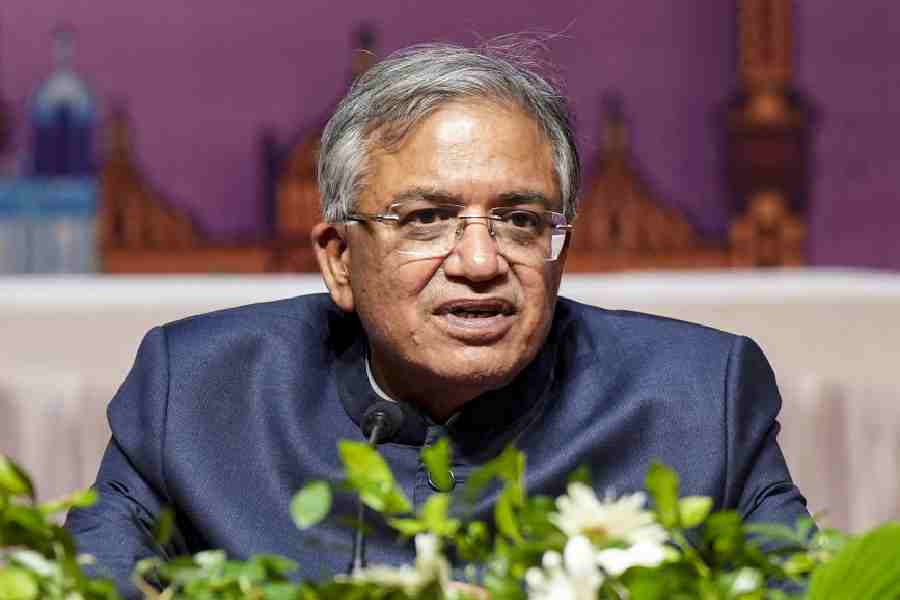
This is the part that gets left out of most viral posts. The Election Commission has responded that such internal differences are a normal part of its deliberations, and has maintained that its final decisions — including on the SIR — were unanimous. On the specific fraud allegations Rahul Gandhi raised earlier in the year, Gyanesh Kumar required that any such allegation be filed as a sworn affidavit within seven days under Rule 20(3)(B) of the Registration of Electors Rules, 1960, warning that unaffidavited claims would be treated as baseless — and no such affidavit was filed by Gandhi or the Congress party. Kumar has also said the SIR was carried out lawfully, and that around 3.66 lakh (366,000) voters voluntarily removed their own names after the draft rolls were published. In Photos | Gyanesh Kumar CEC Row: EC Dissent Triggers Political Storm Over SIR | Outlook India
So: there is a genuine, reported internal dispute inside the EC. There is not, as of this writing, a court-verified finding that elections were rigged. Both facts belong in the same sentence.
Rahul Gandhi’s Vote Chori Press Conferences: Claims and Pushback
Gandhi has held a series of high-profile pressers building his case, each with increasingly specific detail.
At a November 2025 briefing dubbed his “hydrogen bomb” reveal, Gandhi displayed the photo of a woman he said was a Brazilian model who had voted 22 times across 10 different polling booths in Haryana under different names, and claimed one in eight voters in the state were fake. In another briefing, he cited an attempt to delete 6,018 votes in Karnataka’s Aland constituency and the fraudulent addition of 6,850 voters in Maharashtra’s Rajura constituency using what he called automated software. deccanheraldtribuneindia
By September 24, 2026 — the presser that reignited this whole story — Gandhi told reporters in New Delhi he was asserting “with 100% certainty” that votes had been stolen, describing a chain running from “vote chori” to “kanoon chori” (theft of laws) to “sanstha chori” (theft of institutions). He named Prime Minister Narendra Modi and Home Minister Amit Shah as figures who should face investigation for conspiracy, called on CEC Gyanesh Kumar to resign and “become an approver,” and referenced National Security Advisor Ajit Doval in what he framed as a wider plot. RamanmedianetworkRamanmedianetwork
What Hasn’t Been Independently Verified
Gandhi has said the Karnataka CID sought voter data from the EC as part of a formal investigation into alleged deletions, and that the Commission had not supplied it. That specific claim — a police body requesting data the EC hasn’t handed over — is one of the more checkable threads in this story, and worth following as it develops. But the broader claim that Modi and Shah personally orchestrated rigging across five years of elections remains a political accusation, not a judicial finding. No court or independent statutory body has yet ruled on it. That distinction matters, whichever side of this you’re on. tribuneindia
Jantar Mantar and the Right to Protest: Is Delhi Cracking Down?
Parallel to the vote chori (Vote Highjack) fight, Delhi’s iconic protest site, Jantar Mantar, has seen a rougher year than usual.
In June 2026, the newly formed Cockroach Janta Party held its first street protest there demanding the resignation of Union Education Minister Dharmendra Pradhan — the first major demonstration at the site since the 2023 wrestlers’ protest. Police had granted permission only until 5 p.m., and when protesters stayed past that time, tensions escalated; by 20 July, Delhi Police used lathis to disperse a crowd marching toward the site, and allegations of pellet gun use surfaced, which police called false — though a Safdarjung Hospital medical report confirmed at least one protester had suffered a pellet wound. WikipediaWikipedia
In August, a separate protest against caste-based reservation reforms was denied permission entirely. Delhi Police said no authorization had been granted and called circulating videos claiming otherwise “false and misleading,” citing standing prohibitory orders under Section 163 of the BNSS (the successor to the old Section 144 CrPC). Republic World
The Government’s Side of This
It’s worth noting Jantar Mantar protest denials aren’t new or unique to this government — permission has been refused to groups across the political spectrum for over a decade, often citing security, parliamentary session schedules, or the standard 10-day advance-notice rule. What critics argue is different now is the frequency and pattern of denials coinciding with politically sensitive moments. What the government and police maintain is that denials are procedural, security-driven, and applied under laws that predate this administration. Both of those things can be true at once, and readers should treat “the government is scared of protest” as an interpretation, not a proven motive.
Why Are Critics Asking If Modi and Shah Are “Scared”?
This is squarely an opposition framing, not an established fact, so it’s presented here as one. Gandhi and allied leaders argue that an EC under pressure, a tightly managed protest calendar, and a ruling party unwilling to publish raw voter-roll data together suggest a government anxious about scrutiny. The counter-argument from the BJP and government officials is straightforward: elections are conducted under judicial oversight, courts and the Rajya Sabha/Lok Sabha leadership have already declined opposition motions against the CEC, and no allegation has cleared the legal bar of a sworn affidavit. Readers weighing “why won’t they just release the data” against “why hasn’t anyone filed the required affidavit” will find serious people on both sides of that question.
Why Is India’s Economy Rattling Investors in 2026?
Separate from the politics, there’s a real economic story, and it’s more nuanced than “everyone is fleeing India.”
The FDI Numbers, Explained
According to Reserve Bank of India data, net foreign direct investment was negative for a fifth straight month in January 2026, at –$1.39 billion, worse than December 2025’s –$0.49 billion. Gross FDI inflows fell from $8.5 billion in December to $5.7 billion in January, while repatriation — foreign investors selling stakes and taking profits home — stayed high at roughly $4.9 billion. Of the thirteen months between January 2025 and January 2026, eight recorded negative net flows, and FDI into the banking sector specifically dropped 87% between FY23 and FY25. Opinion: India’s FDI slowdown: Why foreign investors are pulling back – Telangana Today
On the stock market side, the picture got starker as the year went on. Foreign investors pulled roughly $21 billion out of Indian stocks in just two months in 2026, putting the year on track to be the worst for outflows since Indian markets opened to foreign investment in 1993. By early May, foreign portfolio investors had withdrawn ₹1.92 lakh crore, already surpassing the entire 2025 sell-off in four months, with the rupee’s slide from around 85 to 95 against the dollar cited as a key trigger. SemaforRepublic World
It’s Not Purely a Political Story — and That’s Worth Saying
Here’s where a fair article has to push back on the “investors are running scared of Modi” framing a little. Analysts point to the ripple effects of the Iran conflict, a global rotation toward AI-chip-driven markets like South Korea and Taiwan, and a weakening rupee as major drivers, not primarily domestic political risk. Some economists argue that rising outwardinvestment — Indian firms deploying capital into the US, Singapore, UK, and UAE — actually signals corporate confidence and balance-sheet strength rather than capital flight, and isn’t inherently a sign of crisis. At the same time, the sharp rise in repatriation and disinvestment does mean a real shortage of capital for domestic reinvestment, and further currency pressure — a genuine headwind, regardless of its cause. Foreign investors pull out of India at record pace | Semafor
So: the government’s claim that the economy is “rising” and the observation that investors are pulling money out are not actually contradictory. Growth figures and portfolio-flow figures measure different things, and 2026’s outflows are driven by a mix of global risk-aversion, currency weakness, and — for some investors — governance uncertainty. Attributing it to one cause alone oversimplifies a genuinely mixed picture.
So, Is Indian Democracy in Crisis? Weighing Allegations Against Facts
| Claim | Status |
|---|---|
| Two Election Commissioners raised 14 formal objections over 10 months | Reported by The Indian Express, not disputed by the EC |
| The EC’s decisions, including SIR, were unanimous | EC’s official position |
| Modi and Shah personally orchestrated vote rigging | Political allegation by Rahul Gandhi; no judicial finding |
| Karnataka CID sought voter data the EC hasn’t shared | Alleged by Gandhi; worth independent verification |
| Jantar Mantar protests are being selectively blocked | Pattern noted by critics; police cite standard procedure and law |
| India’s FDI outflows are a Modi-era failure | Partly driven by global factors (Iran conflict, rupee, AI-market rotation), not solely domestic politics |
Frequently Asked Questions About the Vote Chori Controversy
Is there proof that the 2024 Indian election was rigged?
No court or independent statutory body has confirmed rigging. Rahul Gandhi has presented specific constituency-level claims (Mahadevapura, Aland, Rajura, Haryana), and the EC has disputed or asked for sworn affidavits on several of them.
What is the SIR and why is it controversial?
The Special Intensive Revision is a nationwide exercise to clean up India’s electoral rolls, removing duplicate, deceased, or ineligible entries. It’s controversial because critics say the process risks wrongly deleting eligible voters, while the EC says it’s a routine, lawful roll-maintenance exercise.
Why does Rahul Gandhi keep calling it “vote chori”?
It’s the phrase he’s used since August 2025 to brand his broader campaign alleging systemic electoral manipulation, and it’s become the shorthand the Indian press uses for this whole story.
Are foreign investors really leaving India because of politics?
Not primarily. Currency depreciation, the Iran conflict’s global ripple effects, and capital rotating toward AI-driven markets like South Korea and Taiwan are the most-cited drivers, though governance uncertainty is one factor among several for some investors.
Sources referenced: The Indian Express (via Outlook India, PTC News, Newskarnataka reporting), Tribune India, Deccan Herald, Wikipedia’s documented timelines on the 2025 Indian electoral controversy and 2026 Jantar Mantar protests, Reserve Bank of India data (via Telangana Today and Business Standard), Semafor, Republic World, and Policy Circle.
Related Articles on IMFounder
- India Paper Leak Scandal: 70+ Shattered Dreams, Student Suicides & Modi Govt 10-Year Shameful Failure
- Google’s $15 Billion AI Data Centre Raises Water Concerns in a Country Where over 600 Millions Already Face Water Stress
- India’s Air Pollution Crisis: How Government Failure Turned Breathing Into a Privilege
- CJP Protests Expose Education Crisis Under Modi Government
- The IndiGo Airline Crisis: Chaos Across India, Government Actions, and Global Ripples