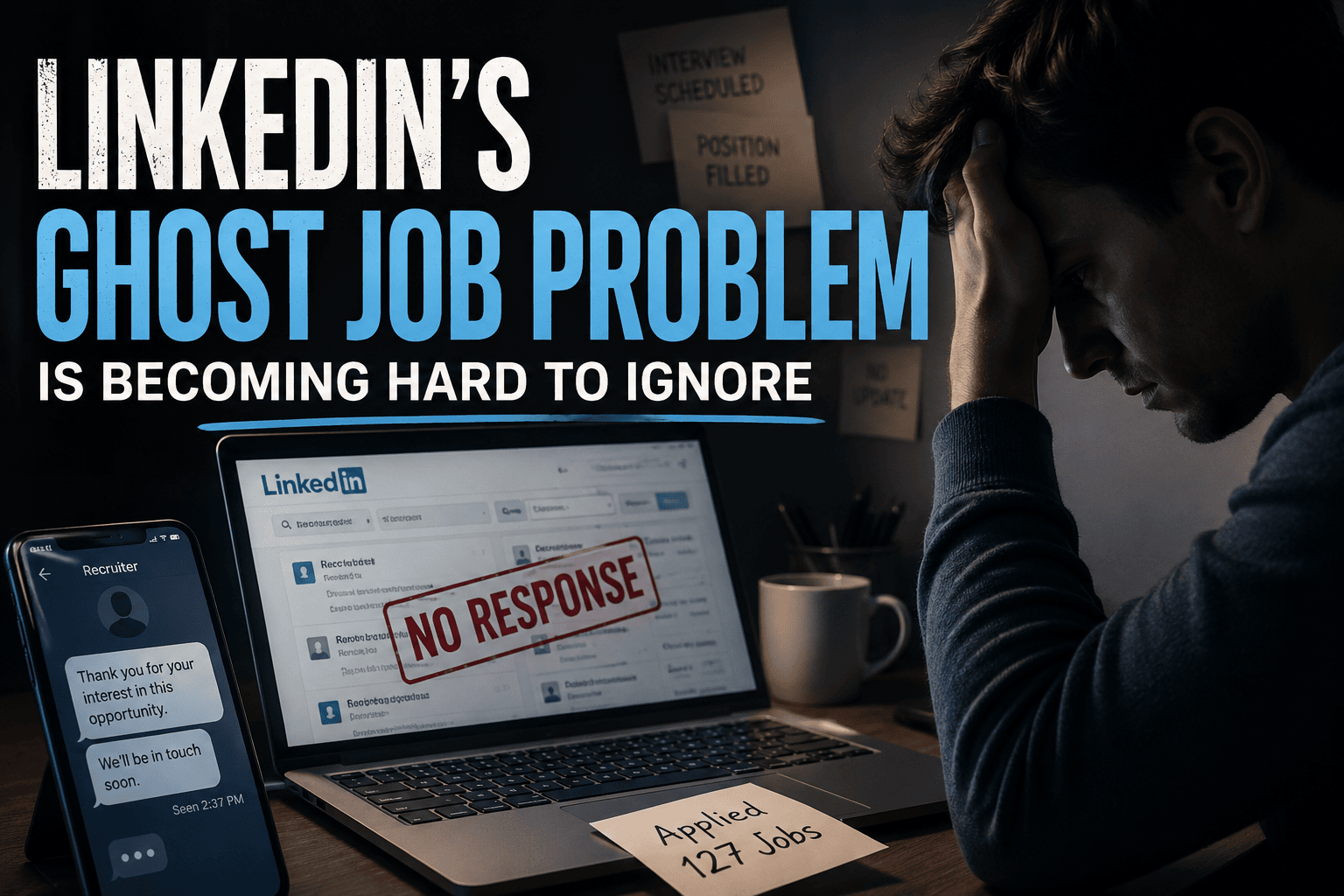

LinkedIn was once viewed as one of the most trusted professional platforms online. It became the place where recruiters connected with talent, companies built credibility, and professionals searched for real career opportunities.
But lately, something feels different.
More and more job seekers are noticing a frustrating pattern. A company posts a job opening. Hundreds, sometimes thousands, of people apply. Recruiters reach out. Conversations begin. Interviews are hinted at. Hope builds.
Then suddenly, silence.
No follow-up. No rejection email. No update. No response at all.
Ghosted.
And in many cases, people are starting to question whether some of these jobs were even real to begin with.
The rise of fake job listings, AI-generated recruiter accounts, and automated engagement tactics is quietly reshaping the professional landscape online. While LinkedIn remains a valuable platform, growing concerns around “ghost jobs” and fake recruiting behavior are becoming impossible to ignore.
A recent survey by Resume Builder found that nearly 4 in 10 companies admitted to posting fake job listings in 2024. Some companies said they kept listings active to create the appearance of growth, while others used them to collect resumes, monitor the talent market, or keep current employees feeling replaceable.
That alone is concerning.
But artificial intelligence is making the situation even more complicated.
AI tools now allow companies and bad actors to automate recruiter outreach, generate fake profiles, create convincing company messaging, and mass-post job openings at scale. Some fake recruiter accounts appear polished, professional, and almost impossible to distinguish from legitimate hiring managers. In certain cases, these accounts engage with candidates long enough to build trust before disappearing entirely.
The result is a growing sense of distrust among job seekers who are already navigating one of the most competitive hiring markets in years.
Many applicants now describe LinkedIn as emotionally exhausting. People spend hours tailoring resumes, writing cover letters, networking, and preparing for opportunities that may never have existed in the first place. The emotional impact of repeated ghosting has become a major conversation across professional communities online.
And the problem goes beyond frustration.
Career experts have warned that fake job postings can distort labor market data, waste applicant time, and contribute to burnout among professionals actively seeking work. Researchers have also raised concerns about AI-generated identity fraud and impersonation becoming more common across professional networking platforms as generative AI tools become more advanced. (forbes.com)
What makes this shift especially damaging is that LinkedIn was built on trust. Unlike other social platforms, LinkedIn positioned itself as a professional ecosystem where credibility mattered. But when users repeatedly encounter fake opportunities, automated recruiter messages, or companies that vanish after collecting applications, confidence in the platform begins to erode.
Ironically, the rise of AI-generated recruiting behavior is happening during a time when companies claim they want more “human connection” in hiring.
Job seekers are increasingly craving transparency. They want honest communication, real timelines, and authentic interaction from recruiters and companies. Instead, many are encountering automated responses, vague messaging, or complete silence after multiple interview rounds.
This has created a strange contradiction inside modern hiring culture. Technology was supposed to streamline recruitment and improve efficiency, but for many applicants, it has made the process feel colder and more impersonal than ever before.
Some companies are pushing back against this trend by emphasizing human-first hiring practices. Others are becoming more transparent about timelines, application status updates, and recruiter verification. LinkedIn itself has introduced verification features for profiles and job postings in an attempt to improve trust and reduce impersonation.
Still, the broader issue reflects a larger shift happening online.
Artificial intelligence is making it easier than ever to appear credible without actually being credible.
That reality is affecting every corner of the internet, including professional spaces that people once considered safe and reliable.
The companies that stand out moving forward will likely be the ones that communicate clearly, treat applicants like people instead of data points, and rebuild trust through transparency rather than automation.
Because right now, many job seekers are no longer just applying for jobs.
They are trying to figure out which opportunities are even real.
Related Articles on IMFounder
- AI Took the Jobs, Housing Took the Future, and Loneliness Became an Industry
- The Global Wave of Anti-Immigration Protests: Why the West is Pushing Back
- Why Work from Home is Not Ideal for the Economy
- The Best Coworking Spaces for Founders in Canada in 2026
- When the Housing Bubble Bursts: Real Stories of Buyers Who Lost Hundreds of Thousands
- The Truth About AI Girlfriends & Digital Companionship: A Growing Mental Health Crisis?
Source
- The Rise of Ghost Jobs in Online Hiring
- How AI Is Reshaping Recruiting
- LinkedIn’s Verification and Trust Systems
- Why Job Seekers Are Losing Trust in Hiring Platforms
- AI Identity Fraud and the Future of Professional Networks