
Apple is one of the most successful companies in human history. It is the most profitable consumer technology company on Earth, commands a market capitalization larger than the GDP of many countries, and continues to sell millions of iPhones, Macs, iPads, and wearables every quarter.
Yet despite those achievements, there is a growing sentiment among many longtime Apple users that something fundamental has changed.
This is not an argument that Apple is failing financially. Far from it. Tim Cook deserves enormous credit for transforming Apple into an operational powerhouse and one of the most efficiently managed businesses ever created. Supply chains, services revenue, retail expansion, shareholder returns, and ecosystem lock-in have all flourished under his leadership.
The concern is that while Apple has become extraordinarily good at running a business, it may have become less focused on the product philosophy that made customers fall in love with the company in the first place.
For decades, Apple stood apart because it obsessed over usability. The company was never interested in having the longest specification sheet or the most features. Instead, it focused on making technology feel simple, approachable, and intuitive. Apple products were successful because they reduced friction, not because they added complexity.
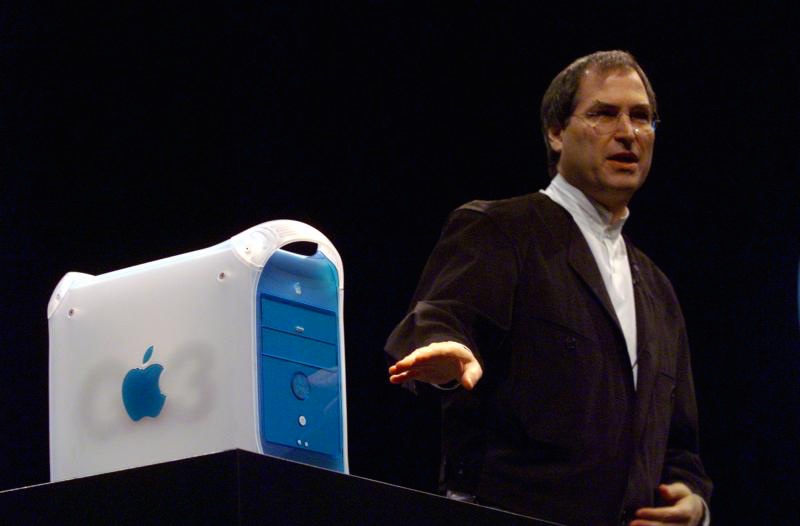
That philosophy was perfectly captured by Steve Jobs during the introduction of the Power Mac G3 when he famously said:
“Design is not just what it looks like and feels like. Design is how it works.”
Nearly three decades later, that quote feels more relevant than ever because many Apple users are beginning to wonder whether the company still believes it.
The Rise of Presentation Apple
Watching modern Apple events often feels very different from watching presentations during the Jobs era.
Recent keynotes devote enormous attention to visual redesigns, interface animations, transparency effects, rounded elements, and aesthetic refinements. At WWDC 2026, Apple introduced its new Liquid Glass design language, presenting it as one of the biggest visual transformations in years. The company spent considerable time discussing how the interface reflects light, responds to movement, and creates a more immersive experience.
None of this is inherently bad. Visual design matters.
The problem is that many customers are asking a much simpler question: does the software work better?
For years, users have reported frustrations involving software bugs, inconsistent behavior, Siri delays, battery issues, application instability, and declining responsiveness on older devices. Yet these concerns often feel secondary during presentations that prioritize aesthetics over functionality.
The average user is not asking for more visual effects. They are asking for a phone that feels reliable, a laptop that remains responsive after several years, and software updates that improve the experience rather than complicate it.
Apple once differentiated itself by eliminating distractions. Increasingly, it seems focused on creating them.
Simplicity Is Slowly Disappearing
One of Apple’s greatest achievements was making complex technology feel effortless.
Older versions of macOS and iOS were not necessarily less capable than today’s software, but they often felt easier to understand. Features were logically organized. Settings were easier to locate. Navigation felt predictable.
Today, many users open the Settings app and immediately use the search bar because manually locating options has become frustrating. Features are buried beneath layers of menus, categories, and subcategories. Tasks that once required a few clicks now require significantly more exploration.
Ironically, Apple has become a victim of the same problem it once criticized in competitors.
The company that built its reputation on simplicity has gradually introduced complexity in the name of offering more features.
Most users do not care whether their operating system contains hundreds of new capabilities. They care whether they can quickly accomplish the tasks they perform every day.
Technology should feel invisible. Increasingly, Apple’s software demands attention.
The Performance Question Apple Rarely Addresses
Every Apple keynote includes performance claims, and many of them are undoubtedly legitimate.
New processors are faster. AI workloads complete more quickly. Graphics performance improves. Battery efficiency increases.
The issue is not whether Apple’s newest hardware is impressive. It clearly is.
The issue is whether existing customers benefit from the same progress.
I experienced this firsthand with my 16-inch MacBook Pro from 2019. After years of software updates, the machine gradually became more frustrating to use. Basic tasks occasionally lagged. Typing sometimes felt delayed. General responsiveness deteriorated to the point where even routine work became irritating.
Out of curiosity, I downgraded the system to macOS Ventura.
The difference was immediate.
Applications launched faster. The system felt smoother. Everyday tasks became enjoyable again. Most importantly, the frustrations that had become part of daily usage largely disappeared.
This raises an uncomfortable question.
If a software downgrade makes a premium computer feel significantly better, what exactly are users gaining from the upgrade?
Apple’s marketing naturally focuses on the latest hardware, but many customers are still using devices purchased three, four, or five years ago. Those customers invested heavily in Apple’s promise of longevity. When software updates make those products feel less capable than before, it creates the impression that progress is benefiting new buyers more than existing ones.
Whether that perception is entirely fair is almost irrelevant.
Perception becomes reality when enough customers share the same experience.
Apple’s Greatest Asset Is Not the iPhone
Apple’s most valuable asset is not the iPhone, the App Store, or even its ecosystem.
It is trust.
Customers have historically been willing to pay premium prices because they trusted Apple to deliver a superior experience. They trusted the company to prioritize usability. They trusted it to make technology simpler rather than more complicated.
That trust was earned over decades.
The challenge facing Apple today is that trust cannot be maintained indefinitely through reputation alone.
Many consumers continue buying Apple products because of what Apple has historically represented. The company is still benefiting from goodwill generated by products and experiences that established its reputation years ago. The question investors and customers should be asking is whether Apple is creating the same level of trust for the next generation of users.
Financial success does not automatically mean customer satisfaction.
History is filled with companies that remained profitable long after they stopped listening to their most loyal customers.
The Jony Ive Effect
The excitement surrounding former Apple design chief Jony Ive’s recent work outside the company is revealing.
People are not interested in Jony Ive simply because he designed beautiful products. They are interested because he represented a philosophy that many believe Apple has gradually abandoned.
The best Apple products were never successful because they looked different.
They were successful because they removed friction.
The original iPod simplified music management. The iPhone simplified smartphones. The Mac simplified personal computing.
Beauty was a consequence of solving problems well.
Today, there are moments when Apple appears to treat beauty as the objective rather than the outcome.
That distinction matters.
Tim Cook’s Apple Has Mastered Business. Has It Forgotten Product Obsession?
This is where criticism of Apple is often misunderstood.
The issue is not that Tim Cook has failed.
By almost every measurable business metric, he has been one of the most successful CEOs in corporate history.
The issue is that operational excellence and product excellence are not always the same thing.
Steve Jobs built Apple around relentless product obsession. Every decision was filtered through the customer experience. Financial results followed.
Modern Apple often appears to operate in reverse. Product decisions increasingly feel influenced by ecosystem expansion, services growth, annual upgrade cycles, and shareholder expectations.
The result is a company that remains incredibly successful while simultaneously generating growing frustration among some of its most loyal users.
Those two realities can exist at the same time.
Apple Doesn’t Need More Glass
Apple does not need another transparency effect.
It does not need another visual metaphor.
It does not need another interface redesign designed primarily for keynote applause.
What Apple needs is a renewed commitment to the principles that made it extraordinary.
Faster software.
Longer-lasting performance.
Greater reliability.
Simpler interfaces.
Products that become better with age instead of merely being replaced by newer ones.
Steve Jobs believed that design was how a product worked. That philosophy transformed Apple from a struggling computer company into one of the most admired brands in the world.
The concern among many longtime Apple users is not that Apple has stopped designing beautiful products.
The concern is that it may have forgotten why those products became beautiful in the first place.
Apple’s challenge is not a lack of talent or resources—it’s recognizing product problems before customers lose trust. That’s exactly why we created IMFounder’s Founder Review service.
Our team of experienced founders, product specialists, developers, designers, marketers, and business professionals reviews startups, products, apps, websites, and business ideas with one goal: helping founders uncover weaknesses, validate assumptions, and improve customer experience before or after launch. Because sometimes the most valuable feedback comes from an outside perspective.
Related Articles on IMFounder
- Apple years of delays, Apple Finally Unleashes Siri AI
- 9 Explosive WWDC 2026 Leaks That Reveal Apple’s Biggest AI
- Apple’s “Unbreakable” M5 Chip Was Cracked by an AI in Just 7 Days
- AI Updates May 2026 That Shocked the Tech Industry
- Google’s $15 Billion AI Data Centre Raises Water Concerns in a Country Where over 600 Millions Already Face Water Stress
- AI Spending Crisis: The Shocking Cost of ChatGPT and Claude