
The Technics turntable has survived cassette tapes, CDs, MP3s, iPods, smartphones, streaming services and now an era increasingly dominated by artificial intelligence.
And somehow, it is still here.
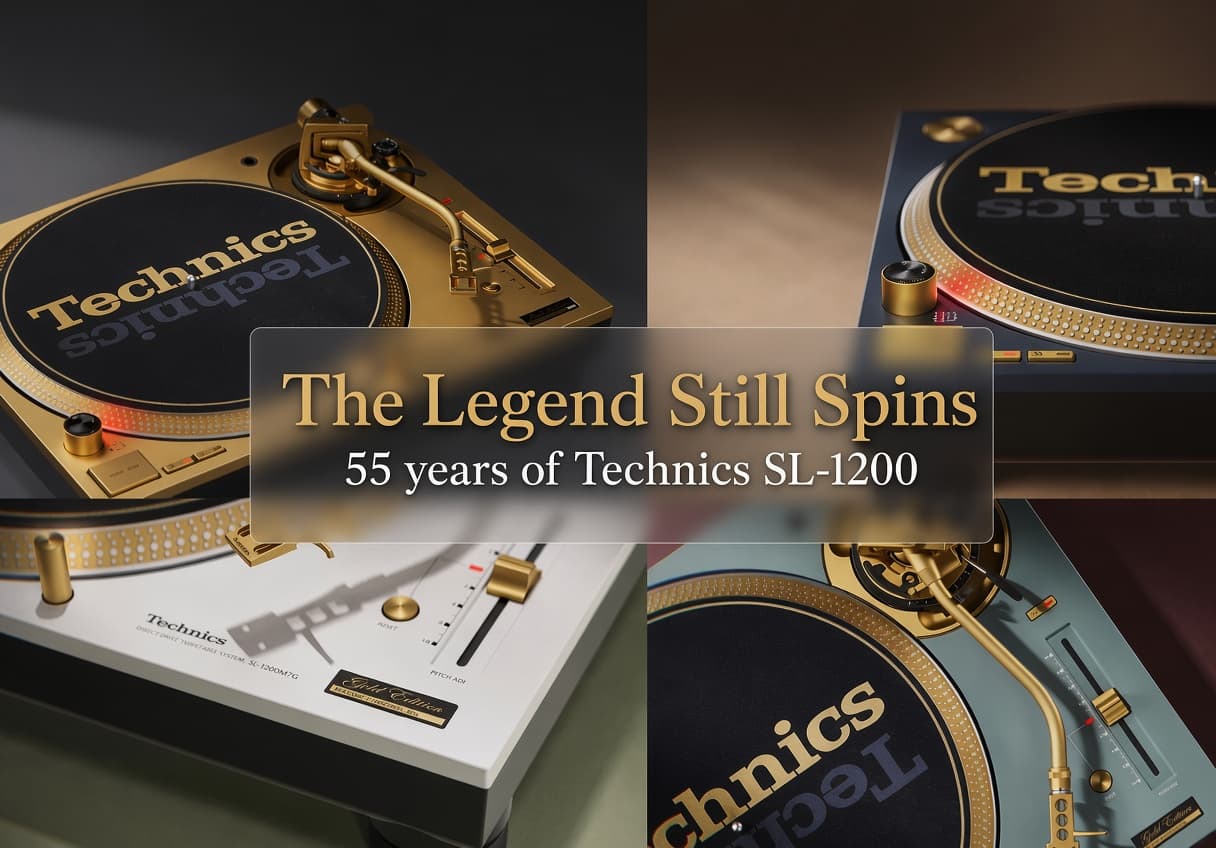
More than five decades after the original Technics SL-1200 arrived in 1972, the legendary direct-drive turntable remains one of the most recognizable pieces of music hardware ever produced. Now Technics is preparing another limited-edition celebration of the machine’s extraordinary legacy, with the SL-1200 55th Anniversary Edition scheduled for release in September 2026 ahead of the series’ 55th anniversary in 2027.
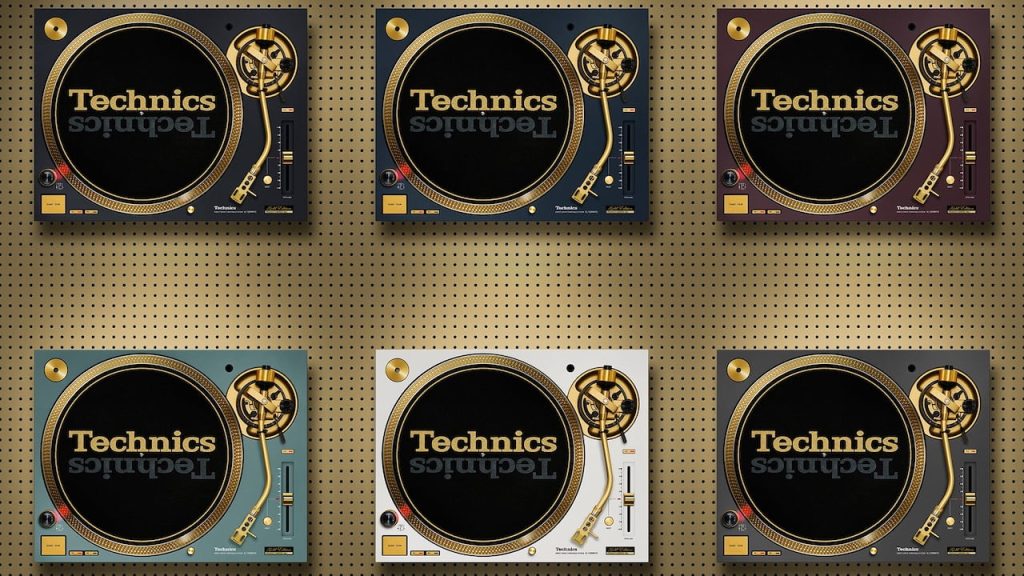
Only 12,000 units will be produced worldwide. The anniversary model comes in seven colours — Gold, Blue, Red, Black, Green, White and Grey — with gold detailing, a serial-numbered anniversary badge and a commemorative slipmat. It is based on the current SL-1200MK7 platform rather than representing an entirely new generation of turntable engineering.
At first glance, it might seem like another nostalgia product.
It isn’t.
The more interesting story is why a piece of hardware designed more than 50 years ago still has cultural relevance in a world where almost every other form of music technology has been digitized.
Why the Technics SL-1200 Became More Than a Turntable
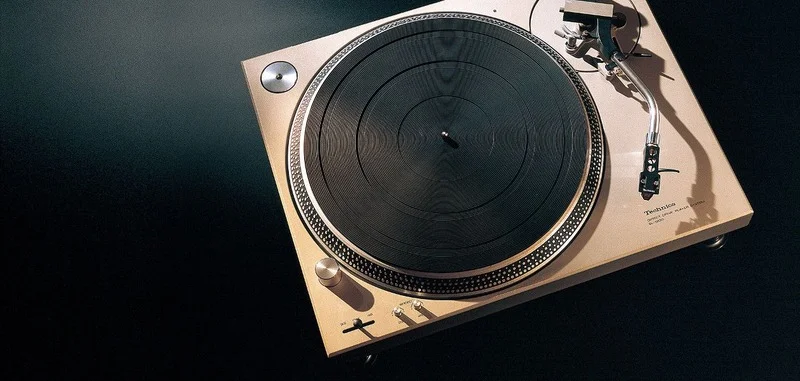
Technics introduced the SL-1200 in 1972 as a direct-drive turntable built around stable rotation, durability and precise playback. The technology itself was not simply about making vinyl sound good. Direct drive connected the motor directly to the platter, eliminating the belt used by conventional belt-drive designs and delivering strong torque and consistent rotation.
Then something unexpected happened.
DJs discovered that the machine could be manipulated.
The platter could be pushed, slowed, stopped and accelerated. The pitch could be adjusted. Records could be cued and mixed with remarkable precision.
The turntable stopped being merely a device for playing recorded music.
It became an instrument.
That transformation became especially important when the SL-1200 and related Technics models entered club culture. Disco, house, techno and hip-hop all developed alongside increasingly sophisticated forms of DJ performance. Technics itself traces the SL-1200’s evolution from playback device to musical instrument through this history.
The SL-1200MK2, introduced in 1979, became a defining moment. Technics engineers had studied DJs in clubs and worked to improve the machine without destroying the familiar operating experience DJs already trusted.
That philosophy is important.
Technics didn’t win by constantly reinventing the interface. It won by refining something people already knew how to use.
The Thing Modern Technology Often Gets Wrong
Modern consumer technology is obsessed with newness.
Every year brings a new smartphone, new processor, new operating system, new AI assistant, new subscription and another reason to replace something that worked perfectly well last year.
The SL-1200 represents almost the opposite philosophy.
Its fundamental experience is remarkably understandable.
Choose a record.
Place it on the platter.
Set the speed.
Drop the needle.
Listen.
There is no login. No firmware update. No subscription. No account. No cloud service and no algorithm deciding what you should hear next.
That simplicity has become surprisingly valuable.
The physical interaction is part of the experience. You handle the record. You read the sleeve. You clean the vinyl. You place the needle. You hear the music begin.
Streaming is infinitely more convenient.
But convenience isn’t the only thing people value.
The Technics Turntable and the Return of Physical Music
The renewed interest in vinyl isn’t simply about sound quality.
It is also about ownership, ritual and physical connection.

IMFOUNDER previously explored this shift in “Vinyl and Cassette Revival in 2025: Why Analog Music Is Spinning Back Into Our Lives,” examining why listeners increasingly want something tangible in an industry dominated by streaming.
The same idea explains much of the fascination with vintage audio.
A 50-year-old receiver can still be repaired.
A mechanical turntable can be serviced.
A record can be played hundreds of times.
And a well-built piece of audio equipment can remain meaningful long after the company that originally made it has changed direction.
That is also why restoration has become part of the culture.
In my own restoration journey with vintage Marantz equipment, I found that restoring an old component is not simply about making it work again. It is about preserving the engineering, craftsmanship and memories attached to it.
The SL-1200 belongs to exactly that world.
Why the 55th Anniversary Edition Matters
The new Technics SL-1200 55th Anniversary Edition is interesting precisely because it doesn’t attempt to reinvent the formula.
It retains the current MK7’s core architecture and DJ-focused features while adding a celebratory visual treatment. The limited edition gets gold anodized details, a gold-finished platter rim, gold controls, a gold tonearm and an anniversary slipmat. Each unit carries an individually engraved serial-numbered anniversary badge.
The seven colour options are also a deliberate nod to the SL-1200’s anniversary tradition. The 50th Anniversary SL-1200M7L, introduced in 2022, was likewise limited to 12,000 units and offered seven colours.
That means the new model isn’t necessarily aimed at someone looking for a dramatically better-sounding turntable.
It is aimed at people who understand what the SL-1200 represents.
For collectors, the serial number matters.
For DJs, the platform remains familiar.
For Technics, the machine continues to connect engineering heritage with contemporary music culture.
And for the rest of us, it raises a fascinating question:
When does technology stop being a product and become cultural history?
The SL-1200’s Secret Is Engineering You Can Feel
One reason the Technics SL-1200 remains so compelling is that its engineering isn’t hidden behind software.
You can feel the torque.
You can see the platter move.
You can physically manipulate the playback.
You can hear the effect of changing pitch.
This is technology as an experience rather than technology as an interface.
The modern SL-1200MK7 has evolved considerably from the original. Technics uses a coreless direct-drive motor, digital motor control, adjustable pitch control and other refinements designed around modern DJ performance.
But the fundamental philosophy remains recognizable.
Precision.
Durability.
Control.
Repeatability.
And a physical relationship between the musician and the machine.
Those are qualities that don’t become obsolete simply because newer technology exists.
From Hip-Hop to House, the Machine Became Part of the Music
It is difficult to separate the history of the SL-1200 from the history of DJ culture.
Technics’ own historical account describes how direct-drive equipment became intertwined with the development of club music and how DJs transformed turntables into performance instruments.
The story reaches beyond the hardware itself.
The SL-1200 helped make techniques such as beat matching, cueing, scratching and pitch manipulation practical and repeatable.
That matters because some technology doesn’t merely support culture.
It changes what people can create.
A synthesizer can change music. A sampler can change music. A guitar can change music.
And the SL-1200 demonstrated that a turntable could become a musical instrument in its own right.
Why Collectors Still Want the Old Ones
There is another reason the SL-1200 remains fascinating: longevity.
Technics says the SL-1200 series became a staple of DJ culture and remained in production for nearly four decades before its original run ended. The company later revived the series, eventually introducing the SL-1200MK7 in 2019 with a new coreless direct-drive motor and updated digital motor control.
That longevity has created a huge secondary culture around used and vintage Technics equipment.
Collectors aren’t simply buying old machines because they are old.
They are buying machines that have demonstrated their ability to survive.
That distinction is important.
Nostalgia can make almost anything desirable for a few years.
Engineering can keep something desirable for decades.
The Technics SL-1200 Is a Lesson in Product Design
There is a surprisingly strong business lesson hidden inside this turntable. The best products don’t necessarily become successful because they change constantly. Sometimes they become successful because they establish a clear purpose and then execute it extraordinarily well.
The SL-1200 was built around a relatively simple proposition: precise rotation, reliable performance and direct physical control. Technics then spent decades refining that proposition. This is the same principle behind some of the world’s most enduring products.
The product becomes familiar. The customer becomes confident. The interface becomes instinctive.
And eventually, changing it too much becomes a bigger risk than improving it.
That is an important lesson for today’s technology companies, particularly in an era when artificial intelligence is encouraging businesses to rebuild almost every product around an AI feature.
Not every product needs to become something completely different.
Sometimes the smartest innovation is knowing what not to change.
What Modern Tech Still Can’t Replace
The SL-1200 doesn’t beat Spotify on convenience. It doesn’t compete with digital audio on portability. It doesn’t have an AI recommendation engine. It doesn’t contain millions of songs.
And that is precisely the point. It offers something different.
Presence.
A streaming service gives you access to music. A turntable gives you an interaction with music.
Those aren’t the same thing.
When you hold a record, clean it, put it on a platter and lower the tonearm, you become part of the playback process.
The machine demands your attention. Modern technology tries to eliminate friction.
The SL-1200 turns friction into ritual.
And perhaps that is the one thing technology cannot replace.
The Legend Keeps Spinning
Technics is now preparing to sell another limited-edition chapter of the SL-1200 story.
The 55th Anniversary Edition is not revolutionary — and it doesn’t need to be.
Its significance comes from what the machine has already accomplished.
From the early days of disco to the foundations of hip-hop, from underground clubs to contemporary electronic music, the SL-1200 became much more than a record player. It became part of the physical language of DJ culture.
And now, in an age of streaming, algorithms and AI-generated music, the machine still has a place.
Not because it is more convenient.
Not because it is newer.
But because it is tangible, repairable, understandable and deeply connected to the people who use it.
That may be the most important lesson of all.
The future of technology isn’t necessarily about replacing everything that came before it. Sometimes, the greatest technology is the technology that gives people a reason to keep coming back.
The Technics SL-1200 has been spinning for more than five decades.
And judging by the excitement around its next limited edition, it isn’t finished yet.
Related IMFOUNDER Reading
The 10 Greatest Turntables of All Time: A Founder’s Personal Collection and the Machines That Made Me Fall in Love With Vinyl — a deeper look at the legendary turntables that shaped my own vinyl journey. Read the IMFOUNDER turntable guide
Vinyl and Cassette Revival in 2025: Why Analog Music Is Spinning Back Into Our Lives — why physical music formats are finding new audiences in the streaming era. Read the IMFOUNDER analog music story
Marantz Restoration — Part 1: A Story of Music, Memory, and a 50-Year-Old Soul — the story of restoring vintage audio equipment and why old machines can still matter. Read the Marantz restoration story
Official Technics Resources
Technics’ official SL-1200 history documents the evolution of the series from a direct-drive audio product into a defining instrument of DJ culture. Technics SL-1200 history
The company’s official SL-1200 feature guide provides additional technical information about direct drive, pitch control and the engineering behind the series. Technics SL-1200 features