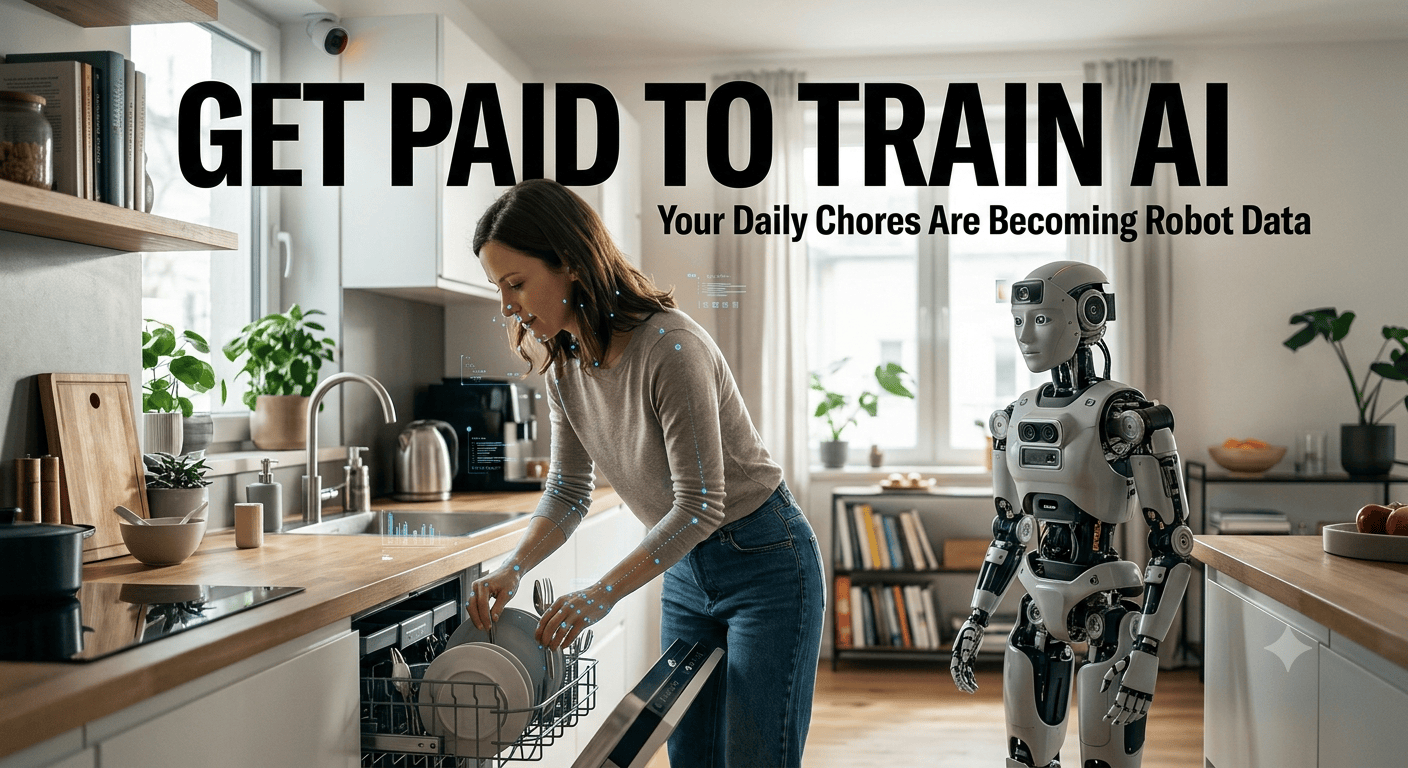

Your camera roll, voice, daily errands and household routines are becoming raw material for the robotics economy. A new platform stack lets ordinary people sell that data directly from almost anywhere.
The newest remote worker does not need a résumé, an office or even a traditional job.
They need a smartphone, a decent internet connection and something ordinary to do.
Fold laundry. Wash dishes. Plate dinner. Organize a drawer. Walk through a parking lot. Photograph a pothole. Pour water into a glass. Describe an image. Record a regional accent. Take out the trash.
Then upload it.
A new generation of AI-data platforms is paying people to photograph, record and document everyday life so artificial intelligence can understand the physical world. These companies are building the missing data layer behind humanoid robots, autonomous vehicles, computer-vision systems and AI agents.
This is no longer the old data-annotation economy built around clicking boxes on a screen for pennies. The market is expanding into first-person video, real environments, human movement, professional techniques and the billions of tiny decisions people make without consciously thinking about them.
The platforms pay contributors. The platforms package the footage. AI laboratories and robotics companies buy the resulting datasets. Investors place billion-dollar valuations on the machines those datasets help create.
That is the paid-chore AI data money funnel.
And for people who understand how to stack the platforms, the same apartment, kitchen, neighborhood and daily routine can become a portable data-production business.
The next remote-work boom will not happen entirely behind a laptop. It will happen inside people’s homes, camera rolls, cars, kitchens and daily routines.
Why AI Suddenly Wants Your Chores
ChatGPT learned language by processing enormous quantities of human writing. Image generators learned visual patterns from photographs and artwork. The public internet supplied the raw material.
Robotics companies face a harder problem.
There is no searchable internet containing billions of clean, first-person demonstrations of humans folding towels, opening jars, repairing appliances, packing groceries or preparing dinner.
Public video is usually filmed for human entertainment. The camera points at a face instead of the hands. Editing removes intermediate steps. Objects disappear outside the frame. Copyright ownership is unclear. Critical motions are blocked or poorly labeled.
Robots require a different type of video.
They need to see the hands, tools, objects, environment and complete sequence of actions. They need multiple people performing the same task in different homes, lighting conditions and physical spaces. They need unsuccessful attempts, corrections and variations.
That is why companies are paying people to record normal life.
According to a 2026 Wired investigation, contributors are already filming themselves tying shoes, washing dishes and pouring liquids for platforms including Kled, Luel and Waffle Video. Rates vary dramatically, from low-paying bulk-data assignments to missions advertising approximately $25 per accepted recording hour.
The task looks insignificant. The aggregate dataset is not.
Kled Turns Your Camera Roll Into Inventory
Kled is one of the largest consumer-facing human-data marketplaces. Contributors upload photographs and videos or complete specialized assignments requested by AI companies.
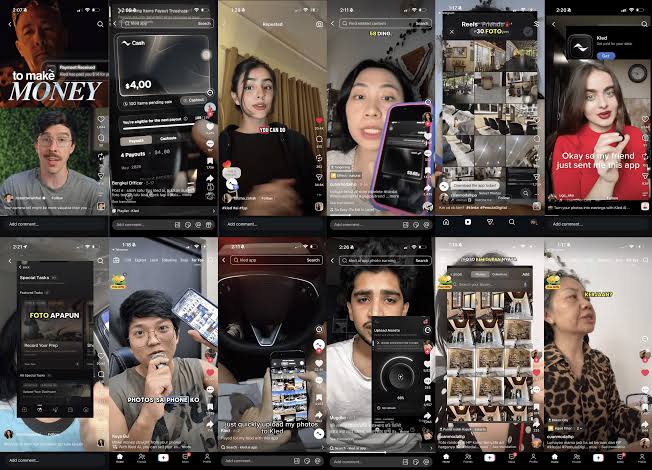
The platform might request:
- First-person cooking videos
- Photographs of streets, buildings or potholes
- Videos of household chores
- Images of deliveries at front doors
- Two versions of the same scene
- Regional objects and environments
- Audio, documents or professional data
- Specialized footage captured with wearable cameras or drones
Kled says its network includes hundreds of thousands of contributors across more than 170 countries. Its App Store description says uploaded content is licensed to AI companies with contributor consent, while payouts can be processed through PayPal, Venmo or a Solana wallet.
This is the easiest entry point into the funnel because a contributor may already possess the inventory. The product can be sitting inside an ignored camera roll.
But volume alone does not guarantee meaningful income.
Kled states that compensation depends on uniqueness, quality and buyer demand—not simply the number of files uploaded. The platform also requires users to reach a submission threshold before becoming eligible for a payout.
The stronger strategy is not uploading 3,000 nearly identical photographs. It is supplying material AI companies cannot easily scrape from public websites.
A truck driver has unusual road footage. A chef has professional hand-movement data. A landscaper has equipment, plants and changing outdoor environments. A rural contributor has roads, buildings and agricultural activity missing from urban datasets.
Generic content competes with the entire internet. Specialized access creates leverage.
Luel Pays for Video, Audio and Human Conversation
Luel operates a global contributor platform for photographs, audio, video, uploaded files and live conversation tasks.

Assignments are matched according to language, location, device and availability. Contributors browse available projects, follow the specifications, submit the requested data and track the payout inside the platform.
This matters because not everyone has access to visually unusual environments or professional workspaces.
A contributor can still hold valuable data through:
- A regional or bilingual accent
- A less-represented language
- Voice conversations
- Screen recordings
- Smartphone sensor data
- Photographs from a specific country
- Videos of ordinary activities inside a local environment
Luel advertises payouts through Venmo in the United States, Wise and Stripe bank transfers. Individual rates depend on the assignment, and payment is issued only when a submission meets the platform’s approval requirements.
The approval requirement is central to this entire economy.
Recording for one hour does not automatically create one paid hour. Lighting, resolution, camera position, visible hands, background noise, task completion and adherence to instructions can determine whether the submission earns anything.
This is remote freedom governed by quality control.
Waffle Video Offers the Strongest Creator Model
Waffle Video treats AI training footage more like licensable creator content.
Instead of requesting access to an existing camera roll, Waffle asks contributors to record new footage through specific missions. Those missions might require someone to tie a shoe, pour liquid, complete an errand or demonstrate another real-world action.
Approved videos receive an upfront payment. Waffle’s enterprise platform says contributors can also receive a 30% revenue share when their footage is relicensed.
That second payment changes the model.
Most gig platforms pay for the labor once and retain the continuing commercial value. Waffle begins moving toward syndication: one human demonstration can produce more than one payment if multiple AI customers license it.
For contributors, that creates a simple priority system:
- Complete the best-paying active missions.
- Follow every technical requirement.
- Create footage with long-term relicensing potential.
- Build a clean library of approved, professionally captured actions.
Waffle access and mission availability are not guaranteed. Assignments appear when enterprise customers request specific datasets. But its recurring-revenue structure is the closest thing this market currently has to royalties.
The real opportunity is not filming more random content. It is retaining participation in the value each useful recording produces.
Shift Monetizes the Work You Already Perform
Shift moves the opportunity from isolated smartphone tasks into hands-on work.
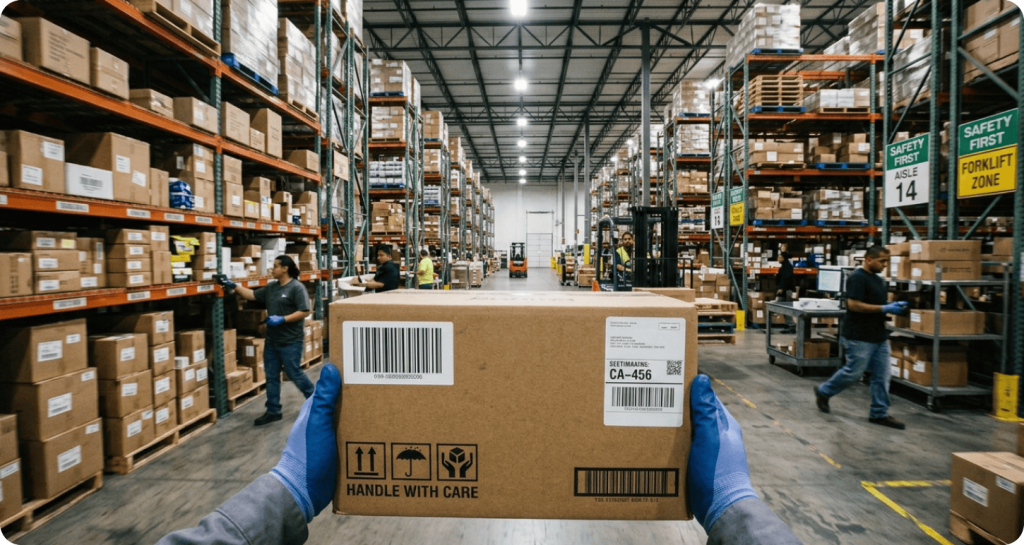
The platform advertises compensation of up to $30 per accepted recording hour. Contributors use a headset to capture first-person footage while performing eligible physical activities.
Shift lists industries including:
- Food service and commercial kitchens
- Cleaning and facility maintenance
- Automotive repair
- Landscaping
- Agriculture
- Construction
- Electronics repair
- Manufacturing
- Pottery and crafts
- Warehouse operations
The platform says contributors receive weekly payments for accepted uploads. It also offers a referral program paying $2 for every approved recording hour generated by a participating business referred through the platform.
That creates two possible income streams: recording and recruiting.
A self-employed chef could record authorized prep and plating work. A cleaning-company owner could enroll the business, establish privacy rules and record qualifying commercial tasks. A mechanic could document repairs from a first-person perspective.
Shift states clearly that it does not promise a fixed number of recording hours or a guaranteed earnings total. Workers must also have authorization to record inside a business. Customers, proprietary processes, confidential documents and other employees cannot simply be filmed without consent.
The money is portable. The legal responsibility follows the camera.
Add Neevo for Mobile Microtasks
Neevo expands the stack beyond physical video.
The platform pays contributors to complete text, audio, image and video tasks used to improve AI accuracy. Work can include recording speech, validating audio, categorizing images, reviewing text or drawing boxes around objects in photographs.
Neevo will not produce a constant stream of work for every contributor. Projects appear when a person’s language, demographic profile or location matches a customer request.
That makes it useful as a secondary platform.
When no physical recording mission is available, a contributor can move into audio collection or mobile annotation. The income streams occupy different parts of the same AI supply chain.
Add Clickworker for Location-Based Data Collection
Clickworker distributes mobile microtasks through its app. Projects can include photographs, surveys, voice recordings, search evaluation, text creation and location-based data collection.
A location task might request images of products, storefronts, transportation systems or public infrastructure. These assignments can be completed while running errands or moving through a city.
This makes Clickworker useful for the “everywhere” portion of the stack.
The home produces household data. The commute produces road and navigation data. The grocery store produces retail data. Public spaces produce mapping and object-recognition data.
The contributor is no longer waiting to arrive at work.
Movement itself becomes inventory.
The AI-Data Income Stack
The strongest strategy is not relying on one app. It is building a stack around different types of data.
Layer One: Existing Media
Use Kled for eligible camera-roll photographs, videos and specialized data requests.
Sort the camera roll before uploading. Remove images containing children, private documents, medical information, client property, visible addresses or anyone who has not consented.
Layer Two: New Mission-Based Video
Use Waffle Video for tightly defined, newly recorded missions.
These tasks require more precision but may offer better rates and relicensing participation. Record exactly what the brief requests. Do not improvise around technical specifications.
Layer Three: Daily Physical Work
Use Shift when your job, business or home activity qualifies.
This is the most natural stack for chefs, cleaners, tradespeople, farmers, makers and other people already completing valuable physical work.
Layer Four: Voice and Human Interaction
Use Luel and Neevo for audio, multilingual, conversational and demographic assignments.
Language diversity can be more valuable than generic visual content. Regional accents and less-represented languages may qualify for assignments unavailable to the wider contributor pool.
Layer Five: Errand and Location Data
Use Clickworker or Kled location-based assignments during normal travel.
Photograph requested public objects, roads or retail environments while already moving through the area. Do not trespass, record private property without permission or photograph restricted locations.
Layer Six: Referrals
Use platform referral programs only after personally verifying that the service pays and operates in the intended country.
Shift advertises compensation tied to approved recording hours generated by referred businesses. Kled also maintains a referral system. Referral income can scale beyond an individual contributor’s available recording time.
Build One Profitable Data Day
A contributor does not need to spend the entire day staring at six apps.
The stack works best when tasks are attached to activities already scheduled.
Morning: Record an approved first-person breakfast-preparation or cleaning task.
Midday: Complete an audio or conversation assignment while sitting at home.
Afternoon: Capture an approved location-based image during errands.
Evening: Complete a Waffle mission requiring a household action.
Weekly: Review the camera roll for eligible Kled submissions and check each platform for new assignments.
The objective is not constant hustling. It is reducing additional labor by matching paid requests with activity that was already going to happen.
However, contributors should not submit the same recording to several platforms unless every applicable license explicitly permits it. One service may require exclusive rights or restrict commercial relicensing. Cross-posting the same file without reading the agreements can violate platform terms and create conflicting ownership claims.
Use separate recordings when the rights are unclear.
How to Avoid Rejected Work
The difference between wasted time and paid data usually comes down to execution.
Before recording:
- Read the entire assignment
- Confirm country and device eligibility
- Check required resolution and orientation
- Clean the camera lens
- Remove personal information from the environment
- Confirm that every visible person has consented
- Use reliable lighting
- Keep required hands and objects inside the frame
- Record the complete process without edits
- Review the footage before submission
- Keep a private log of tasks, time, approvals and payments
Track the actual hourly return.
A task advertising $25 per accepted hour can fall below that figure if setup, uploading, rejection and revision consume additional time. Platform headline rates describe potential compensation—not guaranteed net income.
The Freedom Is Real, but It Is Not Automatic
These platforms remove several traditional employment barriers.
There is no commute. Many tasks require no degree. Work may be available across dozens of countries. A contributor can operate from a home, vehicle, workshop, farm or small business. Several platforms pay in stronger international currencies, which can create meaningful income in lower-wage markets.
But “remote” does not mean effortless.
Task volume changes. Some regions receive more assignments than others. Submissions can be rejected. Platforms can modify their rates or close projects. Equipment and broadband cost money. Contributors are generally responsible for taxes and are not receiving employee benefits.
The immediate freedom comes from access—not guaranteed income.
The person who treats this like a data business will outperform the person randomly uploading content and hoping to get paid.
The Funnel Ends With the Robot
The economics are impossible to ignore.
Workers may receive a few dollars for an image set or up to $30 for an accepted recording hour. The intermediary cleans, verifies, labels and packages thousands of submissions. AI laboratories purchase the finished dataset. Robotics companies use it to train systems that may eventually operate in homes, kitchens, warehouses and factories.
The contributor receives cash now.
The platform acquires inventory.
The AI company acquires intelligence.
The investor acquires equity in the machine.
That does not make the opportunity fraudulent. It means contributors must understand exactly where they sit inside the funnel.
People can use these platforms to create supplemental income, access global digital markets and monetize knowledge that previously generated no direct return. They should also prioritize services offering transparent rates, privacy protections, clear licensing and recurring revenue when data is sold again.
The smartest move is not refusing to train AI. It is refusing to train it for free.
The paid-chore AI economy has already arrived. Your voice, camera roll, kitchen, commute and ordinary routine can now connect directly to the global robotics market.
The internet once paid creators for attention.
The next platform economy will pay humans for reality.
Related Articles on IMFounder
- AI Is Entering the IVF Lab—and Quietly Getting a Vote on Who Gets Born
- 15 Explosive AI Updates August 2026: OpenAI’s Astra Math Breakthrough, DeepMind’s Reorg
- Your Mirror Is About to Start Diagnosing You
- Fashion Is Designing Clothes That Make You Invisible to AI
- 5 Shocking Rounds: Japan’s Sakana Fugu AI Brutally Beats Claude in 2026
- ByteDance’s DeerFlow and the Rise of AI Employees
- Humanized Robots Companies Leading The Humanoid AI Race