
Football is the world’s most popular sport, but behind every World Cup trophy, unforgettable goal, and packed stadium lies one of the most successful business organizations on the planet.
How FIFA Makes Money is a question millions of football fans ask every year. While FIFA is officially a non-profit organization, its financial power rivals some of the world’s biggest corporations. During every four-year World Cup cycle, billions of dollars flow through its accounts from television broadcasters, sponsors, licensing agreements, ticket sales, hospitality packages, and commercial partnerships.
The result is a financial empire that generated nearly US$13 billion during the 2023–2026 commercial cycle, making FIFA one of the richest sporting organizations in history.
Here’s a closer look at the economics behind football’s biggest governing body.
FIFA Revenue: A Billion-Dollar Business
Unlike traditional businesses, FIFA doesn’t manufacture products or sell consumer electronics. Instead, it owns something even more valuable—the commercial rights to the world’s biggest sporting event.
Every four years, broadcasters, advertisers, sponsors, governments, and fans compete for access to FIFA’s tournaments.
According to FIFA’s financial reports, the organization expects approximately US$13 billion in revenue during the current World Cup cycle, nearly doubling revenue compared to previous cycles due to expanded tournaments and commercial growth.
The largest contributors include:
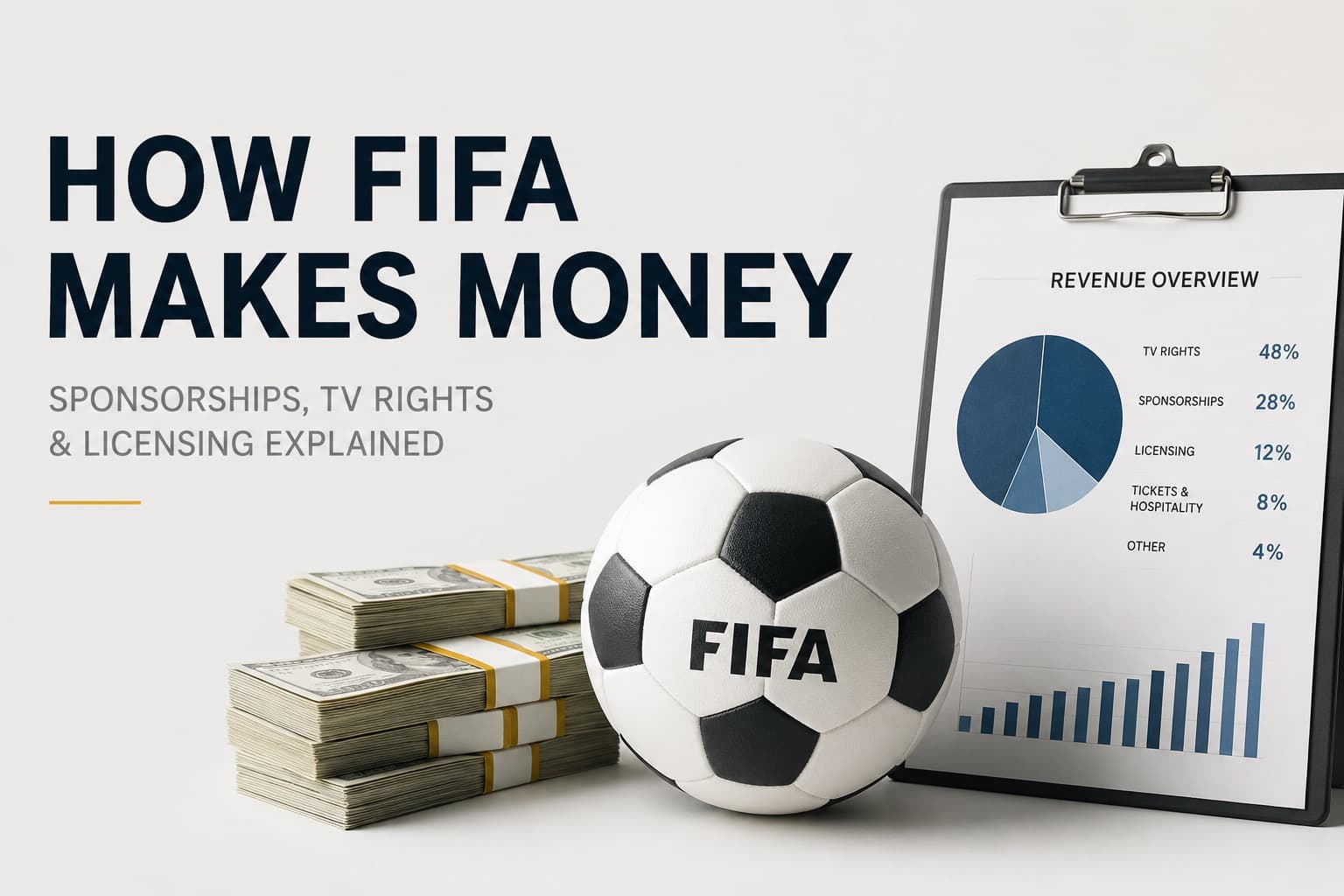
| Revenue Source | Estimated Share |
|---|---|
| Television Rights | 45–50% |
| Sponsorships | 25–30% |
| Licensing & Commercial Rights | 10–15% |
| Hospitality & Ticket Sales | 10–15% |
| Other Income | Remaining |
Television rights remain FIFA’s single largest source of income.
How FIFA Makes Money Through TV Rights
When billions of people watch the FIFA World Cup, they aren’t watching it for free.
Broadcasters around the world pay enormous sums for the exclusive right to air FIFA tournaments.
Major broadcasters including Fox Sports, BBC, ITV, Telemundo, Globo, Canal+, and many regional television companies compete aggressively for these rights because the World Cup consistently delivers some of the highest television audiences in history.
During the 2022 FIFA World Cup, global cumulative viewership reached more than five billion people, making it one of the largest media events ever recorded.
Because advertisers pay premium prices during these broadcasts, television companies are willing to spend billions securing broadcasting rights.
For FIFA, TV rights generate nearly half of total revenue.
FIFA Sponsorships: Global Brands Pay Billions
Another major answer to How FIFA Makes Money is sponsorship.
Companies don’t simply advertise during FIFA events—they purchase official partnerships that provide worldwide exposure.
Global sponsors receive rights to use FIFA branding, hospitality access, digital campaigns, stadium advertising, and promotional opportunities across multiple tournaments.
Sponsors typically include industries such as:
- Airlines
- Automotive manufacturers
- Financial services
- Technology companies
- Beverage brands
- Consumer electronics
- Sportswear companies
These sponsorship agreements often run for several years and are worth hundreds of millions of dollars.
For multinational corporations, associating with the FIFA World Cup provides access to billions of viewers across nearly every country.
FIFA Licensing Revenue Explained
The FIFA logo appears on everything from footballs to video games.
That isn’t accidental.
Licensing is another enormous revenue stream.
Companies pay FIFA licensing fees to manufacture official:
- Footballs
- Jerseys
- Toys
- Trading cards
- Apparel
- Accessories
- Collectibles
- Video games
- Merchandise
Perhaps the most famous example was the long-running partnership with EA Sports, where the FIFA name became one of gaming’s biggest brands before the franchise transitioned to EA Sports FC.
Even after that partnership ended, FIFA continues licensing its intellectual property across multiple industries.
Ticket Sales and Hospitality
Every World Cup sells millions of tickets.
Fans travel from every continent, creating massive demand.
Beyond standard tickets, FIFA also earns substantial revenue from premium hospitality packages.
Corporate executives often purchase luxury experiences that include:
- VIP seating
- Private lounges
- Gourmet dining
- Exclusive networking
- Premium parking
- Meet-and-greet experiences
Some hospitality packages cost several thousand dollars per guest.
The Economics Behind the FIFA World Cup
Hosting a FIFA World Cup isn’t just about football.
Countries invest billions in:
- Stadium construction
- Airports
- Public transport
- Hotels
- Security
- Telecommunications
- Tourism infrastructure
Host nations expect increased tourism, international visibility, and long-term economic benefits.
Meanwhile, FIFA itself bears relatively little infrastructure risk while benefiting from commercial rights, sponsorships, broadcasting agreements, and ticket sales.
This unique model allows FIFA to generate extraordinary profits without owning permanent stadiums in every country.
Does FIFA Pay Tax?
One of the most misunderstood aspects of FIFA’s finances is taxation.
FIFA operates as a non-profit association based in Switzerland.
Being a non-profit does not mean it doesn’t generate billions in revenue. Instead, profits are generally reinvested into football development, tournaments, youth programs, infrastructure grants, women’s football, refereeing, and member associations.
Financial statements are audited annually and publicly released.
Where Does FIFA Spend Its Money?
Although FIFA generates enormous revenue, large portions are redistributed throughout global football.
Major spending categories include:
- Football development programs
- Women’s football
- Youth competitions
- Grassroots football
- Referee development
- Member association funding
- Tournament organization
- Technology and innovation
- Operational expenses
Through programs such as FIFA Forward, billions have been invested into developing football infrastructure worldwide.
The Future of FIFA’s Business Model
The business of football is changing rapidly.
Streaming platforms, artificial intelligence, digital collectibles, direct-to-consumer broadcasting, esports, and expanded tournaments are creating entirely new revenue opportunities.
The expanded FIFA Club World Cup and future Women’s World Cups are expected to generate additional billions over the coming decade.
Commercial partnerships are also evolving beyond traditional sponsorships into technology, fintech, sustainability, and digital fan engagement.
For FIFA, the challenge is no longer attracting viewers—it is finding new ways to monetize one of the world’s largest global audiences.
Final Thoughts
How FIFA Makes Money ultimately comes down to one thing: owning the commercial rights to the world’s biggest sporting spectacle.
Television rights remain the financial backbone of FIFA’s business, while sponsorships, licensing, ticket sales, and hospitality create multiple revenue streams that together generate billions of dollars every four-year cycle.
As football continues expanding into digital media, streaming, esports, and new global markets, FIFA’s business model is likely to become even larger and more profitable.
Whether you’re a football fan, entrepreneur, investor, or business enthusiast, FIFA offers one of the most fascinating case studies in modern sports economics.
Related Articles on IMFounder
- $11,000 World Cup Tickets. $30 Wages.
- There Are Actually Two 2026 FIFA World Cups Happening
- Olympic Lessons for Businesses: Risk, Ethics, Support, Leadership, and Purpose
- The Dark Truth Behind Canada’s International Student Explosion
- Women’s Sports Are Breaking Records and Fans Are Taking Notice
- Google’s $15 Billion AI Data Centre Raises Water Concerns in a Country Where over 600 Millions Already Face Water Stress
Resources
- FIFA Financial Reports: https://inside.fifa.com/about-fifa/finances
- FIFA Annual Reports: https://inside.fifa.com
- Deloitte Sports Business Group: https://www.deloitte.com
- Statista Sports Industry: https://www.statista.com