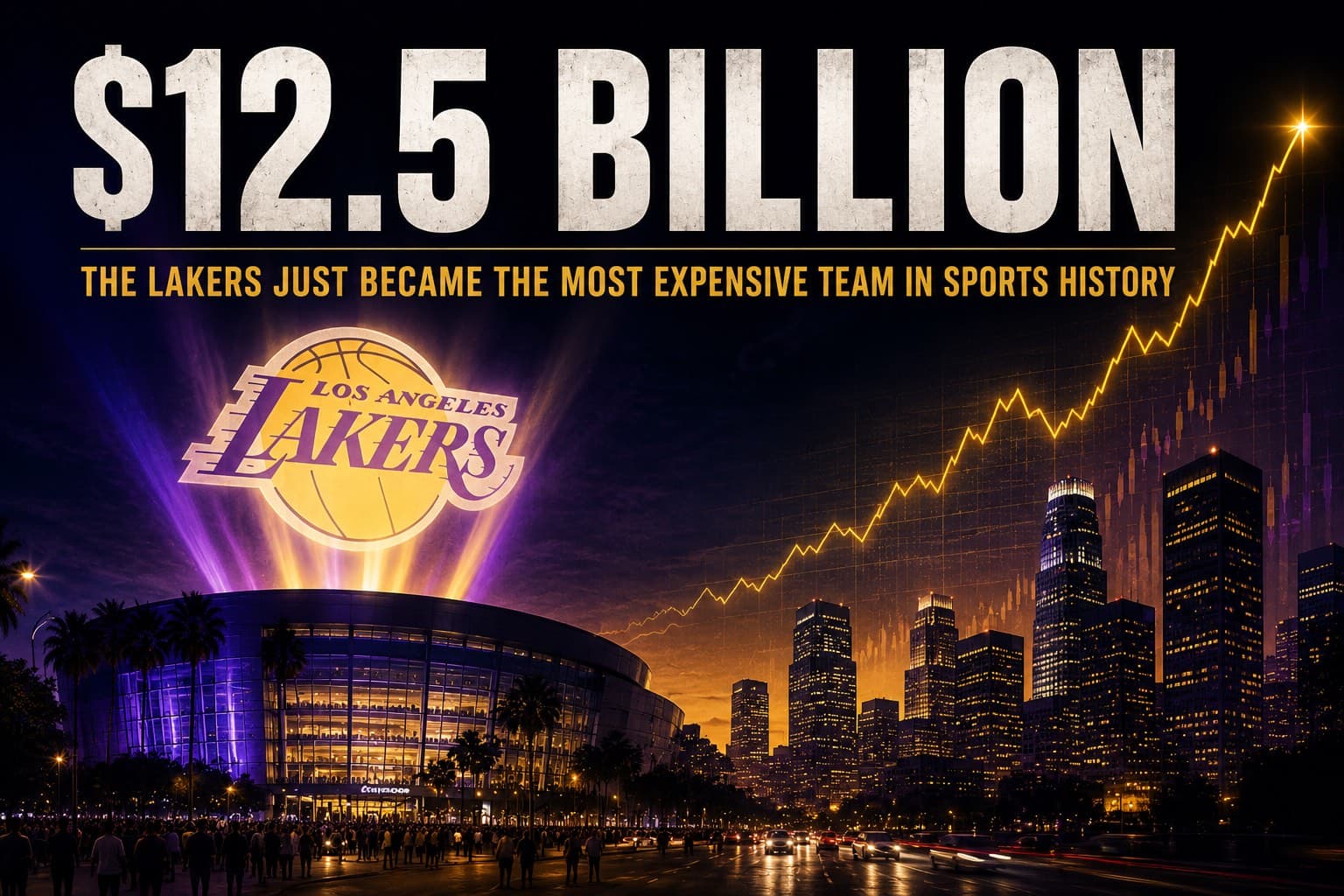

Inside the record $12.5 billion deal reshaping how billionaires, private equity, and even nations are buying into professional sports.
The Lakers $12.5 billion sale just rewrote the record book for professional sports — and it happened almost overnight. On August 12, 2026, the Los Angeles Lakers were sold by Mark Walter to a new ownership group led by former Disney CEO Bob Iger and Thrive Capital founder Josh Kushner, instantly making the Lakers the most expensive sports franchise ever purchased, anywhere in the world, in any sport.
What makes this story bigger than basketball is the pattern behind it. The Lakers deal isn’t an isolated spike — it’s the latest, biggest data point in a decade-long trend of sports franchises turning into one of the hottest asset classes on the planet, with billionaires, private equity firms, and even sovereign governments racing to own a piece of the action. This article breaks down exactly what happened in this record transaction, how it compares to every major sports sale in history, and why the price of owning a team has exploded far faster than almost any other asset class you can name.
What Happened in the Lakers $12.5 Billion Sale?
Here’s the short version: less than a year after buying a controlling stake in the Lakers for a then-record $10 billion, Guggenheim Partners CEO Mark Walter agreed to sell his majority equity to Josh Kushner and Bob Iger for $12.5 billion — a $2.5 billion profit in barely twelve months.
According to reporting from CNBC, ESPN, and CBS Sports, the deal came together in a matter of days. Kushner and Iger had reportedly been circling an NBA expansion franchise in Las Vegas before pivoting hard toward an aggressive offer for the Lakers instead. The two men, who already had a business relationship — Iger joined Kushner’s venture firm, Thrive Capital, earlier in 2026 — approached Walter directly and closed the agreement within roughly a week.
A few key details matter here:
- The Dodgers and Sparks are not included. Walter retains his stake in MLB’s Los Angeles Dodgers and the WNBA’s Los Angeles Sparks; only the Lakers changed hands.
- The Buss family stays involved. Jeanie Buss is expected to remain in a leadership role for at least five years under the new ownership, honoring an earlier agreement made when Walter first bought the team.
- NBA approval is still pending. Like every major franchise sale, the deal requires sign-off from the NBA’s Board of Governors before it’s finalized.
- It’s a historic return for the Buss family’s original investment. Jerry Buss purchased the Lakers for roughly $67.5 million in 1979. At $12.5 billion, the franchise’s value has grown by more than 18,000% in under five decades.
Who Are Bob Iger and Josh Kushner?
Understanding this record-breaking deal means understanding the two men now running the franchise — because neither of them is a typical sports owner.
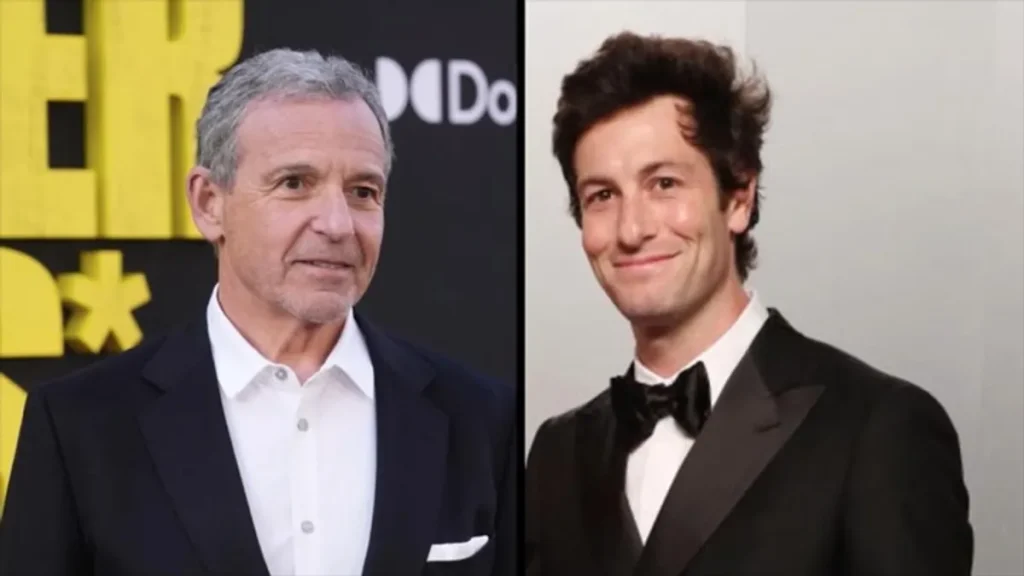
Bob Iger: The Media Titan
Bob Iger, 75, spent roughly two decades running The Walt Disney Company across two separate stints as CEO, overseeing acquisitions like Pixar, Marvel, and Lucasfilm that reshaped the entertainment industry. He stepped down as Disney’s chief executive earlier in 2026. Iger already holds an ownership stake in Angel City FC, the NWSL franchise he controls alongside his wife, Willow Bay — meaning the Lakers purchase isn’t his first move into sports ownership, but by far his biggest.
Josh Kushner: The Venture Capitalist
Josh Kushner, 41, is the founder of Thrive Capital, one of the most influential venture capital firms of the last decade, and co-founder of health insurance company Oscar Health. He’s the younger brother of Jared Kushner, son-in-law of President Donald Trump. Before this deal, Josh Kushner held a minority stake in the Miami Heat — which he will reportedly have to divest to clear NBA conflict-of-interest rules — and previously owned a piece of the Memphis Grizzlies. Kushner also runs Thrive Eternal, the investment vehicle FIFA had explored partnering with on a proposed $4.2 billion World Cup investment deal earlier this year, before that plan was withdrawn.
Put simply: this isn’t a legacy sports family or an old-money dynasty buying the Lakers. It’s a media executive and a venture capitalist — two people whose entire careers are built on spotting undervalued assets and scaling them. That’s exactly why the sports business world is paying such close attention.
Why Did Mark Walter Sell the Lakers So Fast?
This is the part of the story that raises eyebrows. Mark Walter bought the Lakers less than a year ago. Flipping a $10 billion asset for $12.5 billion in under twelve months is an almost unheard-of return in professional sports, where teams are typically held for decades.
Walter’s public explanation, in a statement reported across multiple outlets, framed the sale warmly — calling ownership of the Lakers one of the great honors of his life. But the timing lines up with another detail worth noting: Walter’s companies are reportedly the subject of a federal probe examining whether loans to his businesses were properly disclosed. Multiple outlets, including Yahoo Sports, have reported that this probe has not been officially cited as a reason for the sale, and Walter’s companies have denied any wrongdoing. Whatever the underlying motivation, the financial outcome is clear — a $2.5 billion gain in roughly a year, on top of Walter retaining full ownership of the Dodgers and Sparks.
Quick Timeline: How the Lakers Got Here
- 1979: Dr. Jerry Buss purchases the Lakers, along with the Kings and the Forum, for roughly $67.5 million as part of a larger package deal.
- 1979–2024: The Buss family runs the franchise for 45 years, winning multiple championships and building the Lakers into one of the most recognizable brands in global sports.
- 2025: Mark Walter, CEO of Guggenheim Partners and principal owner of the LA Dodgers, buys a controlling stake in the Lakers from the Buss family at an approximately $10 billion valuation — a then-record for any North American sports franchise.
- August 2026: Barely a year later, Walter agrees to sell his majority equity to Bob Iger and Josh Kushner for $12.5 billion, pocketing a reported $2.5 billion gain and resetting the global record once again.
That’s two record-setting sales of the same franchise inside 24 months — a pace of appreciation almost never seen with an asset this large.
The Lakers $12.5 Billion Sale in Historical Context
To understand just how extreme this number is, it helps to see it next to every other major sports sale of the last decade. Franchise values haven’t just grown — they’ve compounded at a pace that outstrips real estate, gold, and most public equities.
| Rank | Team (League) | Sale Price | Year | Buyer | Seller |
|---|---|---|---|---|---|
| 1 | Los Angeles Lakers (NBA) | $12.5 billion | 2026 | Bob Iger & Josh Kushner | Mark Walter |
| 2 | Los Angeles Lakers (NBA) | $10.0 billion | 2025 | Mark Walter | Buss Family |
| 3 | Boston Celtics (NBA) | $6.1 billion | 2025 | Bill Chisholm | Wyc Grousbeck |
| 4 | Washington Commanders (NFL) | $6.05 billion | 2023 | Josh Harris Group | Dan Snyder |
| 5 | Chelsea FC (Premier League) | $5.2 billion | 2022 | Todd Boehly / Clearlake Capital | Roman Abramovich |
| 6 | Denver Broncos (NFL) | $4.65 billion | 2022 | Walton-Penner Family | Pat Bowlen Trust |
| 7 | Phoenix Suns & Mercury (NBA/WNBA) | $4.0 billion | 2023 | Mat Ishbia | Robert Sarver |
| 8 | Dallas Mavericks (NBA) | $3.5 billion | 2023 | Miriam Adelson & Patrick Dumont | Mark Cuban (majority stake) |
| 9 | Charlotte Hornets (NBA) | $3.0 billion | 2023 | Gabe Plotkin & Rick Schnall | Michael Jordan |
| 10 | New York Mets (MLB) | $2.4 billion | 2020 | Steve Cohen | Fred Wilpon |
A few things jump out immediately. First, the Lakers now occupy both the #1 and #2 spots on this list — the same franchise was sold twice in under two years, and the price still jumped by $2.5 billion. Second, notice how the pace is accelerating: it took from 2020 to 2022 to go from $2.4 billion (Mets) to $4.65 billion (Broncos), but only from 2025 to 2026 to go from $10 billion to $12.5 billion. The curve isn’t just rising — it’s steepening.
Why Are Billionaires and Countries Paying Record Prices for Sports Teams?
This record price tag doesn’t exist in a vacuum. It’s the latest, most extreme symptom of a global shift in how wealthy individuals, investment firms, and even national governments think about sports franchises. Here’s what’s actually driving the numbers.
1. Scarcity Is the Whole Game
There are only 32 NFL teams, 30 NBA teams, and 20 Premier League clubs — and that number almost never grows. Compare that to the stock market, where new companies IPO constantly, or real estate, where new buildings go up every year. A marquee franchise like the Lakers, Cowboys, or Manchester United effectively can never be replicated. When an asset is permanently scarce and demand keeps rising, price discovery stops looking like a normal market and starts looking like an auction for a one-of-one collectible.
2. Media Rights Are Worth More Than Ever
Live sports is now one of the only forms of content that reliably pulls a mass, unskippable audience in the streaming era. Broadcasters and streamers — from ESPN to Amazon to Netflix — are paying enormous sums to lock in live sports rights, and a meaningful share of that revenue flows straight to team owners. As media contracts get richer, franchise cash flow (and therefore franchise value) gets richer with it.
3. Private Equity Finally Got the Green Door
For decades, major U.S. leagues restricted institutional and private equity ownership of teams. That’s changed. The NFL, NBA, and MLB have all loosened their rules over the past few years to allow private equity funds to take minority — and in some cases larger — stakes in franchises. The New York Yankees, for example, recently accepted a $2.6 billion financing injection from Apollo Global Management, according to Sportico. Once institutional capital is allowed in the door, valuations tend to climb quickly, because funds are willing to pay a premium for a trophy asset with predictable, growing cash flow.
4. Nation-States Are Buying Soft Power, Not Just Teams
This isn’t limited to American billionaires. Sovereign wealth funds and state-linked investors have poured money into global sports over the last several years — from Gulf state ownership of top European football clubs to state-backed investment in golf and Formula-adjacent series. For a government, owning or sponsoring a globally visible sports property isn’t primarily about return on investment; it’s about attention, influence, and reputation on the world stage. That kind of buyer is far less price-sensitive than a typical investor, which pushes valuations even higher for everyone else competing to buy.
5. Teams Are Now Marketed Like Alternative Assets
A decade ago, “buying a sports team” was mostly a rich person’s hobby. Today, it’s discussed by wealth managers in the same breath as fine art, rare collectibles, and pre-IPO tech stakes — a genuine alternative asset class with its own valuation models, comparables, and expected returns. That shift in perception, on its own, has pulled in a completely new pool of capital that simply wasn’t competing for these assets ten years ago.
6. The Tax and Estate Planning Angle
Owning a professional sports franchise also comes with real structural financial advantages — from depreciation treatment on player contracts and intangible assets to the estate-planning flexibility of holding a large, illiquid trophy asset inside a family office or trust. For ultra-high-net-worth buyers who already have most of their public-market exposure covered, a franchise offers a rare combination of prestige, cash flow, and tax efficiency that’s hard to replicate anywhere else in a portfolio.
NBA Franchise Valuation 2026: The Bigger Financial Picture
Zoom out from just the Lakers, and the number gets even more staggering. According to Sportico’s 2026 NFL franchise valuations, all 32 NFL teams are now worth a combined $299 billion — a 31% jump in a single year, the largest annual increase the publication has recorded. The NBA is riding the same wave: with the Lakers and Celtics both trading hands for well over $6 billion within the past two years, league-wide NBA valuations have climbed at a similarly historic pace, even before this latest sale resets the ceiling again.
To put that in perspective, a 31% single-year gain across an entire 32-team league is a growth rate most public stock indices would never come close to matching. Sports franchises, once considered a slow, illiquid, “trophy” investment for the ultra-wealthy, are now compounding faster than almost any other major asset class tracked by Wall Street.
What the Lakers $12.5 Billion Sale Means for Investors and Founders
If you’re building a company or managing capital, this deal is worth studying as more than a sports headline — it’s a live case study in asset-class formation. A handful of takeaways stand out:
- Scarcity beats scale. The Lakers generate a fraction of the annual revenue of a mid-sized public company, yet command a valuation most public companies would envy — because there will only ever be 30 NBA franchises.
- Distribution rights are the real business. The underlying product — basketball games — hasn’t changed. What’s changed is what media companies will pay to distribute it, and that’s the real driver of the price tag.
- Access matters more than experience. Neither Iger nor Kushner built their fortunes in sports. What they brought was capital, credibility, and speed — the same combination that wins deals in venture capital, private equity, and M&A generally.
- Watch where institutional capital is newly allowed in. Every time a previously closed asset class opens up to private equity or sovereign capital — as U.S. sports leagues have done in recent years — valuations tend to re-rate sharply higher within a short window. That pattern isn’t unique to sports.
FAQ About the Lakers $12.5 Billion Sale
Who bought the Lakers for $12.5 billion? Former Disney CEO Bob Iger and Thrive Capital founder Josh Kushner led the buying group that purchased the Los Angeles Lakers from Mark Walter for $12.5 billion in August 2026.
Is the Lakers $12.5 billion sale the most expensive sports team sale in history? Yes. As of August 2026, it is the highest price ever paid for a professional sports franchise anywhere in the world, surpassing the previous record of $10 billion, which was also paid for the Lakers less than a year earlier.
Did the Lakers sale include the Dodgers or the Sparks? No. Mark Walter retains his ownership of the Los Angeles Dodgers (MLB) and the Los Angeles Sparks (WNBA). Only his majority stake in the Lakers was sold.
How much profit did Mark Walter make on the Lakers? Based on reported figures, Walter sold the team for roughly $2.5 billion more than the approximately $10 billion he paid for his controlling stake less than a year earlier.
Does the NBA still need to approve the deal? Yes. Like all major franchise sales, the transaction must be approved by the NBA’s Board of Governors before it is officially finalized.
What was the previous record for the most expensive sports team sale? Before this deal, the record was held by the Boston Celtics, which sold for $6.1 billion in 2025 — a number the Lakers alone have now beaten twice in two separate transactions.
How much did Jerry Buss originally pay for the Lakers? Jerry Buss bought the Lakers, the Kings, and the Forum arena as a package deal in 1979 for roughly $67.5 million — meaning the Lakers alone have appreciated well over 18,000% in less than 50 years.
Why are sports team valuations rising so quickly across every league? A combination of factors is driving it: permanent scarcity of franchises, booming live-sports media rights, newly relaxed private equity ownership rules, and a wave of high-net-worth and sovereign wealth buyers treating teams as a legitimate alternative asset class.
The Bottom Line
The Lakers $12.5 billion sale is a single transaction, but it’s also a signal. It confirms that sports franchises have fully graduated from “rich person’s trophy” to one of the most sought-after, fastest-appreciating asset classes in the world — one now attracting media moguls, venture capitalists, private equity giants, and sovereign governments all competing for a shrinking pool of available teams. Whether or not you follow basketball, the money behind this deal tells you exactly where global capital is flowing next.
This article will be updated as the NBA’s Board of Governors reviews and finalizes the sale.
Related Articles on IMFounder
- Your Mirror Is About to Start Diagnosing You
- Women’s Sports Are Breaking Records and Fans Are Taking Notice
- FIFA World Cup Final: Spain’s Historic Triumph Over Argentina Signals a New Era of Football
- How FIFA Makes Money: The Shocking Business Empire Behind Football’s Biggest Organization
- $11,000 World Cup Tickets. $30 Wages. Why SoFi Stadium Workers Are Ready to Strike
- Olympic Lessons for Businesses: Risk, Ethics, Support, Leadership, and Purpose