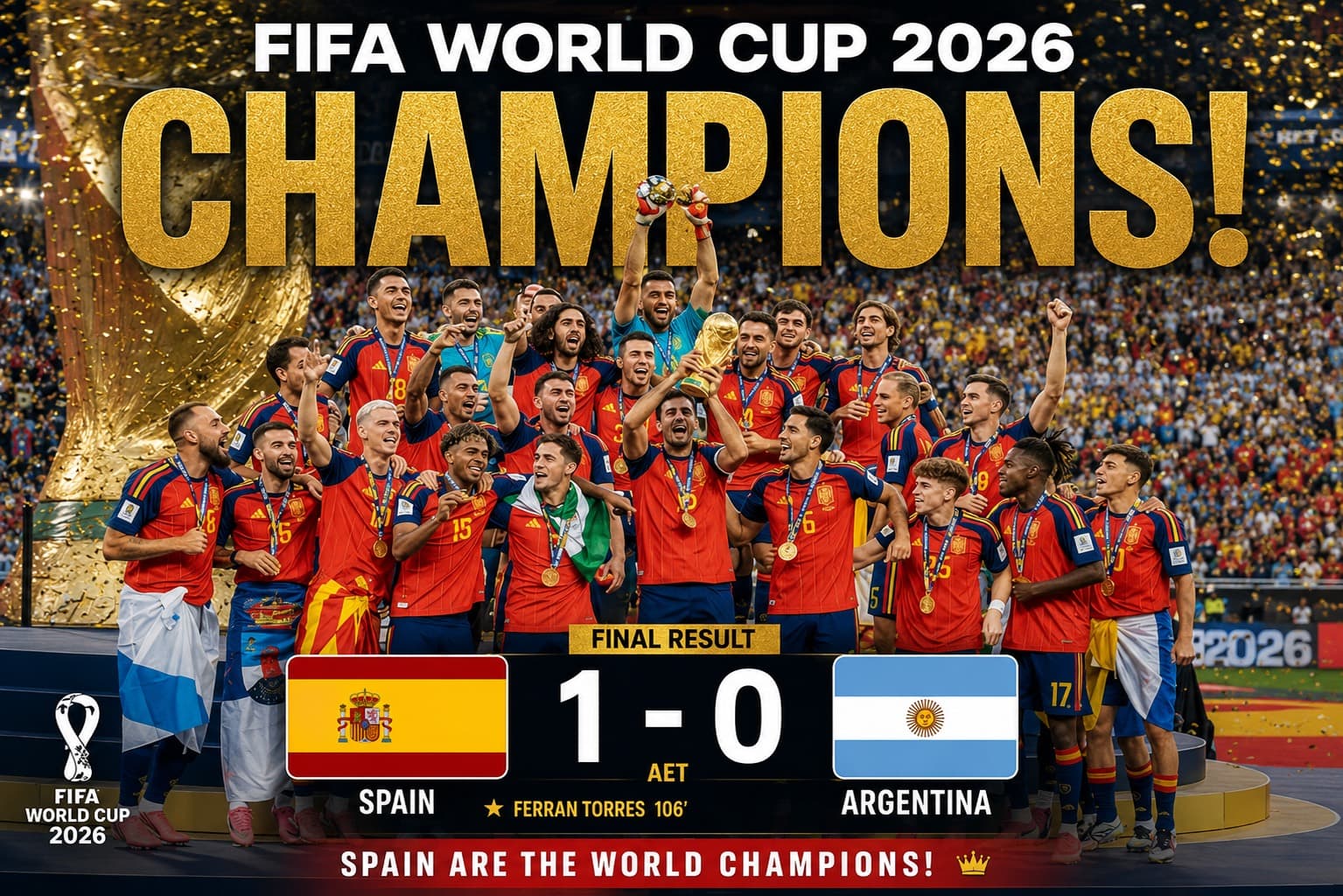

FIFA World Cup Final nights are remembered not only for the trophy lift, but for the stories they leave behind. The 2026 final delivered all the drama football fans could have hoped for—a tactical masterclass, relentless determination, heartbreaking defeat, and the symbolic passing of the torch from one generation of legends to the next.
Inside New York New Jersey Stadium, Spain defeated defending champions Argentina 1-0 after extra time to lift the FIFA World Cup for only the second time in the nation’s history. Ferran Torres’ decisive strike in the 106th minute separated two exceptional teams after more than an hour and a half of relentless football, ending Argentina’s hopes of becoming the first nation since Brazil in 1962 to successfully defend a men’s World Cup title.
Yet this tournament will be remembered for far more than Spain’s victory. It marked the emergence of a fearless Spanish generation led by Rodri, Lamine Yamal and Pau Cubarsí, while also bringing the curtain down on Cristiano Ronaldo’s remarkable World Cup career. For Lionel Messi, the final raised fresh questions about whether the football world has witnessed his last appearance on the biggest stage.
Spain and Argentina Delivered a Final Worthy of History
The world expected a clash between two footballing giants, and neither side disappointed.
Argentina entered the final carrying the confidence of defending champions, determined to become the first back-to-back winners in more than six decades. Lionel Messi once again orchestrated attacks with the calmness and vision that have defined his career, while Julián Álvarez constantly tested Spain’s disciplined defensive line. Every Argentine attack carried the belief that another magical moment could arrive.
Spain, however, never abandoned the philosophy that had guided them throughout the tournament. Rather than chasing the game emotionally, Luis de la Fuente’s side remained patient in possession, controlling the tempo through Rodri and Pedri while allowing young sensation Lamine Yamal to stretch Argentina’s defence with his pace and creativity.
Chances came at both ends, but neither goalkeeper blinked. As normal time ended without a goal, penalties seemed inevitable. Then, in the 106th minute, Spain produced one final move that perfectly reflected everything they had become during this World Cup. A sequence of quick, intelligent passing opened space inside the penalty area, and Ferran Torres calmly slotted the ball beyond Argentina’s goalkeeper to send Spanish supporters into celebration.
Argentina threw everything forward in the closing minutes, but Spain’s defence stood firm. When the final whistle sounded, players collapsed onto the pitch in disbelief as golden confetti rained down on football’s newest world champions.
Spain’s Triumph Was Built on Teamwork, Not Individual Stardom
Unlike many World Cup winners of the past, Spain’s success was never dependent on one superstar carrying the team. Instead, it was built on collective excellence, tactical discipline and remarkable maturity from a squad blending experienced leaders with fearless young talent.
Rodri was the heartbeat of the champions. His ability to dictate possession, protect the defence and control the rhythm of matches made him indispensable throughout the tournament, earning him widespread recognition as the competition’s outstanding player. Alongside him, Pedri quietly orchestrated attacks, while Unai Simón repeatedly delivered crucial saves when Spain needed composure under pressure.
Perhaps the biggest story, however, was the arrival of a new generation. Lamine Yamal continued his extraordinary rise by producing moments of brilliance against some of the world’s strongest defences, while Pau Cubarsí displayed remarkable composure beyond his years. Their performances suggest Spain’s latest triumph may not be the end of a successful cycle, but the beginning of another golden era.
Throughout the tournament, Spain defeated elite opponents with consistency rather than spectacle. They controlled games instead of chasing them, proving that modern football still rewards patience, intelligence and tactical balance as much as individual flair.
Cristiano Ronaldo’s Farewell and Messi’s Uncertain Future
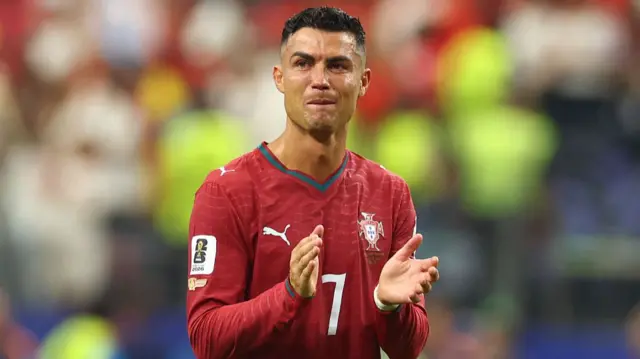
While Spain celebrated the beginning of a new dynasty, the 2026 FIFA World Cup also marked the end of one of football’s greatest journeys.
Before Portugal’s Round of 16 match against Spain, Cristiano Ronaldo confirmed that this would be his final FIFA World Cup. Although Portugal’s campaign ended earlier than supporters had hoped, Ronaldo left the tournament with a legacy that extends far beyond trophies. Across six World Cup appearances, he inspired generations through relentless professionalism, unmatched ambition and an unwavering desire to compete at the highest level long after many of his contemporaries had retired.
His farewell was emotional not because Portugal won the trophy, but because football fans around the world understood they were witnessing the final World Cup chapter of one of the sport’s defining figures. Whether admired as the greatest player of all time or simply one of the greatest, Ronaldo changed expectations of longevity and excellence forever.
For Lionel Messi, the story remains unfinished. After leading Argentina to World Cup glory in Qatar four years earlier, he returned as a defending champion determined to retain football’s biggest prize. Although Argentina ultimately fell short in the final, Messi once again demonstrated why he remains one of the game’s greatest playmakers. As of July 21, 2026, he has not officially announced his retirement from international football, leaving supporters hopeful that another appearance in Argentina’s colours may still be possible.
Regardless of what comes next, Messi and Ronaldo leave behind a rivalry that defined an entire football generation and elevated the sport to unprecedented global popularity.
A World Cup That Changed Football Forever
The 2026 FIFA World Cup will be remembered as more than a tournament. It was a celebration of football’s remarkable ability to evolve while honouring its greatest icons. Spain lifted the trophy through teamwork, discipline and fearless young talent rather than relying on one transcendent superstar, offering a blueprint that many nations will attempt to follow in the years ahead.
At the same time, the tournament delivered unforgettable emotional moments—from Ferran Torres’ extra-time winner and Rodri’s commanding performances to Cristiano Ronaldo’s farewell and Lionel Messi’s pursuit of one final triumph. It reminded supporters that every World Cup simultaneously celebrates the rise of new heroes while bidding farewell to legendary careers.
When Álvaro Morata lifted the trophy beneath a shower of golden confetti, Spain officially became world champions once again. But the lasting legacy of the 2026 FIFA World Cup extends beyond one nation or one match. It marked the beginning of football’s next chapter, proving once again that while legends eventually leave the stage, the beautiful game always finds new stars ready to inspire the world.