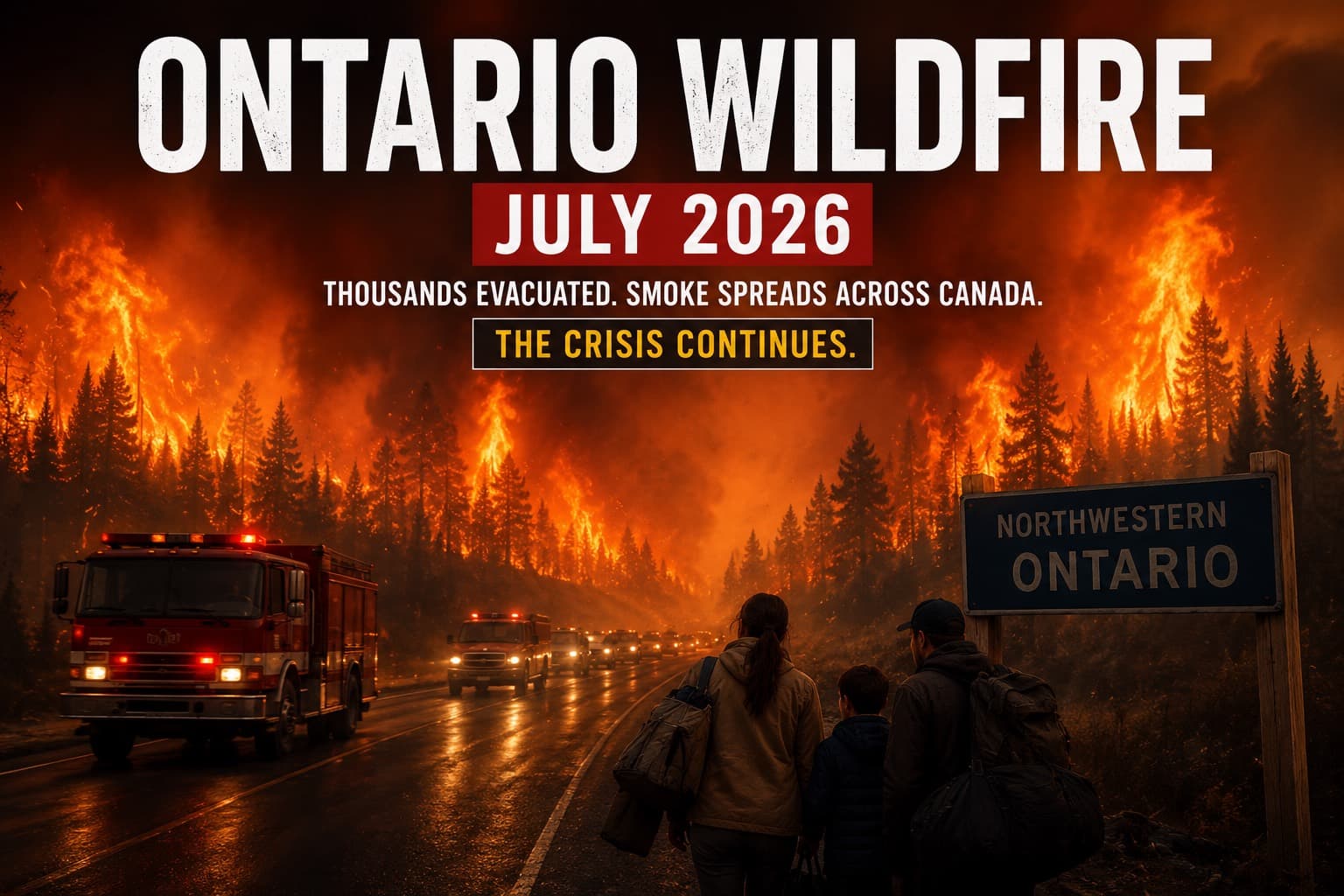

Ontario Wildfire July 2026: Latest Update
Ontario Wildfire July 2026 has become one of Canada’s most serious environmental emergencies of the summer, forcing thousands of residents from their homes, disrupting transportation networks, and covering much of Ontario with hazardous wildfire smoke.
Northern Ontario remains the epicenter of the crisis as firefighters continue battling rapidly expanding wildfires fueled by extreme heat, dry vegetation and strong winds. The emergency has now reached a point where the Ontario government has requested additional assistance from the federal government to help evacuate vulnerable communities. (Reuters)
What Happened?
The wildfire situation escalated dramatically during the second week of July.
Several fires merged into larger fire complexes across Northwestern Ontario, making containment increasingly difficult. Entire First Nations communities received mandatory evacuation orders while emergency crews worked around the clock to protect lives and critical infrastructure.
One of the most dramatic moments came when a Canadian National freight train became surrounded by flames near Armstrong, Ontario. The viral footage quickly spread across social media, highlighting how quickly wildfire conditions had deteriorated.
Following the incident, rail operations through the affected corridor were suspended while crews were evacuated safely. (The Economic Times)
Ontario Wildfire July 2026: Latest Numbers
According to federal officials:
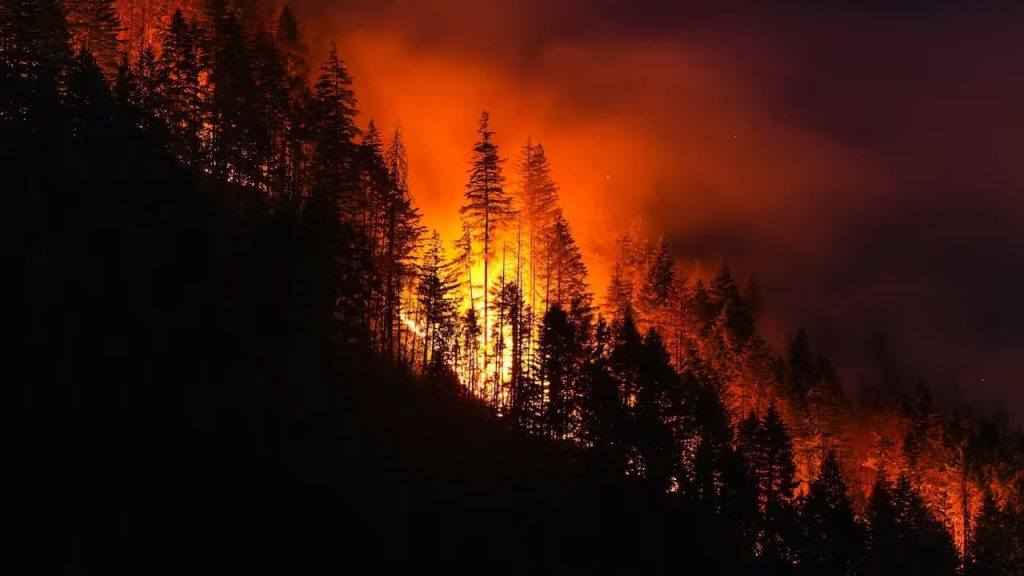
- More than 850 active wildfires are burning across Canada.
- More than 100 fires remain out of control.
- Approximately 2.38 million hectares have already burned this wildfire season.
- Multiple Northern Ontario communities remain under evacuation orders.
- Military assistance has been requested to support evacuations if necessary. (Reuters)
Why Did the Ontario Wildfires Become So Severe?
1. Extreme Heat
Large parts of Ontario experienced unusually high temperatures throughout early July.
Hot weather rapidly dried forests and vegetation, creating ideal wildfire conditions.
2. Dry Forest Conditions
Months of below-normal moisture in parts of Northwestern Ontario left forests extremely vulnerable.
Once fires started, they spread rapidly through dry fuel.
3. Strong Winds
Changing wind patterns accelerated fire growth while pushing dense smoke hundreds of kilometres south into populated areas.
4. Climate Conditions
Experts continue to warn that warmer temperatures and longer wildfire seasons are increasing the likelihood of large-scale fires across Canada.
While climate change does not directly ignite wildfires, it contributes to hotter and drier conditions that allow fires to spread faster and burn longer. (Reuters)
Ontario Wildfire Smoke Reaches Toronto
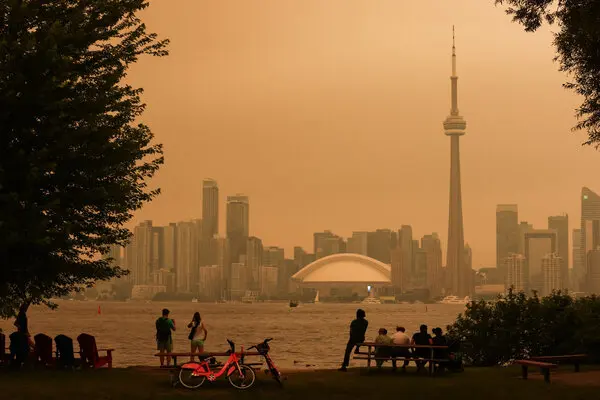
One of the biggest impacts has been wildfire smoke.
Toronto experienced some of the worst air quality levels globally as thick smoke drifted south from Northern Ontario.
Environment Canada issued air quality advisories urging residents to:
- Stay indoors whenever possible
- Reduce strenuous outdoor activities
- Wear properly fitted respirators if spending extended time outdoors
- Monitor vulnerable family members, including seniors and children
Smoke also spread into several U.S. states including Michigan, Minnesota, New York and parts of the Northeast. (The Guardian)
Communities Facing Evacuation
Several remote and Indigenous communities have been among the hardest hit.
Authorities continue organizing evacuations while emergency shelters accommodate displaced residents.
Federal officials confirmed that protecting isolated communities remains one of the highest priorities during the ongoing response. (Reuters)
Transportation Disrupted
The wildfire emergency has also affected transportation.
Major disruptions include:
- CN Rail temporarily suspending operations in affected regions
- Road closures due to heavy smoke
- Delays in moving supplies into northern communities
- Mining companies temporarily evacuating workers from nearby operations
These disruptions could continue if fire conditions worsen over the coming weeks. (Reuters)
What Went Wrong?
Several factors combined to create the current emergency:
Fire Growth Outpaced Initial Containment
Multiple fires expanded simultaneously, stretching firefighting resources.
Remote Geography
Many affected communities are accessible only by limited transportation routes, making evacuations more complex.
Dangerous Weather
Persistent heat, dry conditions and wind repeatedly undermined suppression efforts.
Smoke Impact
Even areas far from active fires experienced dangerous air quality, affecting millions of residents across Ontario.
Officials emphasize that these challenges illustrate how increasingly intense wildfire seasons are placing greater pressure on emergency response systems. (Canada)
Government Response
Ontario has formally requested federal support.
The federal government indicated it stands ready to provide:
- Canadian Armed Forces assistance if required
- Emergency evacuation support
- Resources for affected Indigenous communities
- Continued coordination with provincial wildfire agencies
Officials continue monitoring weather forecasts, which suggest elevated wildfire risk could persist throughout July and August. (Reuters)
What Happens Next?
Fire crews continue working to contain active fires, but officials warn that conditions remain highly unpredictable.
Future wildfire behaviour will depend largely on:
- Rainfall
- Wind conditions
- Temperature trends
- Availability of firefighting resources
Residents are encouraged to monitor official wildfire updates before travelling into affected regions.
Final Thoughts
Ontario Wildfire July 2026 has quickly evolved into one of Canada’s most significant natural disasters of the year. Beyond destroying forests, the fires have displaced families, interrupted transportation networks, reduced air quality across international borders and demonstrated the growing challenges of managing increasingly intense wildfire seasons.
With forecasts indicating continued heat and dry conditions, emergency officials remain on high alert as Canada enters the peak of wildfire season.
FAQ
Is Ontario still experiencing wildfires?
Yes. Multiple active wildfires continue burning across Northern Ontario, with several remaining out of control as emergency crews work to contain them. (Reuters)
Why is Toronto so smoky?
Smoke from large Northern Ontario wildfires has been carried south by changing wind patterns, resulting in hazardous air quality across Toronto and surrounding regions. (The Guardian)
Why were people evacuated?
Communities were evacuated because rapidly spreading wildfires threatened homes, transportation routes and public safety. (CityNews Toronto)
Is the wildfire season expected to continue?
Yes. Federal forecasts indicate elevated wildfire risk through July and August due to above-average temperatures and dry conditions in parts of Ontario. (Canada)
Related Articles on IMFounder
- India’s Air Pollution Crisis: How Government Failure Turned Breathing Into a Privilege
- India Paper Leak Scandal: 70+ Shattered Dreams, Student Suicides & Modi Govt 10-Year Shameful Failure
- Extreme Cold and Winter Storm in Ontario
- Do Thousands of Canadians Die While Waiting for Care?
- Two Fatal ICE-Related Shootings in Minneapolis Spark National Outrage
- Global Fake Degree Scandals: From U.S. Nursing Fraud to International Diploma Mills